
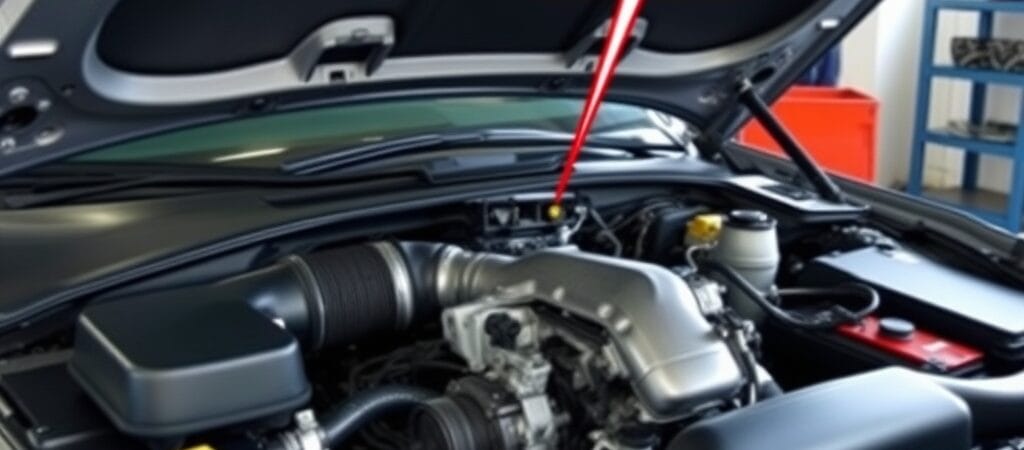
P0174 is a generic OBD-II diagnostic trouble code for “System Too Lean (Bank 2).” It means the engine control module has detected that the fuel-control system on Bank 2 is correcting for a mixture that appears too lean. The code does not identify a failed component by itself. Possible causes include unmetered air, fuel-delivery problems, airflow-measurement errors, Bank 2 injector problems, exhaust leaks that affect sensor readings, and other vehicle-specific faults. Diagnosis should begin with related codes, freeze-frame data, and fuel-trim patterns before parts are replaced.
What Does the P0174 Code Mean?
P0174 means “System Too Lean (Bank 2).” Bank 2 is the cylinder bank that does not contain cylinder number 1, so its physical location depends on the engine design. The code is set when the engine-management system detects that fuel correction on Bank 2 has exceeded its expected range under the conditions defined by the manufacturer. This indicates a detected lean condition or lean-biased feedback; it does not prove that an oxygen sensor, MAF sensor, fuel pump, injector, or other specific component has failed.
Symptoms of the P0174 Code
Check Engine Light (CEL) Indicator
The Check Engine Light may illuminate when P0174 is stored. Some vehicles may have few noticeable drivability symptoms, so the warning light can be the first indication of the problem. The presence of P0174 confirms that the control module detected a Bank 2 lean condition, but further diagnosis is required to determine why.
Performance Issues
Depending on the severity and cause, symptoms may include rough or unstable idle, hesitation, reduced power, misfires, stalling, or changes in fuel economy. Symptoms can vary with engine speed and load. For example, an intake or vacuum leak may have a different fuel-trim pattern at idle than a fuel-delivery problem under load. Some vehicles may show little more than the Check Engine Light.
Possible Causes of the P0174 Code
Vacuum Leaks
Unmetered air entering the engine can cause positive fuel correction and contribute to P0174. Possible leak points include intake hoses, vacuum lines, PCV plumbing, intake-manifold gaskets, and other vehicle-specific connections. A Bank 2-specific intake leak becomes particularly relevant when Bank 2 fuel trims are abnormal while Bank 1 remains comparatively normal. Inspect and test for leaks rather than assuming one is present from the code alone.
Dirty or Faulty Mass Airflow Sensor (MAF)
The mass airflow (MAF) sensor helps the engine control module determine how much air is entering the engine. Contamination, airflow restrictions, wiring problems, or an inaccurate MAF signal can affect fuel calculations. Because a MAF sensor commonly influences both cylinder banks, compare Bank 1 and Bank 2 fuel trims and related codes before blaming the MAF for a Bank 2-only code. Confirm sensor performance using appropriate scan data and vehicle-specific testing before cleaning or replacing it.
Fuel Delivery Issues
Insufficient fuel delivery can produce a lean condition. Depending on the vehicle, possible causes include inadequate fuel pressure or volume, pump or control-system problems, a restricted serviceable filter, or injector faults. A system-wide fuel-delivery problem may affect both banks, while an injector or fuel-distribution problem can affect one bank or cylinder more strongly. Measure the relevant fuel-system parameters according to manufacturer specifications before replacing components.
Oxygen-Sensor or Air-Fuel Sensor Signal Problems
The upstream oxygen or air-fuel sensor provides feedback used for fuel control. A sensor or circuit problem can sometimes produce misleading mixture information, but P0174 does not mean the Bank 2 sensor has failed. Evaluate fuel trims, sensor response, related codes, exhaust integrity, wiring, and other evidence before condemning the sensor.
Exhaust Leaks
An exhaust leak upstream of or near the Bank 2 upstream oxygen/air-fuel sensor can allow outside air to influence the sensor signal and make the exhaust appear leaner than it actually is. Inspect the relevant Bank 2 exhaust path when the fuel-trim pattern and other diagnostic evidence support it. An exhaust leak does not necessarily mean the engine itself is receiving too little fuel.
How to Diagnose the P0174 Code
Verify the Complaint
Confirm P0174 with a capable scan tool and note any drivability symptoms. Check whether the Check Engine Light is steady or flashing and whether the engine has severe rough running, misfires, hesitation, or loss of power. Avoid assuming that the reported symptoms and P0174 share one cause until the diagnostic evidence supports that conclusion.
Inspect for Simple Causes
Inspect the intake system, vacuum and PCV hoses, electrical connectors, accessible Bank 2 intake areas, and relevant exhaust components for obvious damage, disconnections, contamination, or leaks. Also check for signs of recent repairs or disturbed components. A visual inspection can reveal useful clues, but absence of visible damage does not rule out an intake, fuel, sensor, or exhaust fault.
Utilize an OBD-II Scanner
Read all stored and pending DTCs rather than evaluating P0174 alone. Review freeze-frame data and compare short-term and long-term fuel trims for Bank 1 and Bank 2 when supported. If P0171 and P0174 are both present and both banks show similar positive fuel correction, investigate causes that can affect the engine broadly, such as unmetered air, airflow measurement, or fuel delivery. If Bank 2 is substantially more affected than Bank 1, prioritize Bank 2-specific intake, injector, exhaust, sensor, and related faults. Use the pattern to guide testing rather than replacing a component based solely on the code.
Test for Vacuum Leaks
If fuel-trim behavior suggests unmetered air, inspect and test the intake system for leaks. A smoke test is often useful for locating leaks that are not visible. Compare fuel-trim behavior at different engine speeds when appropriate, because the way trims change between idle and higher airflow conditions can provide additional diagnostic clues. Follow vehicle-specific procedures and avoid using flammable sprays around a running engine.
Measure Fuel Pressure
If the diagnostic pattern suggests inadequate fuel delivery, measure fuel pressure and other relevant fuel-system parameters using the manufacturer-specified procedure. Compare the results with specifications under the conditions required for that vehicle. Low pressure does not automatically identify the fuel pump; the cause may involve the pump, electrical supply, control system, regulator, restriction, or another component depending on the design.
Confirm Sensor Performance
Evaluate MAF data and Bank 2 upstream oxygen/air-fuel sensor behavior using a capable scan tool and the manufacturer’s diagnostic procedure. Electrical testing may also be required depending on the sensor and circuit design. Do not rely on a generic voltage test for every sensor, because signal types and diagnostic procedures vary between vehicles. Compare sensor behavior with fuel trims and other evidence before replacing a sensor.
Repair Options for the P0174 Code
Addressing Vacuum Leaks
If testing confirms an intake or vacuum leak, repair the specific leaking hose, gasket, connection, PCV component, or other confirmed source using the appropriate vehicle-specific procedure. After repair, verify that the fuel-trim condition improves rather than assuming the code has been resolved simply because a leak was repaired.
Cleaning or Replacing the MAF Sensor
If testing confirms MAF contamination and the manufacturer permits cleaning, use only an appropriate sensor-cleaning procedure. Replace the MAF sensor only when diagnostic evidence supports an inaccurate or failed sensor. Do not clean or replace the MAF solely because P0174 is stored.
Fuel Injector and Pump Repairs
Repair the specific fuel-delivery fault confirmed during diagnosis. Depending on the vehicle and test results, this may involve an injector, fuel pump or control circuit, regulator, restriction, wiring, or another fuel-system component. Do not replace the pump, filter, or injectors solely because the engine has a lean code.
Repairing a Confirmed Sensor or Circuit Fault
Replace an oxygen/air-fuel sensor only when testing confirms that the sensor is inaccurate or faulty. Repair wiring, connectors, exhaust leaks, or other conditions when they are the actual cause of misleading sensor information. After repair, verify sensor behavior and fuel trims before considering the diagnosis complete.
Verification and Post-Repair Considerations
Clearing Codes and Test Driving
After repairing the confirmed fault, clear the diagnostic trouble codes when appropriate and operate the vehicle under conditions similar to those recorded in the freeze-frame data. Monitor Bank 1 and Bank 2 fuel trims and relevant sensor data. A cleared Check Engine Light alone does not prove the repair was successful; the abnormal fuel-trim condition should no longer return.
Long-Term Monitoring of the Issue
After the initial verification, confirm that P0174 does not return and that fuel trims remain within the expected range for the vehicle under relevant operating conditions. Also check that related drivability symptoms have been resolved. If the code returns, continue diagnosis rather than repeatedly clearing it.
Safety Considerations When Diagnosing the P0174 Code
Use appropriate safety precautions when diagnosing P0174. Work in a well-ventilated area and keep ignition sources away from fuel vapors. Relieve fuel-system pressure according to the manufacturer’s procedure before disconnecting pressurized fuel components. Allow hot exhaust components to cool before inspection, and support a raised vehicle only at approved lifting points with properly rated equipment. Avoid flammable sprays for intake-leak diagnosis. If the engine is severely misfiring, losing substantial power, or the Check Engine Light is flashing, avoid continued driving and arrange appropriate inspection.

Frequently Asked Questions
What does the P0174 code mean?
P0174 means “System Too Lean (Bank 2).” It indicates that the engine-management system detected excessive lean fuel correction on the cylinder bank that does not contain cylinder number 1. The code identifies the detected condition, not the failed component.
What are the symptoms of the P0174 code?
Common symptoms include the Check Engine Light being illuminated, rough idling, sluggish acceleration, and reduced engine power.
What can cause the P0174 code?
Possible causes include unmetered intake air, Bank 2 intake leaks, airflow-measurement problems, insufficient fuel delivery, injector faults, exhaust leaks affecting Bank 2 sensor readings, oxygen/air-fuel sensor or circuit problems, and other vehicle-specific faults. Comparing Bank 1 and Bank 2 fuel trims helps narrow the possibilities.
How is the P0174 code diagnosed?
Confirm the code and related DTCs, review freeze-frame data, compare Bank 1 and Bank 2 fuel trims, inspect for intake and exhaust leaks, and then test airflow measurement, fuel delivery, injectors, sensors, or other systems as indicated by the evidence. Do not replace parts based on P0174 alone.
Can the vehicle still be driven with the P0174 code?
A vehicle with P0174 may still run, but whether it is appropriate to continue driving depends on the symptoms and severity. Diagnose the problem promptly. Avoid continued driving if the engine is severely rough, misfiring, losing substantial power, stalling, or the Check Engine Light is flashing.
What should be checked first when diagnosing the P0174 code?
Start by reading all stored and pending codes, reviewing freeze-frame data, and comparing Bank 1 and Bank 2 fuel trims. Then inspect for obvious intake or vacuum leaks. Whether P0174 appears alone or together with P0171 can help determine whether to prioritize a Bank 2-specific problem or a cause affecting both banks.
Final Checks
P0174 identifies a detected lean condition on Bank 2; it does not identify the failed part. Use related DTCs, freeze-frame information, Bank 1 versus Bank 2 fuel trims, and targeted testing to determine whether the problem involves unmetered air, fuel delivery, airflow measurement, an injector, exhaust leakage, sensor feedback, or another vehicle-specific fault. Repair only the cause supported by diagnostic evidence, then verify that fuel trims normalize and the code does not return under the conditions that originally triggered it.