

An ABS warning light means the vehicle has detected a fault in the anti-lock braking system or a related monitored system. The base braking system may still operate, but ABS—and sometimes stability or traction-control functions—may be unavailable. The light does not identify the failed component. Check for additional brake warning lights, changes in brake feel, pulling, reduced braking performance, or warning messages, and arrange diagnosis promptly.
Common Causes of the ABS Light Activation
An ABS warning can result from wheel-speed signal problems, electrical or communication faults, power-supply problems, hydraulic-system conditions, module faults, or other vehicle-specific issues. The warning light alone cannot determine which component is responsible, so diagnosis should begin with related warning lights and stored ABS/ESC diagnostic information.
Low Brake Fluid or Related Brake-System Warnings
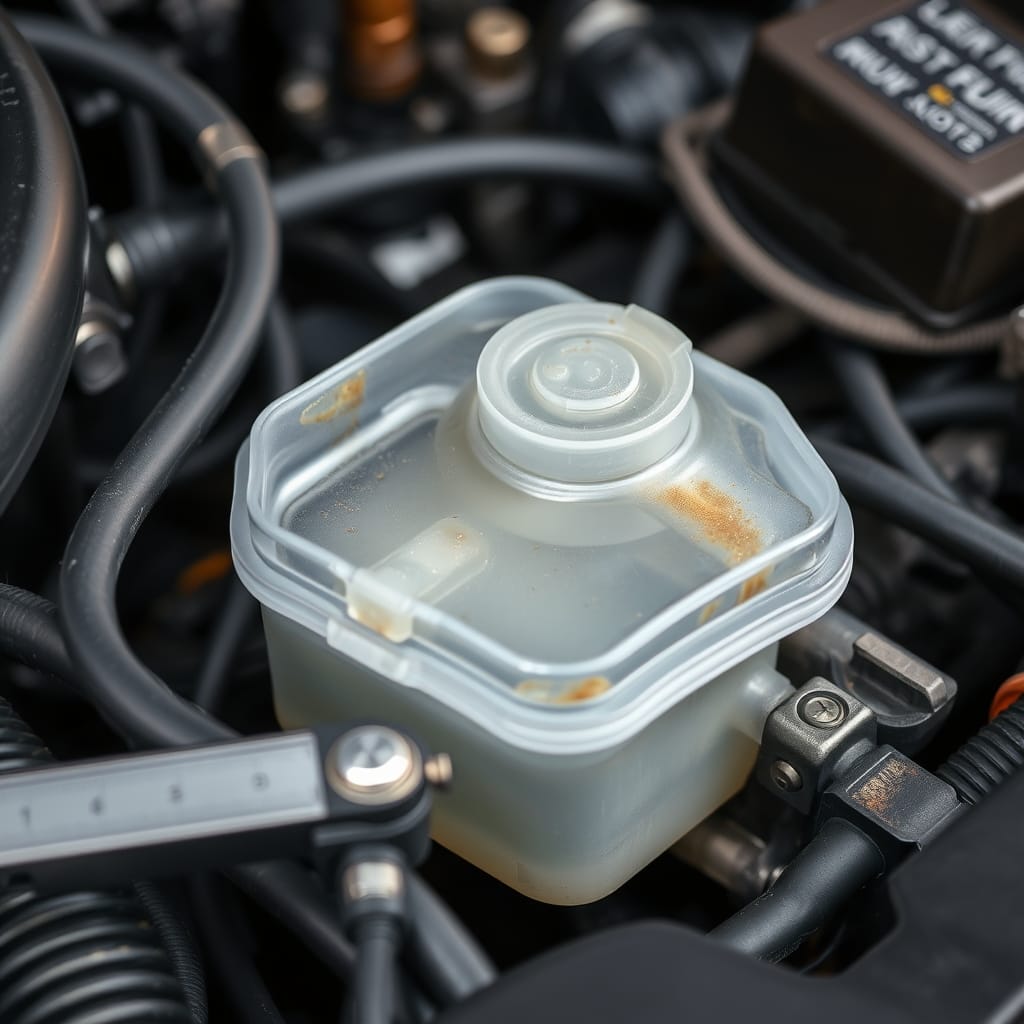
Low brake-fluid level may trigger a brake-system warning and, on some vehicles, may also affect ABS or stability-control operation. However, an ABS light alone does not prove that the fluid level is low. Check the reservoir using the manufacturer’s procedure and note whether a red brake warning or other message is also present. Low fluid should also prompt investigation for brake-pad wear where applicable, leakage, or another cause rather than simply adding fluid.
Wheel-Speed Signal Problems
ABS relies on accurate wheel-speed information. A missing, intermittent, or implausible signal may result from a wheel-speed sensor, damaged wiring or connectors, a tone/reluctor component, wheel-bearing or hub problems, incorrect sensor installation or gap where applicable, or another vehicle-specific condition. A wheel-speed-related DTC does not prove that the sensor itself has failed. Compare scan data and test the relevant signal path before replacing components.
ABS Power-Supply or Fuse Problems
Loss of power or ground to the ABS/ESC system can illuminate the warning and disable system operation. Depending on the vehicle, possible causes include an open fuse, wiring fault, poor connection, relay or power-distribution problem, or another circuit fault. If an ABS-related fuse is open, determine why it failed before replacing it repeatedly. Follow the manufacturer’s circuit-testing procedure and never substitute a fuse with a higher rating.
ABS/ESC Module or Communication Problems
The ABS/ESC control module communicates with wheel-speed sensors and other vehicle modules and inputs. Power, ground, network-communication, internal module, or shared-sensor faults may cause ABS and related warnings. A communication or module-related DTC does not automatically prove that the ABS control module has failed. Verify power supplies, grounds, wiring, network communication, and relevant inputs according to vehicle-specific procedures before considering module replacement.
Wiring and Connector Problems
Damaged wiring, corrosion, loose connections, water intrusion, or connector problems can interrupt wheel-speed signals, power supplies, grounds, or network communication. Inspect the circuit indicated by the diagnostic evidence rather than replacing wiring or connectors solely because an ABS warning is present.
Problems Appearing After Recent Brake, Wheel, or Suspension Work
If the ABS warning appeared immediately after brake, wheel-bearing, axle, tire, or suspension work, inspect areas disturbed during the repair. Depending on the vehicle, a wheel-speed sensor or connector may have been damaged or disconnected, a sensor-related component may be incorrectly installed, or another service-related condition may be present. Some ABS hydraulic procedures also require manufacturer-specific bleeding or scan-tool functions. Do not assume that recent service caused the warning without confirming the fault.
How to Diagnose ABS Light Issues
Diagnosing ABS light issues requires a systematic approach to pinpoint the underlying problem.
Verifying the Complaint
Start by verifying the complaint. Ask questions about when the ABS light activated, if there are any other warning lights illuminated, and whether the vehicle exhibits unusual behaviors during braking. This information provides better context for diagnosis.
Simple Inspections to Conduct
Check the brake-fluid level using the manufacturer’s procedure and note any red brake warning or other messages. Inspect accessible wheel-speed sensor wiring and connectors, visible ABS-related wiring, relevant fuses, and recently serviced wheel or brake areas for obvious damage or disconnection. Record DTCs before disconnecting the battery, removing fuses, or clearing codes.
Scan the ABS/ESC System for Diagnostic Codes
Use a scan tool capable of communicating with the ABS/ESC control module. A basic engine-code reader may not access ABS faults. Read stored and current DTCs and review relevant freeze-frame or live data where supported before clearing anything. Treat each DTC as a starting point for testing rather than proof that the component named in the code has failed.
Test Wheel-Speed Signals and Relevant Circuits
When diagnostic evidence points toward a wheel-speed problem, compare individual wheel-speed data with a capable scan tool where supported. Inspect the associated sensor, wiring, connector, reluctor or encoder components, and wheel-bearing or hub area as applicable. Electrical testing depends on the sensor and circuit design, so use the manufacturer’s specified voltage, waveform, resistance, or other test only when appropriate. Confirm the signal fault before replacing a sensor or hub assembly.
Repair Options After Diagnosis
Repair only the fault confirmed by testing. Depending on the diagnosis, this may involve correcting the cause of low brake-fluid level, repairing wheel-speed sensor wiring or connectors, replacing a confirmed failed sensor or related wheel component, repairing a power or ground circuit, correcting a communication fault, or servicing another ABS/ESC component.
Do not replace wheel-speed sensors, hubs, hydraulic units, or control modules solely because an ABS DTC is stored. If brake fluid is low, identify why before simply topping up the reservoir. If a fuse has opened, diagnose the circuit before repeatedly replacing it.
After repair, clear DTCs with an appropriate scan tool when required and perform any manufacturer-specified calibration, initialization, bleeding, or relearn procedure. Verify that the ABS warning remains off, relevant DTCs do not return, and the system operates normally.
Safety Considerations When the ABS Light Is On
An ABS warning does not necessarily mean normal hydraulic braking has been lost, but anti-lock braking and possibly traction or stability assistance may be unavailable. Drive cautiously and allow additional margin, particularly on wet, icy, loose, or other low-traction surfaces.
If a red brake warning is also illuminated, the brake pedal feels abnormal, braking performance is reduced, the vehicle pulls strongly during braking, brake fluid is visibly leaking, or another serious brake symptom is present, stop driving when safe and arrange immediate inspection. Do not continue driving merely because the vehicle still appears able to stop.
Vehicle-Specific Considerations for ABS Diagnostics
Each vehicle model may have unique requirements and specifications.
Importance of Consulting Vehicle Manuals
Consulting your vehicle’s manual can provide specific guidance on the ABS system and diagnostic procedures. Each manufacturer may have different tolerances, procedures, and components, making it essential to refer to the documentation for accurate diagnostics and repairs.
Frequently Asked Questions
What does it mean when the ABS light is on?
An illuminated ABS warning generally means the vehicle has detected a fault affecting the anti-lock braking system or a related monitored function. Base braking may remain available, but ABS and possibly traction or stability functions may be limited or disabled. The light does not identify the failed component.
What are common causes for the ABS light to activate?
Possible causes include wheel-speed signal problems, wiring or connector faults, ABS power or ground problems, communication faults, brake-system conditions, recent service-related issues, or an ABS/ESC module or hydraulic-system fault. Stored codes and testing are needed to identify the actual cause.
Can I still drive my vehicle if the ABS light is on?
The vehicle may retain normal base braking, but ABS may be unavailable. Drive only as necessary for safe diagnosis or repair, especially in dry conditions, and allow extra caution on slippery roads. Stop driving and seek immediate help if the red brake warning light is also on, brake performance changes, the pedal feels abnormal, or the vehicle pulls while braking.
How can I diagnose the ABS light issue?
First check for other brake or stability warnings and note any change in braking behavior. Inspect brake-fluid level and accessible wiring or recently serviced areas, then use a scan tool capable of accessing the ABS/ESC module. Read the DTCs and relevant live data before clearing anything, and test the circuit or component indicated by the diagnostic evidence.
What should I do if the ABS light remains on after repairs?
If the ABS light remains on after a repair, scan the ABS/ESC module again and determine whether the original DTC returned or a different fault is present. Verify that the repair was completed correctly and check whether the manufacturer requires calibration, initialization, bleeding, or another post-repair procedure. Do not repeatedly clear the warning without diagnosing why it returns.
Final Checks
An ABS light identifies a detected system fault, not a specific failed part. Read ABS-capable scan-tool codes, inspect simple causes such as brake-fluid level, fuses, visible wiring, and wheel-sensor areas, then test the relevant circuit or component using vehicle-specific procedures. Verify the repair only after the warning remains off and the fault does not return.