
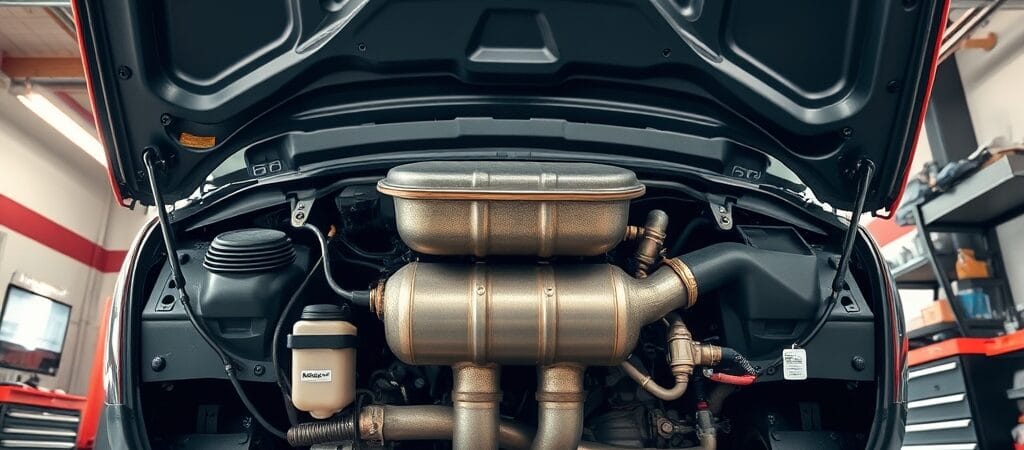
A catalytic-converter problem can cause a check engine light, rattling, reduced power, poor fuel economy, exhaust odor, or failed emissions testing. However, these symptoms and converter-related codes do not prove that the converter has failed. An engine misfire, rich fuel mixture, oil consumption, coolant entry, sensor fault, or exhaust leak can damage the converter or produce similar symptoms. Diagnose the underlying cause before replacing any emissions component.
Signs of a Possible Catalytic Converter Problem
Unusual Sounds: Rattling Noises
Rattling from the exhaust area can occur if the catalytic converter’s internal substrate has broken or become loose, but heat shields, exhaust brackets, pipes, or other components can produce similar noises. Locate the source of the rattle before concluding that the converter is internally damaged.
Changes in Exhaust Emissions: Blue Smoke and Smell
A sulfur or “rotten egg” smell can occur with some fuel-control or converter-related problems, but it does not prove that the converter has failed. Blue smoke usually points to engine oil being burned and may damage the converter over time; it is not a direct catalytic-converter symptom. Diagnose the engine condition and fuel-control system before replacing the converter.
Fuel Efficiency: Understanding Reduced Mileage
Poor fuel economy can occur alongside converter or fuel-control problems, but it is not specific to catalytic-converter failure. Rich operation, misfires, sensor faults, engine-condition problems, and driving conditions can all increase fuel consumption and may also damage the converter. Use fuel-trim data, related codes, and other diagnostic evidence to identify the underlying cause.
Possible Causes of Catalytic Converter Problems
Understanding the potential causes of catalytic converter issues can further aid in diagnosis and prevention.
Restrictions and Internal Damage
A catalytic converter can become restricted if its internal substrate melts, collapses, breaks apart, or becomes contaminated. Excessive exhaust temperatures caused by problems such as repeated misfires or excessive fuel can damage the substrate. Do not assume that a restricted converter simply needs cleaning; determine why the restriction occurred before deciding on a repair.
Overheating and Physical Damage
Excessive converter temperature can damage or melt the internal catalyst substrate, while road impact or other physical damage can deform the housing or damage the internal structure. If physical or thermal damage is confirmed, investigate why it occurred—especially for overheating caused by engine or fuel-control problems—before installing a replacement converter.
Exhaust System Leaks
Exhaust leaks can affect oxygen-sensor readings and emissions-system diagnosis, particularly when they occur near relevant sensors or upstream of the converter. A leak may contribute to misleading converter-efficiency data or indicate another exhaust-system fault. Inspect and repair significant exhaust leaks before condemning the catalytic converter.
Contaminants Affecting the Catalyst
Engine oil or coolant entering the exhaust can contaminate the catalyst and reduce its effectiveness over time. Silicone, inappropriate sealants, or other contaminants may also affect some catalyst or oxygen-sensor systems. If contamination is suspected, diagnose and correct its source before replacing the converter.
Normal Wear and Aging
Catalytic converters often fail because of an underlying issue rather than ordinary age alone. Repeated misfires, excessive fuel, oil burning, coolant contamination, impact damage, or exhaust-system faults can overheat, contaminate, or damage the catalyst. Correct the root cause before installing a replacement converter.
Diagnostic Procedures for a Faulty Catalytic Converter
Implementing proper diagnostic procedures ensures accurate identification of catalytic converter issues.
Verify the Complaint and Operating Conditions
Confirm the driver’s symptoms and determine when they occur—for example, during acceleration, highway driving, cold start, or after the engine is fully warmed. Check whether the concern involves a warning light, rattling, reduced power, exhaust odor, failed emissions testing, or another symptom. Do not assume that any one of these complaints identifies the catalytic converter as the cause.
Visual Inspection of the Exhaust System
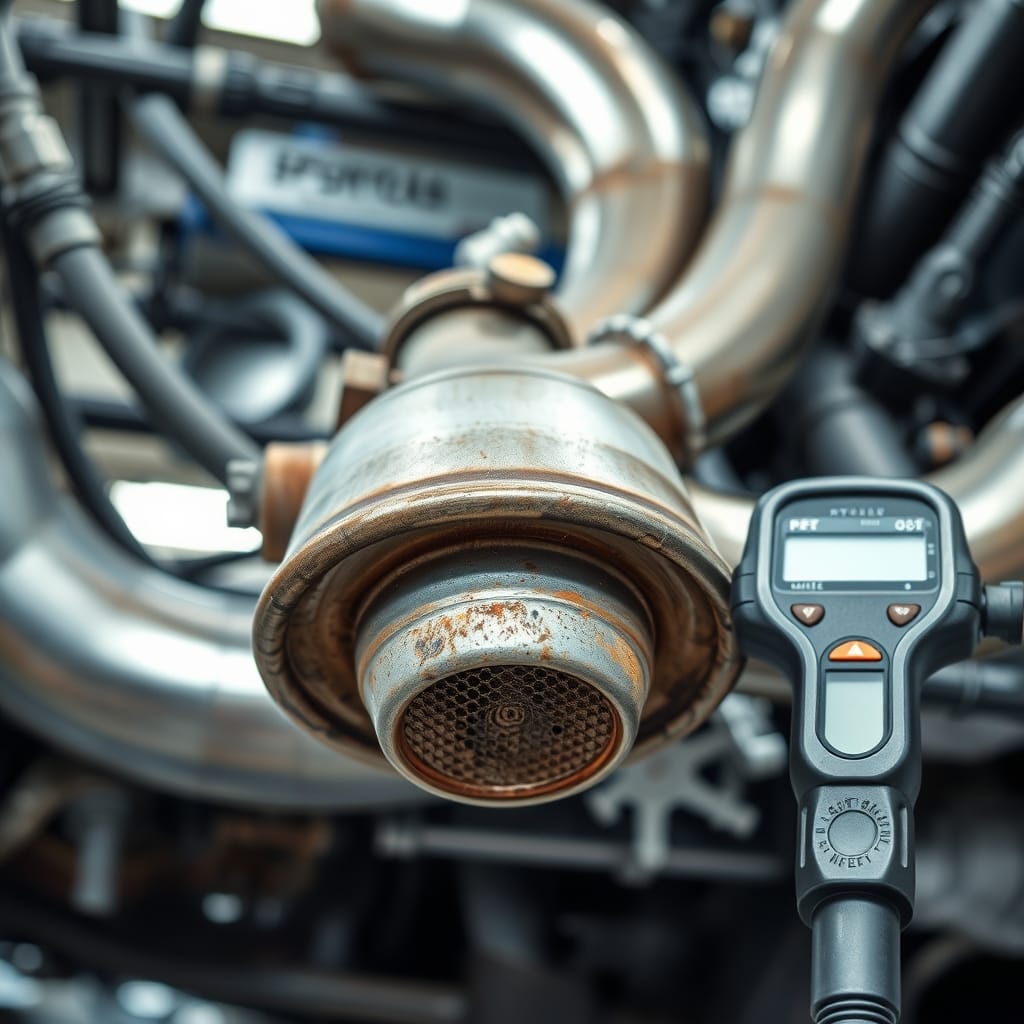
With the exhaust system cool and the vehicle safely supported when necessary, inspect accessible exhaust components for impact damage, corrosion, loose heat shields, damaged connections, and leaks. Look for evidence of overheating or physical converter damage, but remember that an external visual inspection cannot determine catalyst efficiency or reliably confirm an internal restriction.
Utilizing OBD-II Scanner and Diagnostic Codes
Read all stored and pending codes, freeze-frame data, and relevant live data. Converter-efficiency codes can guide diagnosis, but they do not prove that the converter is defective. Check for misfire, fuel-trim, oxygen-sensor, exhaust-leak, and engine-condition problems before condemning the converter.
For more guidance on interpreting DTCs, freeze-frame information, and scan data, see our How to Read OBD2 Codes: A Step-by-Step Diagnostic Guide.
Targeted Testing Before Converter Replacement
Depending on the vehicle and symptoms, diagnosis may include exhaust backpressure testing, appropriate temperature measurements, oxygen-sensor or air-fuel-sensor data, fuel trims, misfire data, and manufacturer-specified catalyst tests. No single generic temperature difference, sensor pattern, or converter-related DTC should be used by itself to condemn the converter. Interpret test results according to the vehicle’s system design and service information.
Repairing a Bad Catalytic Converter
Understanding when and how to repair a bad catalytic converter is vital for restoring vehicle performance.
When Replacement is Necessary
Replace the catalytic converter only when testing confirms it is restricted, internally damaged, inefficient, or otherwise failed—and after correcting the underlying cause. Replacing a converter without fixing a misfire, fuel-control problem, oil consumption, coolant leak, or exhaust fault can cause the replacement to fail again.
Diagnose the Cause of Converter Damage
Before replacing a failed converter, check for faults capable of damaging the replacement. Depending on the diagnosis, this may include persistent misfires, rich fuel control, oil consumption, coolant entering the combustion chambers, exhaust leaks, sensor or circuit faults, and other engine-condition problems. Test related components rather than replacing oxygen sensors or other emissions parts automatically.
Safety Precautions During Diagnosis and Repair
Prioritizing safety during diagnosis and repair is essential to prevent accidents and injuries.
Allow the Exhaust System to Cool
Catalytic converters and surrounding exhaust components can reach extremely high temperatures and may remain hot after the engine is switched off. Allow the exhaust system to cool before touching or inspecting components unless a specific diagnostic procedure requires temperature measurements. Keep combustible materials away from hot exhaust components.
Working in a Well-Ventilated Area
When working on the exhaust system, ensure you’re in a well-ventilated area. Exhaust gases can be harmful if inhaled, so taking precautions to minimize exposure is critical.
Proper Lift and Support for Vehicle Safety
When lifting a vehicle for inspection or repair, always use appropriate supports such as jack stands. Never rely solely on a jack, as it can fail, risking injury while working underneath the vehicle. Ensuring proper safety measures protects you during the repair process.
Frequently Asked Questions
What are common symptoms of a bad catalytic converter?
Possible signs include a check engine light, rattling, reduced power, poor fuel economy, exhaust odor, failed emissions testing, or—when the converter is restricted—poor acceleration. These signs do not prove that the converter itself has failed.
Can a bad catalytic converter affect engine performance?
A severely restricted catalytic converter can reduce engine power by restricting exhaust flow. However, poor acceleration, hesitation, stalling, and poor fuel economy have many other possible causes. Confirm the restriction or converter fault with appropriate testing before attributing performance symptoms to the converter.
How can I diagnose a bad catalytic converter?
Begin by confirming the symptoms, checking all relevant DTCs and freeze-frame data, inspecting the exhaust system, and looking for underlying engine or fuel-control faults. Depending on the vehicle and complaint, diagnosis may then involve backpressure testing, appropriate temperature measurements, sensor and fuel-trim analysis, misfire data, or manufacturer-specified catalyst tests. No single code or generic test proves converter failure by itself.
Is it safe to drive with a suspected catalytic converter problem?
It depends on the symptoms and underlying fault. If the vehicle has severe power loss, repeated stalling, significant overheating, a flashing check engine light associated with an active misfire, unusual exhaust heat, or other serious symptoms, avoid continued driving and have the vehicle assessed. If the vehicle operates normally with only an emissions-related warning, diagnosis should still be arranged promptly to prevent additional damage or emissions problems.
What causes a catalytic converter to fail?
Common underlying causes include repeated misfires, excessive fuel, oil burning, coolant contamination, impact damage, and exhaust-system faults. These issues can overheat, contaminate, or damage the catalyst.
Final Checks
A catalytic converter is often affected by another engine or emissions-system fault. Confirm the actual problem using codes, scan data, exhaust inspection, and appropriate vehicle-specific testing. Repair the root cause before replacing the converter, then verify that emissions-related codes and symptoms do not return.