
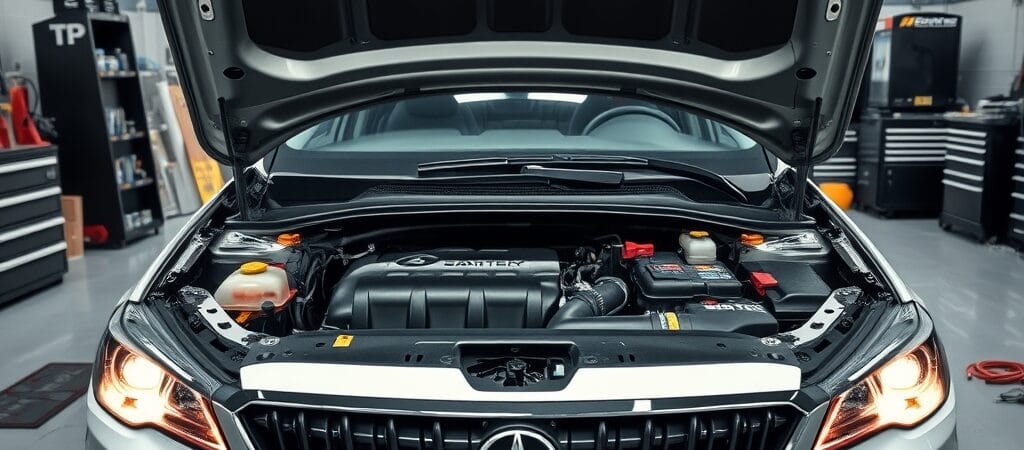
If your car clicks once but won’t start, the engine is usually not cranking, which makes this a no-crank starting-system problem rather than a crank-no-start condition. A single click can occur when the starter solenoid or relay operates but the starter motor does not turn the engine. Possible causes include insufficient battery power, excessive resistance in battery cables or connections, starter-circuit faults, a starter or solenoid problem, and, less commonly, a mechanically locked engine. The clicking sound alone does not identify the failed component, so testing is required before replacing parts.
Why Your Car Clicks Once But Won’t Start
If your car clicks once but won’t start, first confirm that the engine itself is not rotating. A single click may come from the starter solenoid, starter relay, or another electrical component in the starting circuit, depending on the vehicle. The symptom can result from inadequate voltage or current at the starter, excessive resistance in cables or connections, a starter-system fault, or a mechanical problem preventing the engine from turning. The sound alone cannot confirm which component has failed.
Common Symptoms of a Single Click on Ignition Attempt
The Clicking Sound Explained
A single click during a start attempt may come from the starter solenoid, starter relay, or another component in the starting circuit. It can indicate that part of the control circuit is operating while the starter motor is not turning the engine. However, the click does not prove that the starter itself is faulty. Battery condition, cable resistance, grounds, starter power and control circuits, and mechanical engine condition may all need to be checked.
Dashboard and Accessory Behavior
Observe the dashboard lights and, where useful, the headlights during a start attempt. Significant dimming can support investigation of battery condition, connections, voltage drop, or unusually high starter current. Lights that remain bright do not prove that the battery or starter circuit is healthy. Treat these observations as diagnostic clues rather than confirmation of a specific fault.
Possible Causes of a Single Click Issue
Weak or Discharged Battery
A battery may have enough energy to operate lights and accessories but still be unable to supply the current required during cranking. A discharged, deteriorated, or otherwise weak battery can therefore produce a click without normal engine cranking. Battery state of charge and condition should be tested rather than diagnosed from the clicking sound alone.
Battery Cable and Connection Problems
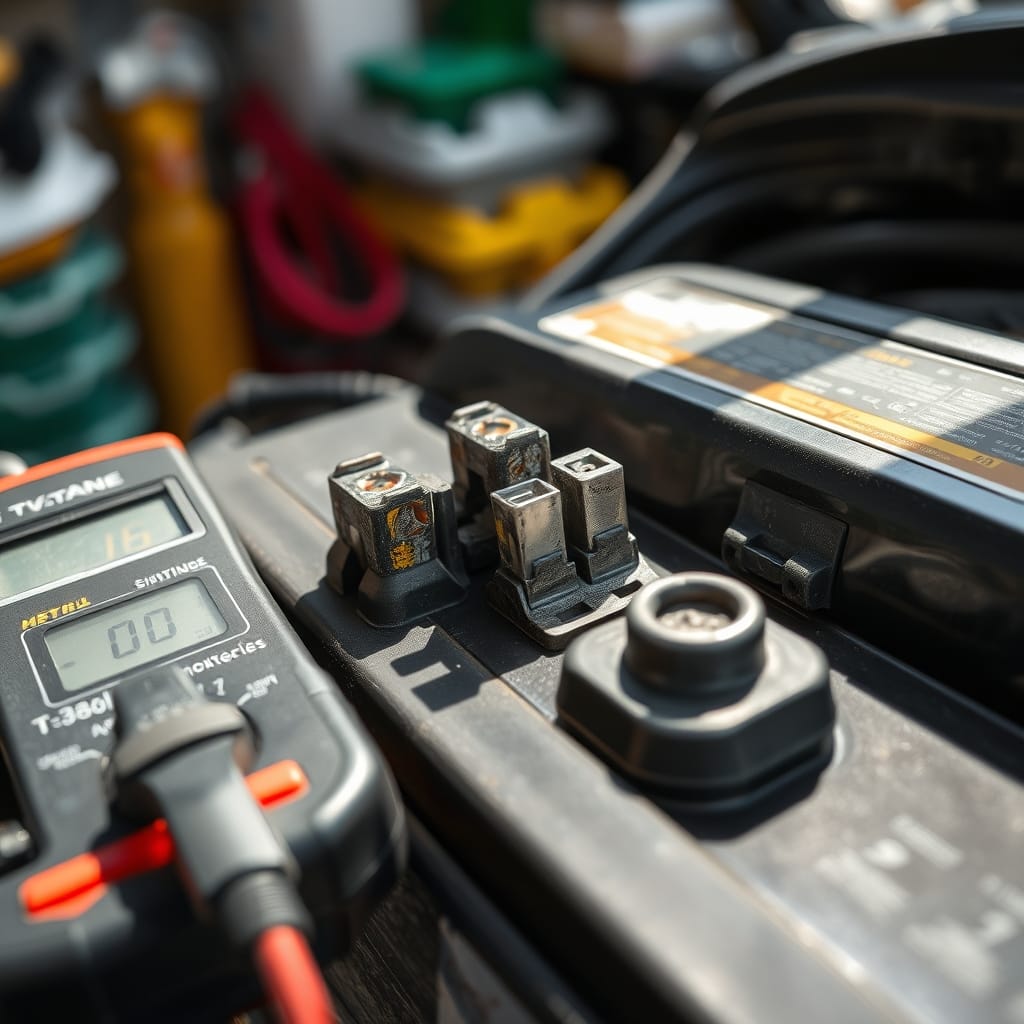
Loose, corroded, damaged, or high-resistance battery connections can restrict current flow to the starter. Problems may occur at the battery terminals, cables, grounds, starter connections, or other points in the high-current starting circuit. Visual inspection is useful, but voltage-drop testing during a start attempt can reveal excessive resistance that is not obvious visually.
Starter Motor or Solenoid Problems
A starter motor or starter-mounted solenoid fault can result in a single click without engine cranking. Internal electrical or mechanical faults may prevent the starter from operating even when the control circuit is functioning. Do not replace the starter based on the click alone. Verify battery condition, cable integrity, voltage drop, starter power and ground, and the relevant control circuit before condemning the starter assembly.
For additional starter-specific warning signs and diagnostic context, see our Bad Starter Symptoms guide.
Starter Control-Circuit Problems
Depending on the vehicle, the starting circuit may involve the ignition switch or start button, starter relay, fuses, transmission range or clutch-interlock inputs, immobilizer system, wiring, connectors, and electronic control modules. A fault in the control circuit can prevent proper starter operation. Use the vehicle’s wiring diagram and manufacturer diagnostic information to determine whether the starter is receiving the required commands and electrical supply.
Mechanical Resistance or a Locked Engine
Less commonly, the starter may be unable to rotate the engine because of excessive mechanical resistance or an internal mechanical problem. This possibility should be investigated only after appropriate electrical and starting-system checks unless other evidence points toward a mechanical failure. Confirm whether the engine can rotate using the correct vehicle-specific procedure before concluding that the engine is internally damaged.
Diagnostic Steps to Identify the Issue
Verify the Complaint
Attempt to start the vehicle and confirm exactly what happens. Determine whether there is one click, repeated clicking, slow cranking, normal cranking without starting, or no response at all. These are different symptom patterns and can lead to different diagnostic paths. Confirm that the engine itself does not rotate when the single click occurs.
Inspect the Battery, Cables and Connections
Inspect accessible battery terminals, cables, grounds, and starter-circuit connections for looseness, corrosion, damage, or overheating. Do not assume that a connection is electrically sound simply because it looks clean. If necessary, perform appropriate voltage-drop testing during a start attempt to identify excessive resistance in the high-current circuit.
Check Scan Data When Relevant
A scan tool can be useful on vehicles where the starting system depends on electronic modules, immobilizer authorization, transmission-range or clutch inputs, or other networked controls. Check relevant DTCs and data when appropriate, but do not expect every battery, cable, starter, or mechanical no-crank problem to set an OBD-II trouble code.
Test Battery Condition and the Starting Circuit
Test battery state of charge and condition using appropriate equipment. Then evaluate the starting circuit under load where appropriate. Voltage-drop testing across the positive and ground sides of the circuit can help identify excessive resistance in cables or connections. Use vehicle-specific specifications and procedures rather than relying on a single universal voltage value.
Test Starter Power, Ground and Control
If the battery and high-current connections test correctly, determine whether the starter receives the required power, ground, and control signal during a start attempt. The exact procedure depends on the vehicle. A starter should be replaced only when testing supports a starter or solenoid fault. Bench testing may provide additional information in some cases, but an unloaded bench test does not evaluate every fault that can occur under installed operating conditions.
Repair Only the Confirmed Cause
Repair should follow the diagnostic evidence. Depending on the confirmed fault, this may involve charging or replacing a failed battery, cleaning or repairing cable connections, repairing wiring or grounds, replacing a faulty relay or starter assembly, correcting a control-circuit problem, or addressing a confirmed mechanical engine fault.
Do not replace the battery, starter, solenoid, relay, or other components simply because the vehicle produces a single click.
Safety Considerations While Diagnosing a No-Crank Condition
Park the vehicle on a stable surface, apply the parking brake, and place an automatic transmission in Park or Neutral. For a manual transmission, follow the manufacturer’s starting and diagnostic procedure and ensure the vehicle cannot move unexpectedly.
Keep hands, clothing, tools, and test leads away from belts, pulleys, fans, and other components that could move if the engine unexpectedly cranks or starts.
Starting circuits carry very high current. Avoid shorting battery or starter terminals with tools or test equipment. Follow vehicle-specific procedures before disconnecting the battery because some vehicles require memory retention, initialization, security, battery-monitoring, or other procedures after power loss.
Never bypass starter or safety-interlock circuits unless a manufacturer-approved diagnostic procedure specifically requires it.
Vehicle-Specific Considerations
Starting-system designs vary between conventional key-start, push-button start, stop-start, hybrid, immobilizer-equipped, and electronically controlled vehicles. Circuit layouts, starter-control strategies, acceptable voltage drops, test points, and service procedures are vehicle-specific. Use the correct wiring diagram and manufacturer service information before performing advanced electrical tests or replacing components.
Frequently Asked Questions
What does it mean if my car clicks once when starting?
A single click means part of the starting circuit may be operating while the engine is not cranking, but the sound alone does not identify the failed component. Battery condition, cables and grounds, starter power and control circuits, the starter assembly, and mechanical engine condition may need to be tested.
What are the common causes of the single click issue?
Possible causes include a weak or discharged battery, high resistance in battery cables or connections, starter motor or solenoid faults, starter control-circuit problems, and, less commonly, mechanical resistance preventing the engine from rotating.
Can I still drive my car if it clicks once and won’t start?
If the engine does not start, the vehicle cannot be driven under its own power. Diagnose the no-crank condition before attempting normal operation. If the vehicle must be moved, use an appropriate towing or transport method.
How can I diagnose the clicking sound problem?
First confirm whether the symptom is a single click with no engine rotation. Inspect the battery, cables, grounds, and accessible connections, then test battery condition and the starting circuit under load as appropriate. If those checks pass, evaluate starter power, ground, control signals, and vehicle-specific starting-system inputs before replacing components.
Is it possible for the engine to be seized if it only clicks once?
It is possible, but a single click does not prove that the engine is seized. Battery, cable, starter, and control-circuit faults should be evaluated as appropriate. If electrical testing does not explain the no-crank condition, mechanical engine rotation can be checked using the correct vehicle-specific procedure.
Final Checks
A single click with no engine cranking is a no-crank condition, not proof of a failed starter. Begin by confirming the exact symptom, then inspect the battery, cables, grounds, and connections. Test battery condition and the starting circuit under load, and evaluate starter power, ground, and control signals when necessary. Consider vehicle-specific electronic controls and mechanical engine condition where appropriate. Replace or repair components only after testing identifies the actual fault.