
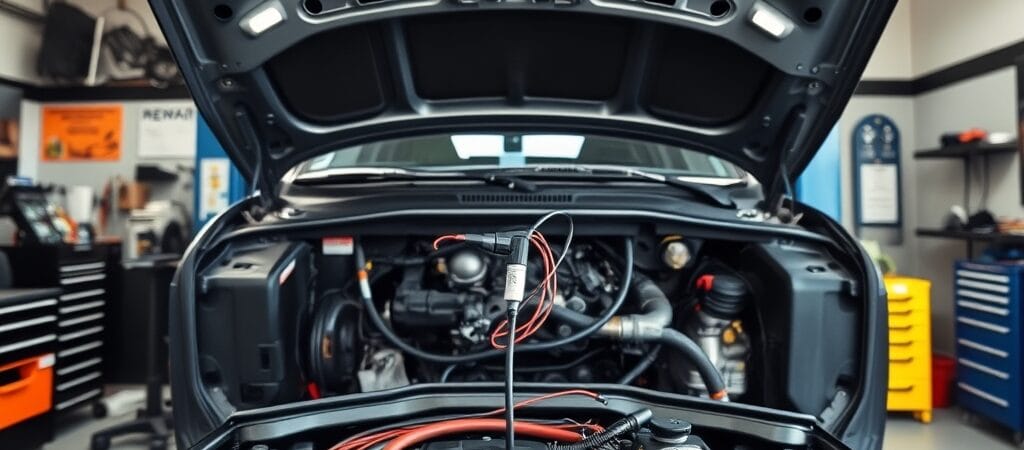
The P0032 code means the engine control module has detected a high electrical condition in the heated oxygen sensor (HO2S) heater control circuit for Bank 1 Sensor 1. This does not automatically mean the oxygen sensor has failed or that excessive voltage is being supplied to its heater. Depending on the vehicle’s circuit design, possible causes include wiring faults, connector problems, an open or faulty heater element, or a control-circuit malfunction. This guide explains the symptoms, possible causes and diagnostic steps needed to identify the actual fault before replacing components.
What Does the P0032 Code Mean?
P0032 is a generic OBD-II diagnostic trouble code commonly described as “HO2S Heater Control Circuit High (Bank 1 Sensor 1).”
Bank 1 refers to the engine bank containing cylinder number one. Sensor 1 generally identifies the upstream oxygen sensor located before the catalytic converter.
The heater helps the oxygen sensor reach its intended operating temperature more quickly. The engine control module monitors the heater circuit and sets P0032 when it detects an electrical condition outside the expected range.
A circuit-high condition does not necessarily mean the heater is receiving too much power. Its interpretation depends on the manufacturer’s wiring design and monitoring strategy. An open circuit, damaged wiring, failed heater element or control-circuit fault may be relevant.
The code identifies an electrical circuit condition, not a confirmed failed oxygen sensor.
Common Symptoms Associated with the P0032 Code
P0032 may appear without noticeable driving symptoms. Possible observations include:
Check Engine Light: The most consistent indication is an illuminated malfunction indicator lamp.
No Noticeable Performance Change: The engine may continue running normally despite the stored code.
Reduced Fuel Economy: Depending on the vehicle’s fuel-control strategy, a heater fault may affect fuel control during certain operating conditions.
Increased Emissions: Delayed oxygen sensor readiness may affect emissions performance, particularly during warm-up.
Additional Driveability Symptoms: Rough idle or hesitation may occur when other related faults are present, but these symptoms should not be attributed to P0032 without further testing.
Symptoms alone cannot establish whether the oxygen sensor, wiring or control circuit is responsible.
Possible Causes of the P0032 Code
Identifying the underlying issues for a P0032 code requires exploring several potential causes.
Shorted Heater-Circuit Wiring
Damaged wiring can produce an unexpected electrical condition in the oxygen sensor heater control circuit. Depending on the circuit design, a short to voltage, open circuit or other wiring fault may cause the control module to detect a circuit-high condition. Inspect the harness for melted insulation, chafing, broken conductors and contact with hot exhaust components. Use the vehicle-specific wiring diagram to determine which faults are consistent with P0032.
Corroded or Loose Connectors
Loose, damaged or corroded terminals can interrupt heater-circuit operation or affect the electrical feedback monitored by the control module. Inspect the oxygen sensor connector for moisture, corrosion, bent pins, poor terminal contact and heat damage. Confirm any suspected connection fault through appropriate circuit testing before repairing or replacing components.
Heater Element Failure
The heater element inside the oxygen sensor may develop an open circuit or another electrical fault. Depending on how the vehicle monitors heater operation, this can contribute to P0032. Measure heater resistance or perform the manufacturer’s specified test only after identifying the correct terminals and disconnecting components as instructed. An out-of-specification result may support sensor replacement, but the code alone does not.
Faulty ECM Output
A fault in the engine control module’s heater driver or monitoring circuit is possible but should generally be considered only after verifying the sensor heater, wiring, connectors, power supply and relevant grounds. Control-module replacement or programming must never be based solely on P0032.
Diagnostic Approach for the P0032 Code
To effectively determine the root cause of the P0032 code, follow these diagnostic steps.
Verify the Complaint
Confirm P0032 using a compatible scan tool. Record whether the code is current, pending or stored, along with any related trouble codes and reported symptoms. Note whether the malfunction indicator lamp is illuminated. Do not assume that the oxygen sensor is faulty simply because P0032 is present.
Inspect Simple Causes
With the engine and exhaust system cool, inspect the Bank 1 Sensor 1 wiring harness and connector. Look for melted insulation, chafed wiring, disconnected plugs, corrosion and damaged terminals. Pay particular attention to wiring routed close to exhaust components.
Do not pull on sensor wires or disturb hot components. Repair visible damage only after confirming the correct wiring and repair procedure.
Scan Codes and Data
Use an OBD-II scanner to retrieve P0032 and any related codes. Review available freeze-frame information and heater-control data where supported. Related heater-circuit or power-supply faults may help narrow the diagnosis.
For a general introduction to retrieving and interpreting trouble codes, see our guide to reading OBD-II codes.
A scan tool provides diagnostic clues but does not, by itself, establish whether the heater element or wiring has failed.
Test Systems and Components
Use the vehicle-specific service information to identify the heater terminals, power supply, control circuit and expected electrical values.
First, verify the relevant power supply and circuit condition according to the manufacturer’s procedure. Then inspect and test wiring continuity, shorts and connector integrity as indicated by the results.
If specified, measure the oxygen sensor heater resistance with the circuit isolated and the power switched off. Compare the result with the correct manufacturer specification rather than a generic resistance value.
Where supported, use scan-tool commands or manufacturer-approved procedures to evaluate heater-control operation. Some systems use pulse-width-modulated or electronically controlled circuits, so ordinary voltage readings may be misleading.
Never measure resistance on an energized circuit or apply battery voltage directly to an unfamiliar oxygen sensor heater or ECM-controlled circuit.
Replace the sensor, repair wiring or investigate the control module only when diagnostic evidence identifies the actual fault.
Repair After Diagnosis
Perform only the repair supported by testing. This may involve repairing damaged wiring, restoring connector integrity, replacing an oxygen sensor with a confirmed heater fault or addressing a verified control-circuit problem.
Follow the manufacturer’s installation, wiring repair and tightening procedures. Avoid unnecessary replacement of sensors or engine control modules.
Verify the Repair
After repairing the confirmed fault, clear the diagnostic trouble codes as appropriate and operate the vehicle under the manufacturer’s specified verification conditions.
Confirm that P0032 does not return and, where supported, that the oxygen sensor heater monitor completes successfully. A short test drive without an illuminated warning light is not sufficient proof of repair if the relevant monitor has not run.
Tools Required for Diagnosing P0032
To diagnose a P0032 code effectively, you’ll need the following tools:
Compatible OBD-II scanner, preferably with relevant live-data or actuator-test functions.
Digital multimeter suitable for automotive electrical testing.
Vehicle-specific wiring diagrams and service information.
Appropriate connector-testing tools or back-probing equipment where permitted.
Basic hand tools for safe access and confirmed repairs.
Safety Considerations When Diagnosing P0032
Oxygen sensors are often installed close to hot exhaust components, and heater circuits may be electronically controlled.
Allow the exhaust system to cool before inspecting sensor wiring or connectors.
Keep hands, clothing and tools away from moving engine components.
Follow manufacturer instructions before disconnecting electrical connectors or testing circuits.
Never perform resistance measurements on energized circuits.
Do not apply external voltage to sensor or ECM-controlled circuits unless the manufacturer explicitly specifies that procedure.
If under-vehicle access is necessary, use suitable support equipment on stable ground. Never work beneath a vehicle supported only by a jack.
Disconnecting the battery is not a universal requirement for diagnosis. Follow the specific service procedure for the work being performed.
Vehicle-Specific Considerations for the P0032 Code
The heater-control circuit design, sensor type, terminal arrangement and diagnostic specifications vary between vehicles.
Always confirm the correct location of Bank 1 Sensor 1 and use the manufacturer’s wiring diagram to identify heater power and control terminals.
Follow the specified resistance, voltage, circuit-testing and verification procedures. Do not assume that a test method or electrical specification from one vehicle applies to another.
Frequently Asked Questions
What does the P0032 code mean?
P0032 means the engine control module has detected a heater control circuit high condition for the heated oxygen sensor at Bank 1 Sensor 1. It does not confirm that the oxygen sensor itself has failed.
What causes the P0032 code?
Possible causes include damaged wiring, connector faults, an open or faulty heater element, power or control-circuit problems and, less commonly, an engine control module fault.
Can I drive my vehicle with the P0032 code?
A vehicle with P0032 may still operate normally, but the fault should be diagnosed promptly. If the engine runs poorly, additional warning lights appear or other serious symptoms occur, seek professional assessment before continuing to drive.
How is the P0032 code diagnosed?
Diagnosis involves confirming the code, inspecting the oxygen sensor wiring and connectors, reviewing related codes and data, and performing manufacturer-specified electrical tests.
Does P0032 always mean I need a new oxygen sensor?
No. P0032 reports a heater-control circuit condition. The oxygen sensor should be replaced only if testing confirms that its heater or another sensor-related component has failed.
How can I verify the repair after fixing P0032?
Clear the code as appropriate, operate the vehicle under the specified conditions and confirm that P0032 does not return. Where supported, verify successful completion of the oxygen sensor heater monitor.
Final Checks
P0032 identifies a heater control circuit high condition affecting the Bank 1 Sensor 1 heated oxygen sensor. It does not automatically confirm a failed sensor or excessive heater voltage.
Begin with code verification and visible wiring inspections, then use vehicle-specific electrical tests to identify the fault. Repair only the confirmed cause and verify that the relevant diagnostic monitor completes without P0032 returning.