
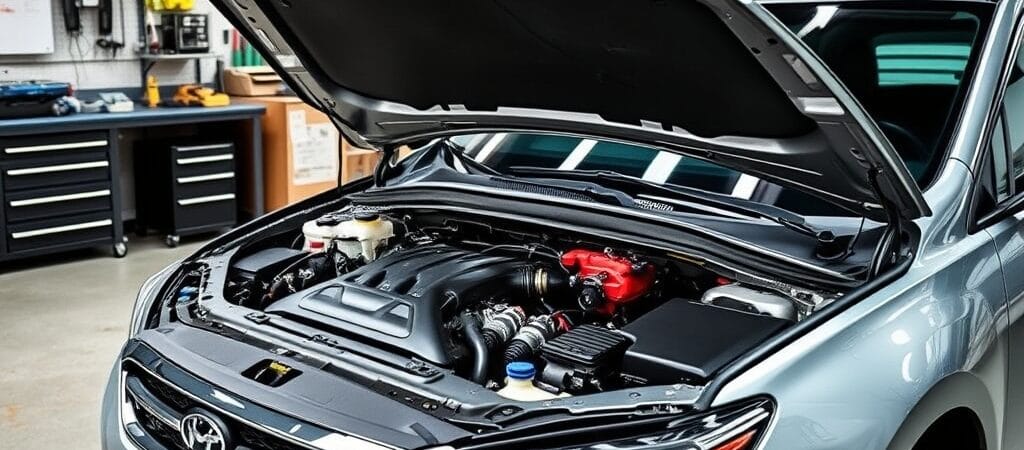
A rough idle means the engine does not run smoothly or consistently while operating at idle speed. You may notice uneven engine operation, fluctuating RPM, misfire-like behavior, stalling, or vibration caused by the engine itself. Because many different ignition, airflow, fueling, control, and mechanical problems can produce similar symptoms, diagnosis should follow a structured process rather than starting with parts replacement. This guide explains how to verify a true rough idle, use DTCs and scan data, inspect likely systems, perform targeted testing, and confirm the repair.
Step 1: Confirm That the Engine Actually Has a Rough Idle
Before diagnosing individual components, confirm that the engine itself is operating unevenly at idle. Vibration felt inside the vehicle does not always mean the engine is running rough; worn engine or transmission mounts can transmit normal engine vibration into the cabin even when engine speed and combustion are stable.
If the engine speed and combustion appear stable but you mainly feel vibration through the steering wheel, seat, or body, see our Engine Shakes at Idle guide to distinguish rough engine operation from mount-related vibration.
Observe Engine Operation and RPM
With the vehicle safely stationary, observe how the engine behaves at idle. Note whether engine speed is unstable, whether the engine sounds uneven, whether it hesitates or threatens to stall, and whether the Check Engine Light or another warning is present. Also note whether the condition occurs when cold, after warm-up, with the A/C operating, or only when the transmission is placed in gear.
Record Related Symptoms
Useful observations may include:
- unstable or fluctuating idle RPM;
- uneven engine operation;
- misfire-like behavior;
- stalling or near-stalling;
- hesitation when moving away from idle;
- Check Engine Light;
- rough operation only when cold or warm;
- changes when additional engine load is applied.
These observations help direct diagnosis but do not identify the failed component by themselves.
Systems That May Need Diagnosis
Once a true rough idle has been confirmed, several systems may require investigation. Which system should be tested first depends on the symptoms, DTCs, scan data, maintenance or repair history, and initial inspection.
Ignition and Misfire Problems
On spark-ignition engines, faults involving spark plugs, ignition coils, wiring, connectors, or related control circuits can cause incomplete combustion and rough idle. Misfire DTCs and cylinder-specific testing can help determine whether an ignition problem is involved.
Do not replace spark plugs or ignition coils based on rough idle alone.
Fueling and Injector Problems
Incorrect fuel delivery or injector operation can affect combustion at idle. Depending on the vehicle, diagnosis may involve evaluating fuel trims, injector operation, fuel pressure, electrical control, or other fuel-system information.
Do not assume that a fuel pump, fuel filter, or injector is faulty without testing the relevant system.
Intake and Unmetered-Air Problems
Air entering through an unintended path can affect idle quality on some engine-management systems. Possible areas include intake hoses, manifold seals, vacuum hoses, PCV-related components, and other intake connections.
Inspection, scan data, smoke testing, or another manufacturer-approved procedure may be used to confirm an intake leak. Avoid using flammable sprays around a running engine to locate leaks.
Airflow, Throttle and Sensor-Input Problems
Engine-management systems rely on multiple inputs to control airflow, fueling, ignition, and idle operation. Incorrect airflow, pressure, temperature, throttle, or other sensor information can contribute to unstable idle on some vehicles.
Compare scan data with actual operating conditions and manufacturer specifications before identifying a sensor as faulty. A suspicious reading may also result from wiring, connections, air leaks, or another system problem.
Mechanical Engine Problems
Low or uneven compression, valve-train faults, incorrect mechanical timing, or other internal engine conditions can cause persistent rough operation. Mechanical testing is generally appropriate when symptoms, DTCs, scan data, abnormal noises, repair history, or earlier diagnostic results point in that direction.
Idle and Electronic-Throttle Control Problems
Idle airflow is controlled differently across vehicle designs. Older systems may use a separate idle-air-control valve, while many newer vehicles control idle through an electronic throttle body and engine-management strategy.
Diagnose the system actually fitted to the vehicle rather than assuming that an IAC valve is present. Depending on the design, diagnosis may involve throttle data, adaptations, deposits, control circuits, or other vehicle-specific checks.
Step-by-Step Rough Idle Diagnosis
When diagnosing a rough idle, following a structured approach is essential for accurate results.
Step 1: Define When the Rough Idle Occurs
Determine whether the condition occurs during cold start, warm idle, only in gear, with the A/C or other loads operating, or continuously. Note engine RPM, warning lights, recent repairs or maintenance, unusual noises, and whether the symptom improves when engine speed is raised slightly.
Step 2: Perform a Basic Visual Inspection
With the engine off and following appropriate safety procedures, inspect accessible intake hoses, vacuum and PCV-related connections, ignition wiring and connectors where applicable, electrical connections, and other components for obvious damage, disconnection, contamination, or signs of previous repair problems.
A visual inspection can reveal useful clues, but appearance alone does not confirm that a component is faulty.
Step 3: Scan for DTCs and Freeze-Frame Data
Retrieve stored and pending DTCs before clearing anything. Record freeze-frame information and check whether misfire, fuel-trim, airflow, throttle, sensor, or other engine-management codes are present.
A DTC identifies a condition detected by the control system; it does not automatically identify the failed component.
If random or multiple-cylinder misfire code P0300 is present, see our P0300 Code guide for a structured diagnostic approach.
Step 4: Review Relevant Live Data
Use scan data to narrow the diagnostic direction. Depending on the vehicle and symptoms, useful parameters may include short- and long-term fuel trims, misfire information, engine RPM, airflow or manifold-pressure data, coolant temperature, throttle information, oxygen or air-fuel sensor data, and other vehicle-specific parameters.
Interpret data as a system rather than condemning a component from one unusual value.
Step 5: Perform Targeted Testing
Use the observations, DTCs, freeze-frame information, live data, and visual inspection to decide which system requires testing. Depending on the evidence, diagnosis may include:
- cylinder-specific ignition or misfire testing;
- intake-leak or smoke testing;
- injector or fuel-system testing;
- airflow or throttle-control diagnosis;
- electrical circuit testing;
- compression or mechanical-timing testing when indicated.
Avoid testing or replacing unrelated components simply because they appear on a general list of possible rough-idle causes.
Step 6: Investigate Mechanical Condition When Indicated
Compression, leak-down, mechanical-timing, or other internal-engine testing may be appropriate when preliminary diagnosis suggests a mechanical problem. Examples include persistent cylinder-specific misfire despite normal ignition and fueling checks, abnormal cranking behavior, unusual mechanical noise, or evidence of incorrect valve timing.
Mechanical testing should follow the correct procedure and specifications for the specific engine.
Repair Only the Confirmed Cause
Repair should follow the diagnostic evidence. Depending on the confirmed fault, this may involve correcting an intake leak, repairing ignition or injector circuits, servicing a confirmed fuel-system problem, repairing wiring or connections, correcting a vehicle-specific throttle or idle-control problem, or addressing a mechanical engine fault.
Do not replace spark plugs, coils, injectors, sensors, fuel pumps, throttle components, or other parts solely because the engine idles roughly.
Verify the Repair
After completing the repair, reproduce the conditions that originally caused the rough idle. Check operation during cold start or warm idle, in gear, with relevant accessory loads, or under other conditions that originally triggered the symptom.
Recheck DTCs and relevant scan data and confirm that the original rough-idle condition does not return. Complete manufacturer-specified relearn or adaptation procedures where required.
Safety Considerations During Rough Idle Diagnosis
Keep hands, clothing, tools, and test leads away from belts, pulleys, cooling fans, and other moving components while the engine is running. Be cautious around hot engine and exhaust components.
Fuel systems may remain pressurized after the engine is switched off, and some direct-injection systems operate at very high pressure. Follow vehicle-specific procedures before opening or testing fuel-system components.
Do not use flammable liquids or sprays around a running engine to search for intake leaks. If the vehicle must be raised, never work underneath it while it is supported only by a jack.
Vehicle-Specific Considerations
Idle-control strategies, normal idle speeds, ignition systems, fuel systems, sensor layouts, fuel-pressure specifications, throttle adaptations, and diagnostic procedures vary significantly between vehicles. Some engines use a separate IAC valve, while others use electronic throttle control.
Use service information for the exact year, make, model, and engine when interpreting scan data, performing tests, or applying specifications. Do not apply universal sensor values, fuel pressures, idle speeds, or repair procedures.
Frequently Asked Questions
What are the common symptoms of a rough idle?
A rough idle may involve uneven engine operation, unstable RPM, misfire-like behavior, stalling or near-stalling, hesitation as the engine leaves idle, or a Check Engine Light. The exact symptoms vary with the underlying cause.
What causes rough idle in engines?
Possible causes include ignition or misfire faults, intake leaks, fueling or injector problems, airflow or throttle-control issues, incorrect sensor inputs, and mechanical engine conditions. Diagnosis is required because the symptom alone does not identify the faulty component.
How can I verify a rough idle problem?
Observe whether the engine itself runs unevenly at idle and record when the symptom occurs. Note RPM behavior, warning lights, cold-versus-warm operation, transmission position, accessory loads, and whether the condition improves when engine speed increases slightly.
What diagnostic tools do I need to check rough idle?
Useful tools may include an OBD-II scan tool, digital multimeter, smoke-testing equipment, fuel-system test equipment, and mechanical test tools depending on the suspected cause. The required equipment varies with the vehicle and diagnostic evidence.
Can rough idle be fixed easily?
It depends on the cause. Some faults may involve a relatively simple connection or intake repair, while others require ignition, fuel-system, electronic-control, or mechanical diagnosis. Confirm the fault before deciding what repair is necessary.
Final Checks
Diagnosing rough idle should begin by confirming that the engine itself is operating unevenly and documenting when the symptom occurs. Retrieve DTCs and freeze-frame information, review relevant live data, inspect accessible components, and perform targeted testing based on the evidence. Do not replace components solely because they are commonly associated with rough idle. Repair the confirmed cause, reproduce the original conditions, and verify that the symptom and related faults do not return.