
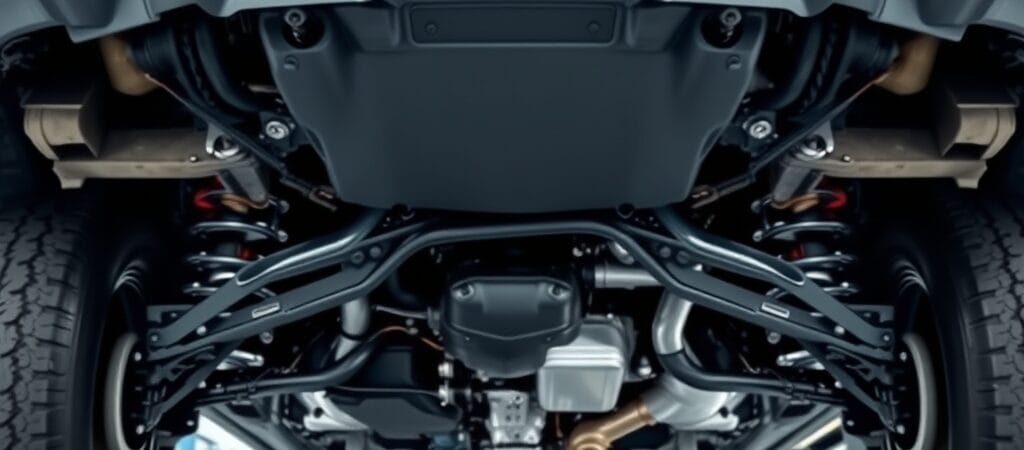
If your car jerks when letting off gas, you may feel a sudden lurch, jolt, or shudder as you release the accelerator. The sensation can come from a normal change in engine braking, but repeated or unusually harsh jerking may indicate a problem with the engine, transmission, mounts, or drivetrain.
The timing of the symptom is an important diagnostic clue. A jolt immediately after releasing the pedal can have different causes from a shudder during a downshift or a vibration that continues while coasting.
This guide explains the possible causes, warning signs, diagnostic checks, and repair options so you can identify the problem before replacing components unnecessarily.
Why Your Car Jerks When Letting Off Gas
When you release the accelerator, engine torque decreases and the vehicle transitions from driving under power to coasting or engine braking.
This change affects the engine, transmission, and drivetrain. Depending on the vehicle, the engine computer may also reduce fuel delivery or adjust throttle operation during deceleration.
A small change in vehicle movement can be normal, particularly in lower gears or at low speeds.
However, a sharp jolt, repeated bucking, or excessive shuddering may indicate that the transition is not occurring smoothly.
Normal Engine Braking vs. Abnormal Jerking
Engine braking occurs when the drivetrain helps slow the vehicle after the accelerator is released.
In a manual-transmission vehicle, engine braking can be particularly noticeable in lower gears. Some automatic transmissions also produce noticeable deceleration as they downshift.
Normal engine braking generally feels predictable and consistent.
Abnormal jerking may involve:
- A sudden, harsh jolt when the accelerator is released
- Repeated bucking during deceleration
- A clunk accompanied by vehicle movement
- Strong vibration during a downshift
- Jerking that becomes progressively worse
- A symptom that was not present previously
The severity, timing, and accompanying symptoms help determine whether further inspection is needed.
Common Symptoms Associated With Jerking During Deceleration
Sudden Jolt After Releasing the Accelerator
The vehicle may lurch immediately when engine torque decreases.
This can occur because of excessive movement in an engine or transmission mount, drivetrain play, or an abrupt change in power delivery.
The sensation alone does not identify the faulty component.
Clunking Noise During Load Changes
A clunk when moving between acceleration and deceleration may indicate excessive movement or clearance somewhere in the drivetrain.
Possible areas include mounts, driveshaft joints, or other driveline components.
The source should be confirmed through inspection.
Shuddering During Downshifts
If jerking occurs at a particular speed as an automatic transmission downshifts, transmission operation may be involved.
However, the symptom may also result from engine-management or drivetrain issues.
Rough Idle or Engine Hesitation
If the engine also runs roughly at idle or hesitates during acceleration, an engine-related fault becomes more relevant.
These symptoms may justify investigating ignition, intake, or fuel-control systems.
Vibration While Coasting
Vibration that continues after releasing the accelerator may be related to rotating drivetrain components, tires, wheels, or other mechanical conditions.
A vibration that depends primarily on road speed should not automatically be attributed to the throttle body.
Common Causes of a Car Jerking When Letting Off Gas
1. Worn Engine or Transmission Mounts
Engine and transmission mounts help control powertrain movement.
When a mount deteriorates, the engine or transmission may move excessively as torque changes.
This movement can create a noticeable jolt when releasing or reapplying the accelerator.
Other possible clues include vibration at idle or a clunk during gear engagement.
A visual inspection and manufacturer-approved movement checks are needed to confirm mount condition.
2. Excessive Drivetrain Backlash
Drivetrain backlash is the clearance between mechanical components that transmit power.
A certain amount of clearance is normal.
Excessive wear in drivetrain joints, splines, or other components may produce a clunk or jolt as the direction of transmitted torque changes.
The components requiring inspection depend on whether the vehicle uses front-wheel drive, rear-wheel drive, or all-wheel drive.
3. Transmission Downshift Problems
An automatic transmission may downshift as the vehicle slows.
If a downshift is unusually harsh, the driver may feel a sudden jolt.
Possible contributing factors include transmission control issues, hydraulic problems, or mechanical wear.
Transmission fluid condition and level may be relevant, but they must be checked using the vehicle manufacturer’s procedure.
Do not assume a fluid change will resolve every deceleration jerk.
4. Torque-Converter Clutch Behavior
On vehicles equipped with a conventional automatic transmission, the torque-converter clutch may engage or release under certain operating conditions.
Abnormal clutch operation can sometimes contribute to shuddering or jerking.
The relationship between vehicle speed, engine speed, transmission gear, and commanded clutch operation can help a qualified technician investigate this possibility.
Not every automatic transmission uses a conventional torque converter.
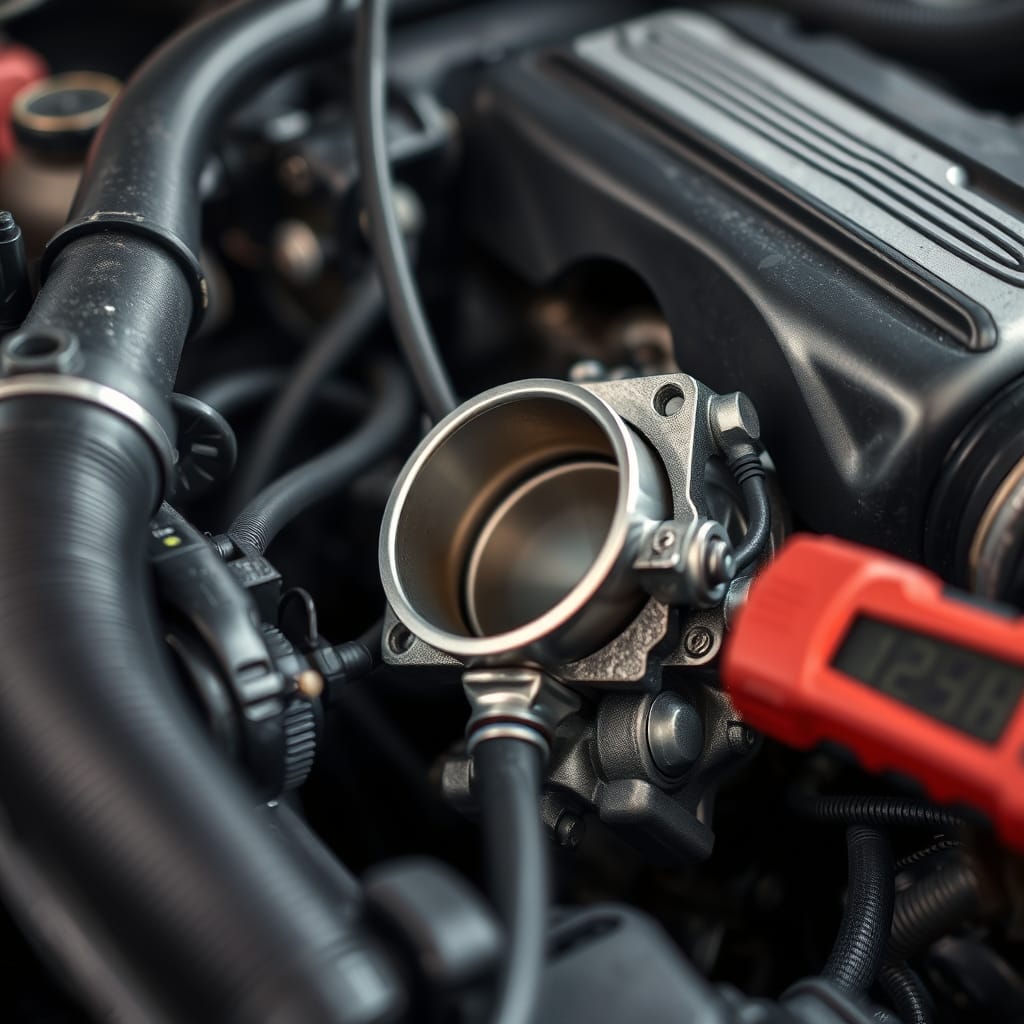
5. Throttle Body or Electronic Throttle Control Problems
The throttle system controls engine airflow.
If throttle operation is inconsistent, the engine may respond abruptly during changes in accelerator position.
Possible issues include contamination, a sticking mechanism, wiring problems, or an electronic throttle control fault.
However, a dirty throttle body is not automatically the cause of jerking during deceleration.
Inspect and test the system before cleaning or replacing components.
6. Engine Misfires
An engine misfire can create hesitation, vibration, or jerking.
Possible causes include ignition-system faults, fuel-delivery problems, or mechanical engine issues.
Misfires are particularly relevant when jerking is accompanied by rough idle, hesitation, or a flashing check engine light.
For an example of how a misfire code should be diagnosed, see our P0301 Code guide.
7. Intake Air Leaks
Unmetered air entering the engine can interfere with fuel control and idle stability.
Depending on the engine and operating conditions, an intake air leak may contribute to hesitation or unstable engine behavior when the accelerator is released.
However, an intake leak is not a universal cause of deceleration jerking.
Confirm the problem using appropriate inspection and testing methods.
8. Fuel-Delivery Problems
Fuel-pressure or injector problems may cause inconsistent engine performance.
These faults are more relevant when jerking also occurs during acceleration, idle, or steady-speed operation.
Testing fuel injectors solely because the vehicle jerks when releasing the accelerator is not a reliable diagnostic approach.
9. Manual-Transmission and Clutch-Related Issues
On manual-transmission vehicles, abrupt clutch engagement, driveline play, or clutch-related mechanical problems can contribute to jerking.
Driving technique and gear selection can also affect the sensation of engine braking.
A symptom that persists despite smooth operation or is accompanied by abnormal noises warrants inspection.
How to Diagnose a Car That Jerks When Letting Off Gas
A systematic approach helps distinguish engine-management faults from transmission or drivetrain problems.
Step 1: Verify When the Jerking Occurs
Start by recording the circumstances in which the symptom appears.
Important questions include:
- Does the jolt happen immediately after releasing the accelerator?
- Does it occur only at low speeds?
- Does it happen during a transmission downshift?
- Is there a clunking noise?
- Does the vehicle jerk when accelerating again?
- Is the symptom present when the engine is cold or warm?
- Are any warning lights illuminated?
Avoid attempting to reproduce severe or unpredictable jerking on public roads.
If the vehicle is difficult to control, arrange professional inspection rather than continuing to drive it.
Step 2: Identify the Type of Symptom
Determine whether the driver is experiencing:
- A single jolt during a torque change
- Repeated engine bucking
- A downshift shudder
- A mechanical clunk
- Continuous vibration while coasting
This distinction is important.
A single clunk may suggest a different diagnostic direction from repeated engine misfires.
Step 3: Inspect Simple Mechanical Causes
With the vehicle parked securely and the engine switched off, inspect accessible components for obvious problems.
Look for:
- Damaged engine or transmission mounts
- Loose or visibly damaged intake hoses
- Disconnected electrical connectors
- Damaged wiring
- Obvious fluid leaks
- Visible damage to accessible drivetrain components
Do not work beneath a vehicle supported only by a jack.
Avoid touching hot or moving components.
Step 4: Scan for Diagnostic Trouble Codes
Use an appropriate scan tool to check for stored, pending, and relevant manufacturer-specific diagnostic codes.
Possible areas of interest include:
- Engine misfire detection
- Electronic throttle control
- Airflow and fuel management
- Transmission control
- Related sensor circuits
Record freeze-frame information where available.
For guidance on interpreting diagnostic trouble codes, see our How to Read OBD2 Codes guide.
A vehicle can have a mechanical drivetrain problem without storing an OBD-II code.
Step 5: Review Relevant Live Data
Depending on the vehicle and available scan-tool functions, useful data may include:
- Engine speed
- Vehicle speed
- Accelerator pedal position
- Throttle position
- Engine load
- Misfire information
- Fuel-control data
- Transmission gear information
- Torque-converter clutch status
Compare the data with the timing of the symptom.
Live data can provide clues, but an unusual reading must be interpreted in the context of the vehicle’s operating strategy.
Step 6: Inspect Engine and Transmission Mounts
If the symptom includes a clunk or pronounced movement during torque changes, inspect the powertrain mounts.
Look for damaged rubber, separation, broken brackets, or other evidence of deterioration.
Use manufacturer-approved procedures to evaluate mount movement.
Excessive movement should be confirmed before replacing a mount.
Step 7: Investigate the Drivetrain
If a mechanical clunk is present, inspect the relevant driveline components.
Depending on the vehicle, these may include:
- Constant-velocity joints
- Driveshaft joints
- Differential mounting components
- Propeller shaft connections
- Other drivetrain couplings
Follow vehicle-specific procedures for checking excessive play or damage.
Do not attempt drivetrain inspections beneath an unsecured vehicle.
Step 8: Evaluate Transmission Operation
If jerking coincides with a downshift, investigate transmission operation.
A qualified technician may compare commanded gear changes with actual vehicle behavior and review relevant transmission data.
Fluid inspection, hydraulic testing, or mechanical checks should follow manufacturer specifications.
Do not replace transmission components based solely on the sensation of jerking.
Step 9: Test Engine-Management Components When Indicated
If diagnostic evidence points toward engine operation, investigate the appropriate system.
Possible tests may involve:
- Throttle control operation
- Intake air leaks
- Ignition performance
- Fuel delivery
- Related sensor circuits
Choose tests based on symptoms, trouble codes, and live data.
Avoid replacing spark plugs, ignition coils, injectors, or throttle components without confirming the fault.
Repair Options After Diagnosis
The correct repair depends on the confirmed cause.
Repair or Replace Worn Mounts
If testing confirms a damaged engine or transmission mount, replace the affected component according to manufacturer instructions.
Check related brackets and mounting hardware for damage.
Repair Drivetrain Components
If excessive play or damage is confirmed in a drivetrain joint or coupling, repair or replace the affected component using the correct service procedure.
Address Confirmed Transmission Faults
Transmission repairs may involve electrical, hydraulic, control, or mechanical work.
The required repair should follow the specific diagnostic findings.
Service the Throttle System When Necessary
If inspection confirms throttle contamination or another throttle-control problem, follow the manufacturer-approved cleaning, repair, or replacement procedure.
Some electronic throttle systems require additional adaptation or relearn procedures.
Repair Confirmed Engine Faults
If misfires, intake leaks, or fuel-control problems are verified, repair the affected system.
Afterward, confirm that engine operation is stable and that the deceleration jerk has been resolved.
How to Verify the Repair
After completing the confirmed repair:
- Inspect the repaired components and connections.
- Confirm that any relevant fluid levels and service adjustments meet manufacturer specifications.
- Check for remaining diagnostic trouble codes.
- Review relevant live data if needed.
- Perform a controlled verification drive only when the vehicle is safe to operate.
- Compare the original symptom with the vehicle’s behavior after repair.
- Confirm that no abnormal clunks, jolts, or related symptoms remain.
If the symptom persists, continue diagnosis rather than replacing additional parts without evidence.
Safety Considerations
Jerking during deceleration can affect vehicle control, especially if it is severe or unpredictable.
Stop driving and arrange professional inspection if:
- The vehicle jerks violently or becomes difficult to control.
- The accelerator or throttle appears to stick.
- The engine repeatedly stalls in traffic.
- A flashing check engine light accompanies severe misfiring.
- There are significant drivetrain noises or signs of mechanical failure.
- Transmission engagement becomes unpredictable.
Do not conduct aggressive road tests to reproduce the problem.
When inspecting mechanical components, use suitable tools and approved lifting equipment.
Never work beneath a vehicle supported only by a jack.
Keep clear of rotating parts, hot exhaust components, and energized high-voltage systems on hybrid and electric vehicles.
Vehicle-Specific Considerations
The causes of jerking during deceleration vary by vehicle design.
A manual-transmission vehicle may respond differently from a conventional automatic, continuously variable transmission, or dual-clutch transmission.
Hybrid and electric vehicles may also change regenerative braking or motor torque when the accelerator is released.
A change in deceleration feel can be normal for a particular operating mode, but an unexpected or harsh jolt still warrants investigation.
Use the manufacturer’s service information to determine normal behavior, diagnostic procedures, and component specifications.
Frequently Asked Questions
Why does my car jerk when I let off the gas?
Possible causes include worn engine mounts, excessive drivetrain play, transmission downshift problems, throttle-control issues, or engine misfires.
The timing and characteristics of the jerk help identify the appropriate diagnostic tests.
Is it normal for a car to jerk during engine braking?
A mild, predictable change in deceleration can be normal.
However, repeated bucking, a harsh jolt, or an unusual clunk should be investigated.
Can bad engine mounts cause jerking when releasing the accelerator?
Yes. Worn mounts can allow excessive powertrain movement when engine torque changes.
Inspection is necessary to confirm whether the mounts are responsible.
Can a transmission cause jerking during deceleration?
Yes. Harsh downshifts or certain transmission-control problems can cause noticeable jolts.
However, the transmission should not be blamed without supporting diagnostic evidence.
Can a dirty throttle body cause jerking?
In some vehicles, throttle contamination may contribute to inconsistent engine response.
Cleaning is appropriate only when inspection and manufacturer guidance support it.
Can I keep driving if my car jerks when I let off the gas?
A mild symptom may not require immediate stopping, but it should be investigated.
If the jerking is severe, unpredictable, or accompanied by stalling, abnormal drivetrain noises, or loss of control, stop driving and arrange professional inspection.
How do I diagnose jerking when releasing the accelerator?
Start by identifying when the symptom occurs, checking for obvious mechanical problems, scanning for diagnostic codes, and performing targeted tests based on the findings.
Will replacing spark plugs fix the problem?
Only if testing confirms that worn or defective spark plugs are contributing to the symptom.
Jerking during deceleration can have several causes unrelated to ignition components.
Final Checks
If your car jerks when letting off gas, first determine whether the sensation is normal engine braking or an abnormal change in engine or drivetrain behavior.
Pay attention to the timing of the jolt, any accompanying noises, and whether the symptom occurs during a transmission downshift.
Inspect accessible components, review relevant diagnostic data, and test the systems supported by the evidence.
Repair only the confirmed cause and verify that the vehicle operates smoothly afterward.