
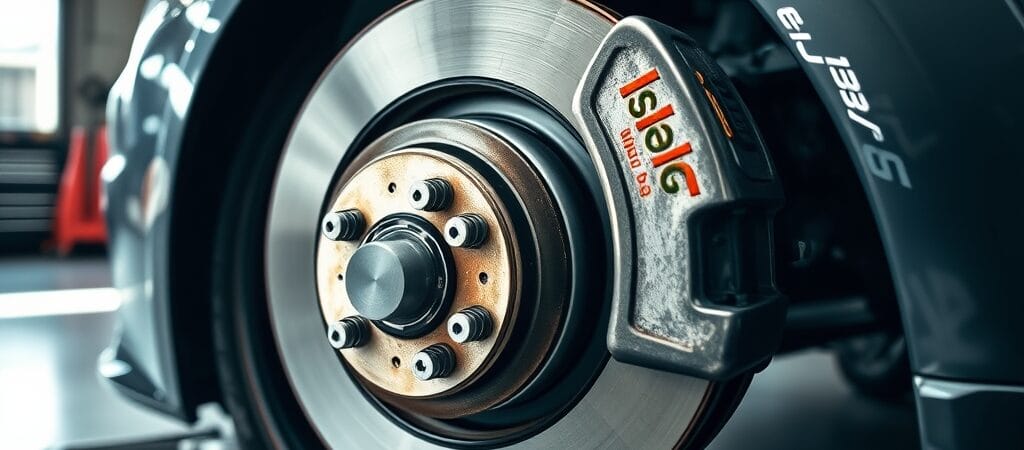
Brake caliper sticking symptoms can include a burning smell near a wheel, unusual brake heat, uneven brake pad wear, pulling to one side, and a vehicle that feels harder to accelerate.
These symptoms may occur when a brake caliper, its sliding hardware, or a related hydraulic component prevents the brake pads from releasing normally after braking.
A sticking caliper can create continuous friction between the brake pads and rotor. If the condition becomes severe, it may overheat the brakes, damage components, and reduce braking safety.
However, these symptoms do not automatically confirm a defective caliper. Brake hoses, pad hardware, wheel bearings, and other brake-system problems can produce similar complaints.
This guide explains the warning signs, possible causes, diagnostic steps, and repair considerations for a suspected sticking brake caliper.
Brake Caliper Sticking Symptoms to Watch For
1. Burning Smell Near a Wheel
A burning smell after driving can be an important warning sign of brake drag.
When brake pads remain in contact with a rotating rotor, friction generates heat. This may produce a hot or burning odor, particularly after a longer drive.
The smell may be more noticeable near one wheel.
However, a burning odor can also result from other overheated components. The source must be confirmed before assuming the caliper is responsible.
If you notice smoke, a strong burning smell, or signs of severe overheating, stop in a safe location and avoid continuing to drive.
2. Excessive Heat at One Wheel
A sticking caliper may cause one brake assembly to become significantly hotter than comparable brakes after similar operating conditions.
This can happen when the pads continue rubbing against the rotor after the brake pedal is released.
Uneven brake temperatures can provide a useful diagnostic clue, but they are not proof of a seized caliper.
Normal temperature differences may result from braking distribution, vehicle design, driving conditions, or other mechanical problems.
Never touch a wheel, rotor, or caliper to determine whether it is hot. Brake components can cause serious burns.
A qualified technician can compare temperatures using suitable equipment and a controlled diagnostic procedure.
3. Vehicle Pulling to One Side
A vehicle may pull to one side while braking or, in some cases, while driving without pressing the brake pedal.
A dragging brake can create resistance at one wheel and affect how the vehicle tracks.
However, pulling during braking may also occur when a brake on the opposite side produces insufficient braking force.
Tire problems, alignment issues, and suspension faults can cause similar symptoms.
The direction of the pull alone does not identify which caliper is defective.
4. Uneven Brake Pad Wear
Uneven pad wear is another important symptom.
A sticking caliper piston, seized slide pin, or binding brake pad may prevent normal pad movement.
Possible findings include:
One brake pad worn more than the other
One wheel’s pads wearing faster than those on the opposite side
Uneven friction-material thickness
Signs of excessive heat or glazing
Abnormal wear patterns on the rotor
The wear pattern can help guide diagnosis, but it must be interpreted in relation to the caliper design.
Do not assume every unevenly worn pad indicates a defective caliper piston.
5. Reduced Acceleration or Increased Resistance
A dragging brake creates additional resistance while the vehicle is moving.
Drivers may notice that the vehicle feels sluggish, requires more accelerator input, or does not coast as freely as expected.
Fuel consumption may also increase if brake drag is persistent.
These symptoms are not unique to sticking calipers, so other possible causes should be considered.
6. Unusual Brake Noises
A sticking caliper or binding pad may contribute to squealing, scraping, or grinding noises.
Noise can occur when a pad remains in contact with the rotor or when related brake hardware is damaged.
However, similar noises can result from worn brake pads, debris, damaged rotors, or other brake components.
Grinding noises, especially when accompanied by reduced braking performance, require prompt inspection.
7. Vibration or Shaking During Braking
Some vehicles with brake drag may also develop vibration or pulsation.
Excessive heat and uneven brake wear can contribute to conditions associated with brake vibration.
However, steering-wheel vibration does not specifically identify a sticking caliper.
Rotor thickness variation, runout, suspension problems, and other faults may also be involved.
For a more detailed explanation of this symptom, see our Car Shakes When Braking guide.
8. Brake Pedal or Braking Performance Changes
Depending on the underlying problem, a driver may notice unusual braking behavior.
This could include inconsistent braking response, a change in pedal feel, or a vehicle that does not slow down as expected.
These symptoms require careful assessment because they can also indicate hydraulic faults unrelated to a sticking caliper.
A soft pedal, significant loss of braking force, or other serious braking abnormalities should be treated as urgent safety concerns.
What Causes a Brake Caliper to Stick?
Corroded or Seized Slide Pins
Floating calipers use sliding hardware that allows the caliper to move as the brakes are applied and released.
Corrosion, damaged protective boots, or inadequate lubrication may restrict this movement.
The result can be uneven pad contact, abnormal wear, or brake drag.
Not all calipers use the same sliding arrangement, so the correct inspection procedure depends on the design.
Sticking Caliper Piston
A caliper piston may fail to retract normally because of internal corrosion, seal deterioration, contamination, or mechanical damage.
This can leave the brake pads applying excessive friction after the driver releases the pedal.
A piston that does not move correctly should be evaluated using the manufacturer’s service procedure.
Binding Brake Pads or Damaged Hardware
Brake pads must be able to move as intended within their mounting hardware.
Corrosion buildup, damaged clips, incorrect parts, or improper installation can cause pads to bind.
A binding pad may create symptoms similar to a seized caliper.
Internally Restricted Brake Hose
A flexible brake hose can sometimes become internally damaged or restricted.
In certain cases, hydraulic pressure may reach the caliper during braking but fail to release normally.
This can keep the brake applied even when the caliper piston and sliding hardware are otherwise serviceable.
A restricted hose is an important alternative diagnosis when a brake remains engaged.
Testing hydraulic pressure and determining whether it releases correctly should be performed by a qualified technician.
Brake Fluid Contamination or Internal Corrosion
Moisture or contamination in brake fluid may contribute to corrosion and deterioration of hydraulic components.
However, discolored brake fluid alone does not prove that a caliper is sticking.
Follow the manufacturer’s brake-fluid type and replacement requirements.
Incorrect Installation or Previous Repairs
Improperly installed pads, incorrect hardware, damaged components, or mistakes during earlier brake work may prevent normal movement.
Always consider recent repairs when investigating new brake drag or uneven pad wear.
Parking Brake Mechanism Problems
Some rear brake calipers incorporate a mechanical or electronic parking brake mechanism.
A malfunction in this system can cause rear brake drag.
Electronic parking brake systems may require a manufacturer-approved service mode before certain repair operations.
How to Diagnose a Sticking Brake Caliper
A reliable diagnosis should distinguish mechanical binding from trapped hydraulic pressure and other brake-system faults.
Step 1: Verify the Symptoms
Record when the complaint occurs.
Useful questions include:
Does the vehicle pull while braking or while cruising?
Is the burning smell present after short or long drives?
Does the problem occur only after repeated braking?
Has brake work recently been performed?
Is one wheel showing unusual pad wear or heat?
If the brakes are smoking, severely overheated, or no longer functioning normally, do not continue road testing.
Step 2: Perform a Safe Visual Inspection
Once the vehicle is safely parked and the brakes have cooled, inspect accessible components.
Look for:
Damaged brake hoses
Fluid leaks
Torn caliper dust boots
Corroded hardware
Uneven pad wear
Heat discoloration
Damaged or incorrectly installed components
A visual inspection can reveal useful evidence but may not establish the root cause.
Step 3: Compare Brake Conditions
A qualified technician may compare brake temperatures and pad wear across comparable wheels.
Temperature measurements must be interpreted carefully because different brakes may operate under different loads.
An unusually hot brake can indicate drag, but the cause still needs to be identified.
Step 4: Inspect Caliper Movement and Pad Hardware
With the vehicle safely supported and the brake assembly accessible, a qualified technician can inspect the caliper’s sliding hardware, pad fit, and piston operation.
The inspection should determine whether:
Slide pins move as specified
Brake pads are free to move correctly
Mounting hardware is damaged
The caliper piston operates normally
The parking brake mechanism releases fully, where applicable
Do not force components or use unapproved methods to retract a piston.
Step 5: Investigate Possible Hydraulic Pressure Retention
If the brake remains applied despite normal mechanical movement, the technician may need to determine whether hydraulic pressure is being retained.
Potential causes can include an internally restricted brake hose or another hydraulic control problem.
This work requires appropriate equipment and vehicle-specific procedures.
Opening a hydraulic brake circuit without the correct procedure can introduce air, release fluid, and compromise braking performance.
Step 6: Check for Related Electronic Faults When Relevant
On vehicles with ABS, electronic parking brakes, or integrated brake-control systems, a suitable diagnostic scanner may provide additional information.
If the ABS warning light is illuminated, see our ABS Light On guide to understand possible causes and the diagnostic checks involved.
However, a mechanically sticking caliper often does not produce a diagnostic trouble code.
The absence of fault codes does not rule out brake drag.
Step 7: Confirm the Root Cause
Review the physical findings and any required hydraulic or electronic tests.
Determine whether the issue involves:
Seized slide pins
Binding brake pads
A sticking caliper piston
A restricted brake hose
A parking brake mechanism
Another confirmed brake-system fault
Only proceed with the repair supported by the diagnostic evidence.
Repair Options After Diagnosis
Service Confirmed Binding Slide Pins
If the slide pins are dirty or binding but remain serviceable, cleaning and applying the specified brake-compatible lubricant may restore normal movement.
Replace damaged pins, boots, or hardware as required.
Do not apply general-purpose grease or lubricant to brake friction surfaces.
Replace Damaged or Binding Pad Hardware
If the pads or their mounting hardware are binding, correct the confirmed problem using compatible components.
Inspect the pads and rotors for damage caused by excessive heat or abnormal wear.
Replace a Defective Caliper
If a caliper piston is seized, leaking, severely corroded, or otherwise unserviceable, caliper replacement may be necessary.
Some calipers may be rebuildable under approved procedures, depending on their design and condition.
Do not replace the entire caliper solely because a wheel is hot.
Replace a Confirmed Restricted Brake Hose
If diagnosis confirms an internal hose restriction, replace the affected hose according to the manufacturer’s requirements.
The brake hydraulic system must then be serviced and bled using the correct procedure.
Repair Parking Brake Problems
If the parking brake mechanism is responsible, follow the vehicle-specific repair and adjustment procedure.
Electronic parking brake systems may require diagnostic equipment and a service mode.
Inspect Heat-Damaged Brake Components
Persistent brake drag can damage pads, rotors, seals, and nearby components.
Inspect the affected brake assembly for overheating and replace components that no longer meet service requirements.
How to Verify the Brake Repair
Brake repairs require more than confirming that the original noise or smell has disappeared.
After repair, a qualified technician should:
Confirm that the repaired components are installed correctly.
Use the manufacturer’s torque specifications.
Verify that brake hoses and wiring are routed correctly.
Complete any required hydraulic bleeding or electronic service procedures.
Check brake-fluid level and inspect for leaks.
Confirm correct brake-pedal feel and braking response.
Verify that the affected brake releases normally.
Perform an appropriate controlled road test when the vehicle is safe.
Recheck for abnormal drag, heat, noise, or pulling.
Do not return the vehicle to normal road use until braking operation has been verified.
Safety Considerations When Inspecting Brakes
Brake-system faults can affect vehicle control and stopping distance.
Follow these precautions:
Do not continue driving if the brakes are smoking, severely overheating, or losing effectiveness.
Never touch a hot wheel, rotor, or caliper to assess temperature.
Allow overheated brakes to cool before inspection.
Never work under a vehicle supported only by a jack.
Use appropriate lifting equipment and designated support points.
Wear eye protection and suitable gloves.
Avoid inhaling brake dust or cleaning it with compressed air.
Do not contaminate brake pads or rotors with lubricants.
Do not open hydraulic brake lines without the correct equipment and service procedure.
Follow electronic parking brake service instructions where applicable.
If braking performance is uncertain, arrange professional inspection or vehicle recovery rather than driving.
Vehicle-Specific Considerations
Brake caliper designs and service procedures vary.
Some vehicles use floating calipers, while others use fixed multi-piston designs.
Rear calipers may incorporate mechanical or electronic parking brake mechanisms.
Torque specifications, lubrication points, hydraulic bleeding procedures, and brake component replacement requirements also differ.
Always consult manufacturer-specific service information before disassembly, repair, or final verification.
Frequently Asked Questions
What are the most common brake caliper sticking symptoms?
Common signs include a burning smell near a wheel, excessive brake heat, uneven pad wear, pulling, unusual brake noises, and increased resistance while driving.
These symptoms suggest a possible brake drag problem but do not independently confirm a defective caliper.
Can a sticking brake caliper cause a burning smell?
Yes. Continuous pad-to-rotor friction can generate excessive heat and produce a burning odor.
If the smell is strong or accompanied by smoke, stop safely and have the brakes inspected.
Can a sticking caliper make the car pull to one side?
Yes. Uneven braking force or brake drag can cause pulling.
However, the direction of the pull alone does not identify the faulty component or side.
Can a sticking brake caliper cause vibration?
It may contribute to vibration through brake drag, overheating, or abnormal wear.
Other causes, including rotor thickness variation and suspension problems, must also be considered.
How can I tell whether a brake caliper is stuck?
Look for a combination of symptoms such as unusual heat, uneven pad wear, brake drag, and pulling.
A qualified inspection is needed to distinguish a seized piston or slide pin from a restricted brake hose or other fault.
Can a brake hose cause symptoms similar to a sticking caliper?
Yes. An internally restricted flexible brake hose can sometimes retain hydraulic pressure and prevent the brake from releasing normally.
This condition can resemble a seized caliper.
Is it safe to drive with a sticking brake caliper?
Driving with a suspected sticking caliper can be unsafe, particularly if the brake overheats or the vehicle pulls.
If there is smoke, severe heat, significant pulling, or reduced braking performance, stop driving and arrange professional assistance.
Does a sticking caliper always need replacement?
No. The correct repair depends on the confirmed cause.
Binding slide pins or pad hardware may be serviceable, while a damaged piston or severely corroded caliper may require replacement.
Final Checks
Brake caliper sticking symptoms should be investigated promptly because persistent brake drag can lead to overheating, uneven pad wear, rotor damage, and unsafe braking behavior.
The most useful clues include abnormal heat, a burning smell, uneven pad wear, pulling, and resistance while driving.
However, these symptoms do not automatically establish that the caliper itself is defective.
A proper diagnosis should distinguish mechanical binding from hydraulic pressure retention and other brake-system problems.
Repair the confirmed cause, inspect any heat-damaged components, and verify safe braking operation before returning the vehicle to normal use.