
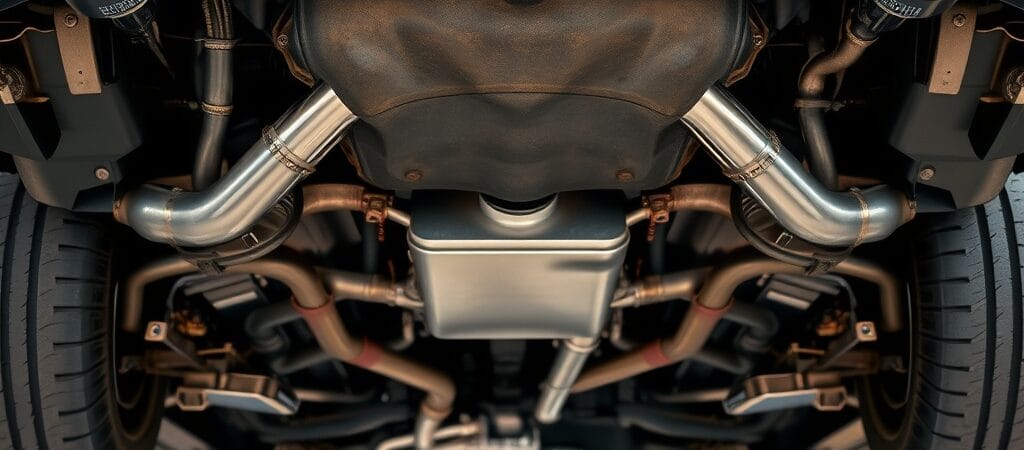
If your car loses power and you suspect a clogged exhaust, an exhaust restriction is one possible cause—but power loss alone does not prove that the exhaust system is blocked. Restricted flow through a catalytic converter, muffler, damaged pipe, or another exhaust component can affect engine performance, but ignition, fuel-delivery, intake, sensor, and mechanical problems can produce similar symptoms. Diagnose the restriction before replacing exhaust components.
Why an Exhaust Restriction Can Cause Power Loss
The engine must expel exhaust gases efficiently as part of normal operation. A significant restriction in the exhaust system can increase exhaust backpressure and interfere with the engine’s ability to move air through the cylinders, particularly as engine load and speed increase.
This can contribute to poor acceleration, reduced power, or other drivability problems. However, these symptoms are not unique to a clogged exhaust. Confirm that an exhaust restriction actually exists before deciding that the catalytic converter, muffler, or exhaust piping is responsible.
Recognizing Symptoms of a Clogged Exhaust System
Decreased Acceleration and Power
A significant exhaust restriction can cause the vehicle to feel increasingly weak during acceleration or under load because the engine cannot expel exhaust gases efficiently. The symptom may become more noticeable as engine speed or load increases. Similar power loss can also result from fuel, ignition, intake, sensor, transmission, or mechanical problems, so acceleration behavior alone cannot confirm an exhaust restriction.
Hesitation or Poor Performance Under Load
An exhaust restriction may contribute to hesitation, poor acceleration, or difficulty maintaining performance under load. However, hesitation and stuttering are also common with misfires, fuel-delivery faults, intake problems, and other engine-management conditions. Check for supporting diagnostic evidence rather than attributing these symptoms to the exhaust system alone.
Changes in Fuel Economy
Some faults associated with poor engine performance or exhaust-system problems may also coincide with increased fuel consumption. Fuel economy, however, is affected by many mechanical, operating, and environmental factors and should be treated as supporting information rather than evidence that the exhaust is clogged.
Excessive Exhaust Backpressure
A significant exhaust restriction can produce higher-than-normal exhaust backpressure. This is a measurable diagnostic condition rather than a symptom that can be confirmed from driver observations alone. Excessive exhaust temperatures or other abnormal operating conditions may accompany some restrictions, but do not assume that engine overheating, warped cylinder heads, or gasket damage was caused by exhaust backpressure without supporting diagnosis.
Unusual Exhaust Noises
Rattling, hissing, or other abnormal exhaust noises can provide useful clues. A rattle may indicate loose material or a damaged component, while hissing can occur with an exhaust leak or other flow problem. Noise alone cannot determine whether the exhaust is internally restricted.
Common Causes of Exhaust Restriction
Restricted or Damaged Catalytic Converter
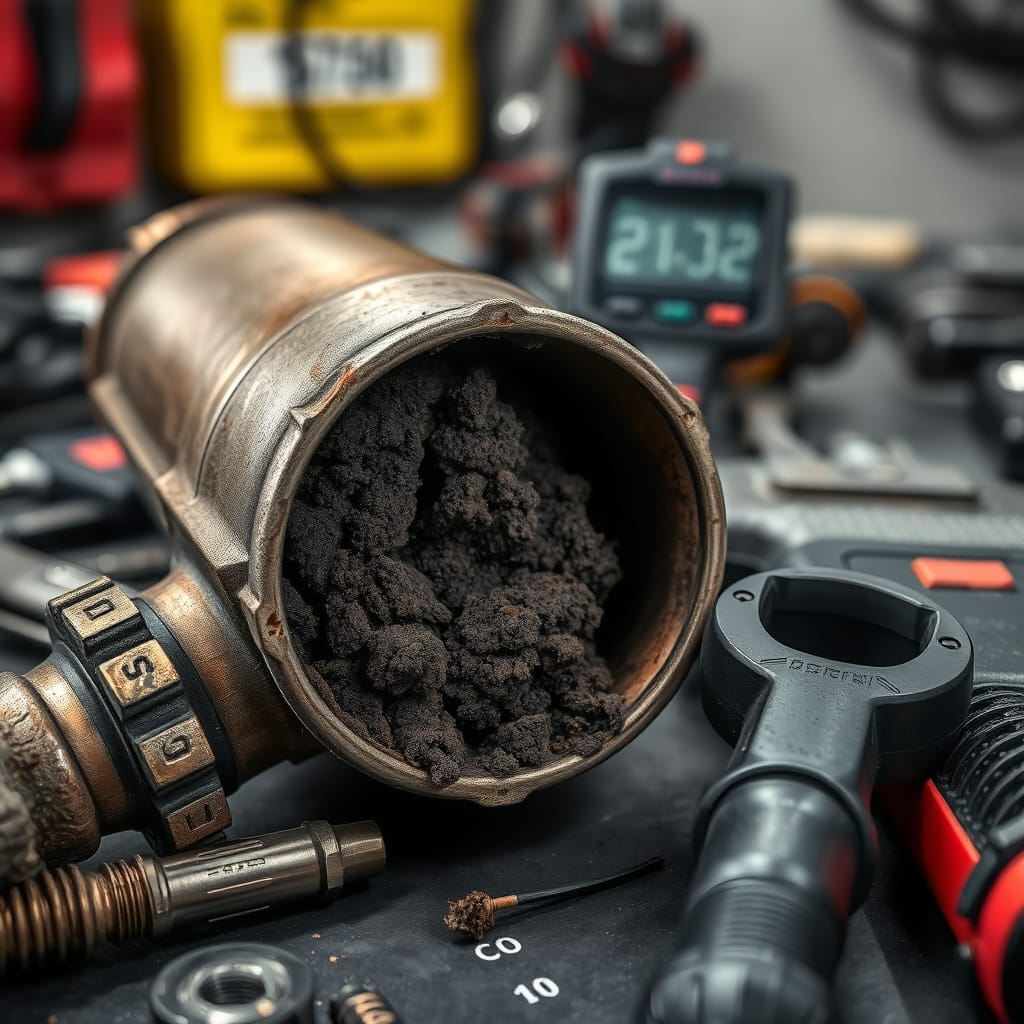
A catalytic converter can become physically restricted or internally damaged, reducing exhaust flow. However, converter damage may be the result of another engine problem rather than the original fault. Persistent misfires, abnormal fuel control, oil consumption, coolant entering the combustion process, or other conditions can damage or contaminate a converter.
Diagnose both the restriction and any underlying cause before replacing the converter.
For more detail on distinguishing converter-related symptoms from other engine problems, see our Bad Catalytic Converter Symptoms guide.
Internally Damaged or Restricted Muffler
Internal muffler damage, collapsed material, corrosion, or another obstruction can restrict exhaust flow in some cases. Because external appearance may not reveal an internal restriction, further testing may be required when the diagnostic evidence points toward the muffler.
Damaged or Restricted Exhaust Pipes
Exhaust piping can become restricted if it is crushed, severely deformed, internally damaged, or obstructed. Inspect the system for impact damage, collapsed sections, abnormal bends, or other visible problems, but confirm that any observed damage actually affects exhaust flow before treating it as the cause of the power loss.
Other Causes of Similar Power-Loss Symptoms
Power loss does not automatically indicate an exhaust restriction. Misfires, incorrect fuel delivery, intake restrictions, boost-control problems on turbocharged engines, sensor faults, transmission problems, and mechanical engine conditions can produce similar complaints.
Use the vehicle’s symptoms, DTCs, scan data, inspection results, and targeted tests to determine which system should be investigated rather than replacing exhaust components based only on the way the vehicle drives.
Diagnosing Power Loss Due to Exhaust Issues
Verify the Power-Loss Complaint
Determine exactly when the power loss occurs—for example, during acceleration, at higher engine speed, under heavy load, or across all operating conditions. Note warning lights, unusual noises, misfire symptoms, abnormal exhaust behavior, and any recent repairs or events.
A road test may help reproduce the complaint when the vehicle can be driven safely, but avoid heavy-load testing if severe misfiring, overheating, abnormal exhaust temperatures, or another condition makes continued operation unsafe.
Inspect for Visible Problems
With the exhaust system cool, inspect accessible exhaust pipes, connections, the catalytic-converter area, muffler, and related components for crushing, impact damage, corrosion, loose parts, or other visible abnormalities. Also inspect for exhaust leaks that could affect diagnostic results.
If the symptoms do not clearly point toward an exhaust restriction, consider other likely causes of power loss before continuing with exhaust-specific testing.
Scan for DTCs and Relevant Data
Scan the vehicle for diagnostic trouble codes and review freeze-frame and relevant live data. Misfire, fuel-control, oxygen-sensor, air-measurement, boost, or catalyst-related DTCs may provide useful direction depending on the vehicle.
A DTC does not prove that the exhaust is restricted or that a catalytic converter has failed. Diagnose the condition reported by the code and evaluate it together with other test results.
See our How to Read OBD2 Codes guide for the correct diagnostic approach to trouble codes.
Measure Exhaust Backpressure When Appropriate
Exhaust backpressure testing can provide direct evidence of a restriction when performed correctly. The test location, procedure, operating conditions, and acceptable pressure depend on the vehicle and engine.
Compare measurements with manufacturer-specific service information rather than relying on a universal pressure threshold. If excessive backpressure is confirmed, additional testing may be needed to determine whether the restriction is in the catalytic converter, muffler, piping, or another part of the exhaust system.
Locate the Restriction
Once testing supports the presence of excessive exhaust restriction, determine where that restriction is located. Depending on the vehicle and available equipment, diagnosis may involve pressure measurements at different points in the exhaust, inspection of damaged components, scan-data analysis, or other manufacturer-recommended procedures.
Temperature measurements around a catalytic converter can provide supporting information about exhaust-system operation, but inlet-to-outlet temperature differences alone do not prove that the converter is clogged or failed. Interpret temperature data together with backpressure measurements, engine operating conditions, DTCs, fuel-control information, and other diagnostic evidence.
Repair Options for Clogged Exhaust Systems
Repair a Confirmed Converter or Muffler Restriction
If diagnosis confirms that a catalytic converter or muffler is physically restricted or internally damaged, repair or replace the affected component according to vehicle-specific procedures and applicable emissions requirements.
Before replacing a catalytic converter, diagnose conditions that may have caused or contributed to the damage—such as persistent misfires, abnormal fuel control, oil consumption, or coolant entering the combustion process—so the replacement component is not exposed to the same unresolved fault.
Repair Confirmed Exhaust-Pipe Damage
Repair or replace exhaust piping when inspection and testing confirm that crushing, collapse, internal damage, or another defect is restricting flow or creating another relevant exhaust problem. Follow manufacturer-specific repair procedures and maintain the original emissions-system configuration.
Verify the Repair
After repairing the confirmed restriction or related fault, clear DTCs only when appropriate and reproduce the original operating conditions safely. Confirm that engine power has returned, the restriction measurement is within the vehicle-specific specification when applicable, and relevant scan data behaves normally.
Verify that no unresolved misfire, fuel-control, oil-consumption, coolant-entry, or other underlying condition remains that could damage the repaired exhaust system.
Safety Considerations When Diagnosing Exhaust Problems
Allow exhaust components to cool before touching or removing them because catalytic converters, manifolds, pipes, and related components can reach temperatures capable of causing severe burns.
Never work beneath a vehicle supported only by a jack. Use manufacturer-approved lifting points and properly rated support equipment on a stable surface.
When the engine must run for diagnosis, work in a properly ventilated area and route exhaust gases safely away from occupied spaces. Keep hands, clothing, wiring, and test equipment away from moving or hot components.
Follow vehicle-specific procedures when removing sensors or installing exhaust-pressure test equipment, and do not modify or bypass required emissions-control components.
Vehicle-Specific Exhaust-System Considerations
Exhaust layouts, catalytic-converter configurations, sensor locations, turbocharger arrangements, pressure-test procedures, acceptable backpressure specifications, and emissions requirements vary by vehicle. Use manufacturer-specific service information for test locations, specifications, removal procedures, fastener requirements, and repair verification.
Do not remove, bypass, hollow out, or otherwise defeat emissions-control equipment as a substitute for diagnosing and repairing the underlying problem.
Frequently Asked Questions
What causes a car to lose power with a clogged exhaust?
A significant exhaust restriction can increase backpressure and interfere with the engine’s ability to expel exhaust gases, contributing to reduced performance. However, many fuel, ignition, intake, sensor, transmission, and mechanical problems can cause similar power loss, so the exhaust restriction should be confirmed through diagnosis.
How can I tell if my exhaust is clogged?
Poor acceleration, reduced performance under load, abnormal exhaust noises, or certain DTCs may raise suspicion of an exhaust problem, but these signs do not confirm a restriction. Inspection, scan data, exhaust-backpressure testing, or other vehicle-specific tests may be needed.
Can a clogged exhaust system prevent my vehicle from starting?
A severe exhaust restriction can interfere with engine operation and, in some cases, contribute to a no-start or start-and-stall condition. However, many other faults can cause those symptoms, so a no-start condition should not be attributed to the exhaust system without testing.
How do I diagnose a clogged exhaust?
Start by verifying when the power loss occurs and inspecting the exhaust for visible damage. Scan for DTCs and relevant data, consider other causes of power loss, and perform exhaust-backpressure or other targeted testing when the evidence supports an exhaust restriction. If a restriction is confirmed, determine its location before replacing components.
Can I repair a clogged exhaust myself?
Basic visual inspection may be possible for an experienced DIYer, but exhaust diagnosis can involve very hot components, lifting the vehicle, pressure testing, seized fasteners, emissions-control equipment, and vehicle-specific procedures. Use appropriate equipment and professional assistance when the required work cannot be performed safely.
Final Checks
If your car loses power and you suspect a clogged exhaust, do not assume the catalytic converter or another exhaust component has failed based on symptoms alone. Verify the complaint, inspect for visible problems, scan for relevant DTCs and data, and measure exhaust restriction when appropriate.
If excessive backpressure is confirmed, locate the restriction before replacing parts and investigate any underlying engine condition that may have damaged the exhaust system. After repair, reproduce the original operating conditions safely and verify that engine performance and relevant diagnostic measurements have returned to normal.