
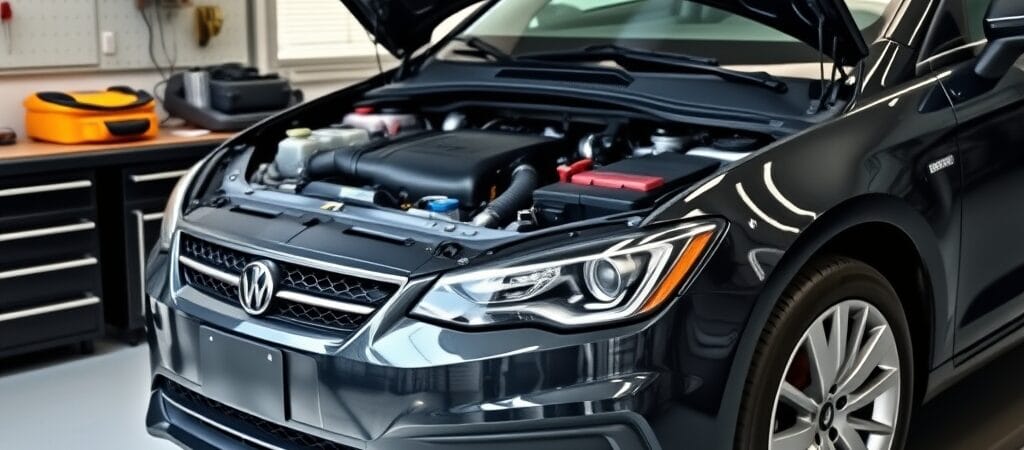
If your car overheats going uphill, the engine may be generating more heat than the cooling system can remove under increased load. Low coolant, restricted radiator airflow, cooling-system faults and certain engine or transmission problems can contribute. This guide explains what to check, how to narrow down the cause and when to stop driving to avoid serious engine damage.
Why Your Car Overheats Going Uphill
Climbing a hill increases the power demanded from the engine, particularly when the vehicle is heavily loaded or towing. This produces additional heat that the cooling system must manage. A system that maintains normal temperatures during light driving may struggle under these conditions. However, overheating on hills does not automatically prove that the radiator, thermostat or water pump is faulty. The actual cause must be identified through inspection and testing.
Symptoms of Overheating When Climbing Hills
Recognizing the symptoms of potential overheating while driving uphill can help prevent serious engine damage.
Recognizing Temperature Gauge Readings
A temperature gauge rising above its normal range, an engine-temperature warning light or an overheating message can indicate a cooling problem. Some vehicles use damped gauges that remain near the center across a range of temperatures, while others provide numerical readings. Do not continue climbing a hill to see how high the temperature will rise. Follow the vehicle manufacturer’s warning instructions and stop safely if overheating is indicated.
Effects of Weight and Load on Overheating
Carrying passengers, cargo or a trailer increases the load on the engine during uphill driving. Towing in high ambient temperatures can further increase cooling demand. Note whether the temperature rises only when towing or climbing steep grades, and whether it returns toward normal during lighter operation. These observations help identify the conditions that trigger the problem but do not establish the failed component.
Possible Causes of Overheating During Uphill Driving
Identifying possible causes is essential to accurately diagnose why your car overheats going uphill. The cause may not be immediately obvious and often requires further inspection.
Inadequate Cooling System
Low coolant, external or internal coolant leaks, restricted radiator airflow, blocked cooling passages, an incorrect coolant mixture, a thermostat that does not operate correctly or inadequate coolant circulation can reduce the system’s ability to remove heat. Some faults become noticeable only when engine load increases. A coolant-temperature sensor or its circuit can also produce misleading readings or affect control strategies on certain vehicles, so distinguish an indicated temperature problem from confirmed overheating before replacing components.
Transmission Issues
On some vehicles, transmission heat is transferred to the engine cooling system through a shared heat exchanger. Excessive transmission heat, slipping or an inappropriate operating condition may increase the cooling load during uphill driving. However, transmission problems are not a universal cause of engine overheating. Investigate this possibility when symptoms, transmission-temperature data or vehicle-specific service information support it.
Overloading the Vehicle
Exceeding the manufacturer’s payload or towing limits can place excessive demand on the engine, transmission and cooling system. Even loads within the rated limits can increase operating temperatures on long or steep climbs. Check the vehicle’s applicable weight and towing ratings, and consider whether the overheating occurs only under heavy-load conditions.
Mechanical Failures
Other possible causes include a water pump that is not circulating coolant adequately, a cooling fan or fan-control problem, combustion gases entering the cooling system, or engine-related faults that increase heat generation. Cooling-fan behavior varies by vehicle and operating conditions, and fan operation should not be assumed to be the primary cause of overheating at highway speeds. Targeted testing is necessary to identify which system is responsible.
How to Diagnose Overheating While Driving Uphill
A careful and methodical approach is important to determine why your car overheats going uphill.
Verifying the Overheating Complaint
Record when the temperature rises, including vehicle speed, hill steepness, ambient temperature, towing or cargo load, air-conditioning use and whether the symptom occurs during other driving conditions. Review any warning messages and available temperature data. If the vehicle is already overheating, do not deliberately recreate the condition by driving up another hill. Further testing should be performed under controlled, safe conditions using vehicle-specific procedures.
Simple Inspections to Perform
With the engine completely cool, check the coolant level using the manufacturer’s procedure and inspect accessible hoses, connections, the coolant reservoir and surrounding components for leaks or dried coolant residue. Examine the radiator and condenser area for external debris or airflow restrictions. Check the condition of the applicable pressure cap without opening a hot or pressurized system. Also look for damaged belts where relevant. These checks can reveal obvious problems, but the absence of visible leakage does not rule out a cooling-system fault.
Using OBD-II Scanner for Diagnostic Data
An OBD-II scan tool can help retrieve stored and pending trouble codes, freeze-frame information and available live data such as engine coolant temperature. Compare readings with the vehicle’s operating conditions and manufacturer specifications. Where supported, additional data such as cooling-fan commands, engine load or transmission temperature may help narrow the investigation. A trouble code or abnormal reading is a diagnostic clue, not proof that a particular component has failed.
For an introduction to retrieving and interpreting diagnostic data, see our OBD-II guide.
Testing Cooling System Components
Select tests based on the initial findings. Depending on the vehicle, these may include a cooling-system pressure test, pressure-cap test, thermostat-operation assessment, cooling-fan command and response checks, or evaluation of coolant circulation and radiator temperature differences. If evidence suggests combustion gases are entering the cooling system, a suitable combustion-gas test or further engine testing may be appropriate. Use manufacturer-approved procedures and do not open the cooling system while hot. Confirm the fault before replacing parts.
Repair Options After Diagnosis
After determining the cause through diagnosis, repairs should be performed based on the identified issue.
Addressing Cooling System Issues
Repair the specific fault confirmed during diagnosis. This may involve correcting a leak, removing an airflow obstruction, replacing a verified faulty thermostat or water pump, repairing a fan-control fault, or correcting the coolant type, concentration or fill level according to manufacturer specifications. Coolant flushing is not automatically necessary for every overheating complaint. After repair, refill and bleed the cooling system using the vehicle-specific procedure, then verify proper operation.
Fixing Transmission Problems
If testing confirms that transmission operation or excessive transmission heat contributes to the overheating complaint, follow the manufacturer’s diagnostic procedure. Depending on the findings, repairs may involve correcting a fluid-level problem, addressing a cooling-related restriction or repairing a verified transmission fault. Use the specified transmission fluid and checking procedure; do not replace transmission components based solely on uphill overheating.
Verifying the Repair
After completing the confirmed repair, check for leaks, verify the coolant level and ensure the system has been filled and bled correctly. Monitor engine temperature and other relevant data during a controlled test that follows manufacturer guidance. Do not intentionally overheat the engine to prove the repair. Where safe and appropriate, confirm that the original operating conditions no longer produce abnormal temperature behavior. Recheck coolant levels after the engine has cooled.
Safety Considerations When Addressing Overheating
Always observe safety precautions when investigating or repairing overheating issues.
Precautions Before Performing Repairs
If an overheating warning appears while driving uphill, reduce engine load and find a safe place to stop as soon as possible. Follow the owner’s manual instructions and shut off the engine when directed or when overheating is severe. Never remove a radiator or coolant-reservoir pressure cap while the system is hot or pressurized. Hot coolant and steam can cause serious burns. Allow the engine to cool before inspection, and keep clear of electric cooling fans that may start unexpectedly.
Monitoring Engine Temperature During Tests
Monitor temperature warnings and available diagnostic data during testing. Stop the test if the temperature rises abnormally, coolant escapes, steam appears or engine operation becomes unsafe. Avoid repeated uphill driving to reproduce severe overheating. Pressure testing, fan-control testing and other advanced checks should follow manufacturer procedures and may require professional equipment.
Vehicle-Specific Considerations for Overheating Issues
Cooling-system design, thermostat control, fan operation, transmission cooling arrangements and temperature-warning strategies vary between vehicles. Some vehicles use electronically controlled thermostats, multiple cooling circuits or specialized coolant-filling procedures. Refer to the manufacturer’s service information for diagnostic specifications, coolant requirements, pressure-test limits and repair instructions. Hybrid and electric vehicles may have additional cooling circuits and high-voltage components that require qualified service personnel.
Frequently Asked Questions
What causes my car to overheat when going uphill?
Uphill driving increases engine load and heat generation. Low coolant, restricted radiator airflow, cooling-system faults, inadequate coolant circulation or other engine-related problems may become more noticeable under these conditions.
Why does my car overheat uphill but not on flat roads?
The cooling system may be able to control engine temperature during lighter driving but struggle when heat production increases on a climb. This pattern helps guide diagnosis but does not identify a specific failed component.
Is it safe to keep driving when my car overheats uphill?
No. If the vehicle indicates overheating, follow the manufacturer’s warning instructions and stop safely. Continuing to drive with an overheating engine can cause severe damage. Do not resume driving until it is safe to do so.
What should I check first if my car overheats uphill?
After the engine has cooled completely, check the coolant level, look for visible leaks and inspect accessible cooling-system components for damage or airflow restrictions. Never open a hot, pressurized cooling system.
Can a transmission problem cause overheating while climbing hills?
On some vehicles, excessive transmission heat can increase the load on the engine cooling system. Whether this is relevant depends on the transmission design and the diagnostic evidence.
How can I confirm that the overheating problem is fixed?
Verify the repair through coolant-level checks, leak inspection, relevant diagnostic data and controlled operation under appropriate conditions. Avoid deliberately recreating severe overheating.
Final Checks
When a car overheats going uphill, the increased engine load may expose a cooling-system problem that is less noticeable during normal driving. The most effective approach is to document the conditions, inspect accessible components, review relevant diagnostic data and test suspected systems before making repairs. Never continue driving with severe overheating, and always verify that the confirmed repair resolves the original complaint.