
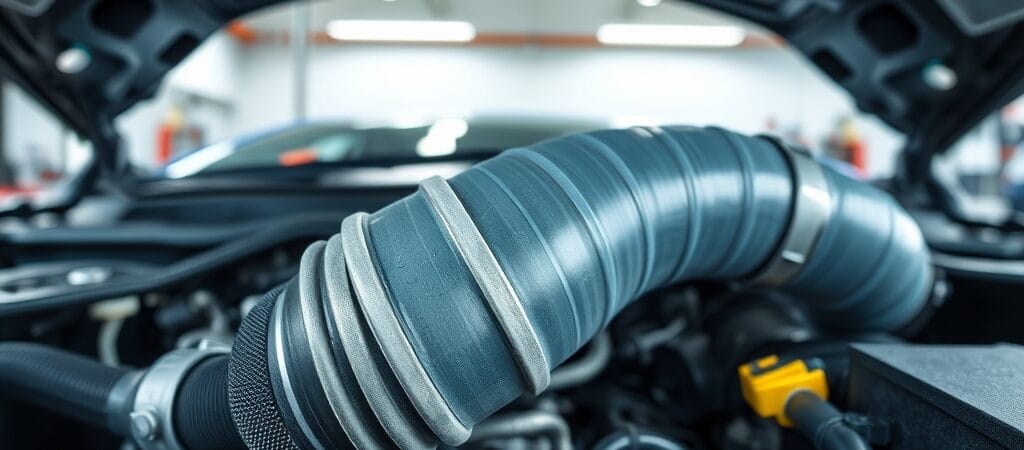
If a coolant hose visibly swells or bulges when the engine is hot, inspect it carefully rather than assuming that normal cooling-system pressure is responsible. Cooling systems normally operate under pressure, and properly specified hoses are designed for those conditions. Abnormal swelling can indicate hose deterioration, contamination, incorrect hose construction, excessive system pressure, or another cooling-system problem. Diagnose both the condition of the hose and the reason it is swelling before replacing parts.
Why a Coolant Hose May Swell When Hot
A cooling system normally becomes pressurized as the engine reaches operating temperature, and a serviceable hose is designed to tolerate the vehicle’s specified temperature and pressure range. Slight changes in hose firmness during operation should not automatically be confused with abnormal swelling.
Visible bulging, localized enlargement, distortion, or separation of the hose structure can indicate deterioration or damage. Possible contributors include weakened hose reinforcement, oil or other incompatible-fluid contamination, incorrect hose specification, abnormal cooling-system pressure, overheating, or another vehicle-specific cooling-system fault.
The appearance of a swollen hose does not identify the underlying cause by itself.
Symptoms of a Swollen Coolant Hose
Visible Bulging or Distortion
With the engine cold, inspect accessible coolant hoses for localized bulges, abnormal enlargement, soft or distorted areas, cracking, surface damage, leaks, or dried coolant residue. Compare suspicious areas with the normal shape of the hose and its routing.
Do not squeeze, handle, or closely inspect a hot pressurized hose in an attempt to judge its condition. A weakened hose can rupture unexpectedly.
Coolant Loss or Overheating Symptoms
A deteriorated or severely distorted hose may eventually leak, rupture, collapse, or interfere with coolant circulation depending on the failure mode. Watch for falling coolant level, visible leakage, steam, or an abnormal engine-temperature warning.
If coolant appears only after the system warms up, see our Coolant Leaking Only When Engine is Hot guide for the separate leak-diagnosis process.
Hose swelling itself does not prove that coolant flow is restricted or that engine damage has occurred. If the engine is overheating, diagnose the cooling-system problem rather than assuming the hose is the only cause.
Common Causes of Swelling in Coolant Hoses
Excessive Temperature or an Existing Cooling-System Fault
Abnormally high cooling-system temperatures can place additional stress on hoses and other components, particularly if the hose is already aged or weakened. However, overheating may also be a separate symptom of the underlying cooling-system fault rather than the direct cause of the hose damage.
If overheating is present, investigate coolant level, circulation, thermostat operation, radiator performance, cooling-fan operation, leaks, and other relevant systems according to the vehicle’s design
Pressure-Cap or Cooling-System Pressure Problems
The cooling-system pressure cap is designed to control pressure according to the vehicle’s specified operating range. An incorrect cap, damaged sealing surfaces, or a cap that does not operate as specified may contribute to abnormal pressure behavior or coolant loss.
Some vehicles use a radiator-mounted cap, while others use a pressure cap on an expansion tank. Test the cap and cooling system according to vehicle-specific specifications rather than replacing the cap solely because a hose appears swollen.
Hose Deterioration or Internal Damage
Coolant hoses use reinforced rubber or other engineered materials designed for cooling-system temperature, pressure, and chemical exposure. With age and service, the hose material or reinforcement can deteriorate. Internal separation or weakened reinforcement may allow localized bulging when the system becomes pressurized.
A hose with confirmed structural swelling, separation, cracking, soft spots, or other significant deterioration should be replaced with the correct specification.
Oil or Other Incompatible-Fluid Contamination
Oil, petroleum-based fluids, or other incompatible chemicals can damage some coolant-hose materials and may cause softening or swelling. If contamination is suspected, inspect the coolant and hose condition and determine where the contaminating fluid originated.
Do not replace only the swollen hose if an unresolved leak or contamination source will expose the replacement hose to the same problem.
Abnormal Cooling-System Pressurization
Combustion gases entering the cooling system can cause abnormal pressurization in some engine faults, but a swollen or firm hose does not prove that a head gasket has failed. Other pressure-control and cooling-system problems must also be considered.
If symptoms support an internal engine leak—such as unexplained coolant loss, repeated abnormal pressurization, or other vehicle-specific evidence—perform the appropriate pressure, combustion-gas, leak-down, or manufacturer-recommended tests before considering internal engine repairs.
How to Diagnose a Swollen Coolant Hose
Verify the Hose Condition
Begin with the engine completely cold. Inspect the hose for localized bulging, distortion, soft spots, cracking, leakage, contamination, incorrect routing, or contact with nearby components.
Determine whether the apparent swelling occurs only as normal system pressure develops or whether the hose shows actual structural distortion. Document any overheating, coolant loss, recent cooling-system repairs, hose replacement, or contamination that may help identify the cause.
Check Coolant Level and Recent Service
With the engine cold, verify coolant level according to the manufacturer’s procedure. Inspect for visible leaks, incorrect hose installation, damaged clamps or connections, an incorrect replacement hose, pressure-cap problems, and anything recently disturbed during cooling-system service.
Do not remove a radiator or expansion-tank pressure cap while the system is hot or pressurized.
Scan for Relevant DTCs and Data When Appropriate
An OBD-II scan cannot confirm that a coolant hose is swollen or identify why the hose material has deteriorated. However, DTCs and live data may provide supporting information when the vehicle also has overheating, temperature-sensor, thermostat-monitoring, cooling-fan, or other electronically monitored problems.
Treat codes as diagnostic clues rather than proof of a failed cooling-system component.
See our How to Read OBD2 Codes guide for interpreting diagnostic trouble codes correctly.
Perform Targeted Cooling-System Tests
Further testing should follow the symptoms and initial inspection rather than automatically testing every cooling-system component.
Depending on the findings, diagnosis may include:
- Cooling-system pressure testing: Perform only on a cooled system and do not exceed the manufacturer-specified test pressure.
- Pressure-cap testing: Confirm that the cap operates according to the vehicle’s specified pressure range and procedure.
- Temperature and circulation diagnosis: Evaluate thermostat, radiator, water-pump, and cooling-fan operation when overheating or circulation problems are present.
- Contamination diagnosis: Determine the source if oil or another incompatible fluid is found in the cooling system.
- Internal-leak testing: Perform appropriate combustion-gas, pressure, leak-down, or other manufacturer-specified testing when the evidence supports an internal engine problem.
Test only what the diagnostic evidence supports and interpret results using vehicle-specific service information.
Repair Options After Diagnosis
Replace a Structurally Damaged Hose
If inspection confirms structural swelling, localized bulging, separation, cracking, severe softening, leakage, or another condition that compromises the hose, replace it with the correct vehicle-specific part.
Do not stop at hose replacement. Identify and correct abnormal pressure, overheating, contamination, incorrect installation, or another underlying condition that could damage the replacement hose.
Use the Correct Replacement Hose
Use a hose that meets the vehicle manufacturer’s required dimensions, material, temperature capability, pressure capability, and routing requirements. An OEM component or a correctly specified quality aftermarket replacement may be appropriate.
Install clamps, fittings, protective sleeves, and routing components according to the vehicle-specific procedure.
Inspect Related Hoses and Components
If one hose has deteriorated, inspect the other accessible cooling-system hoses and connections for similar age-related damage, contamination, cracking, softening, or leakage. Replace additional components based on their actual condition and manufacturer recommendations rather than automatically replacing every hose because of vehicle age.
Verify the Repair
After replacing the confirmed damaged hose and correcting the underlying cause, refill and bleed the cooling system according to the vehicle-specific procedure.
Check for leaks, verify coolant level at the appropriate stage, and bring the engine to operating temperature using the manufacturer’s verification procedure. Confirm that the replacement hose maintains its normal shape, engine temperature remains controlled, and the original abnormal swelling does not return.
Recheck coolant level after the required heat cycle and cool-down period.
Safety Precautions When Inspecting Coolant Hoses
Never remove a radiator or expansion-tank pressure cap, disconnect a hose, or perform pressure testing while the cooling system is hot or pressurized. Hot coolant and steam can escape suddenly and cause severe burns.
Allow the system to cool before handling hoses or opening the cooling system. When the engine must run for diagnosis, keep hands, clothing, tools, and test equipment away from belts, pulleys, fans, and other moving components. Electric cooling fans may operate unexpectedly on some vehicles.
Wear appropriate eye and hand protection, clean coolant spills promptly, and collect and dispose of used coolant according to applicable local requirements.
Vehicle-Specific Considerations for Coolant Hoses
Cooling-system pressure specifications, cap design, hose materials, routing, clamps, filling and bleeding procedures, electric-pump operation, and diagnostic methods vary by vehicle.
Use manufacturer-specific service information for the correct replacement hose, pressure-test limit, coolant specification, component locations, filling and bleeding procedure, and repair verification.
Frequently Asked Questions
What does it mean if my coolant hose swells when hot?
Visible bulging or abnormal enlargement can indicate deterioration of the hose structure, contamination, incorrect hose specification, abnormal system pressure, overheating, or another cooling-system problem. Normal cooling systems operate under pressure, so the cause should be diagnosed rather than assumed from hose firmness alone.
What are the symptoms of a swollen coolant hose?
Signs include localized bulging, abnormal hose shape, soft or deteriorated areas, cracking, coolant leakage, or dried coolant residue. Coolant loss or overheating may occur if the hose or another cooling-system component is failing.
Can a swollen coolant hose lead to engine damage?
A damaged hose can eventually leak or rupture and cause significant coolant loss, which can lead to overheating and engine damage if operation continues. The swelling itself does not prove that engine damage has already occurred.
How can I diagnose a swollen coolant hose?
Inspect the hose with the engine cold, verify coolant level, look for leaks or contamination, and review recent cooling-system service. If the cause remains unclear, test cooling-system pressure and the pressure cap according to vehicle specifications and perform additional cooling-system or internal-leak testing only when supported by the symptoms.
What should I do if my coolant hose is swollen?
Replace a hose when inspection confirms structural swelling, bulging, separation, cracking, leakage, or other significant deterioration. Also diagnose and repair the underlying cause so the replacement hose is not damaged again.
Final Checks
A coolant hose that visibly bulges or becomes abnormally distorted when hot should be inspected, but normal cooling-system pressure should not automatically be mistaken for hose failure. Evaluate the hose condition, coolant level, recent service, pressure-cap operation, overheating symptoms, contamination, and other relevant cooling-system evidence.
Replace a structurally damaged hose with the correct specification, repair the confirmed underlying cause, refill and bleed the system according to vehicle-specific procedures, and verify that normal hose shape and engine temperature are maintained after the repair.