
Diagnosing a thermostat problem requires more than matching symptoms to a failed part. Overheating, slow warm-up and abnormal temperature readings can also result from low coolant, trapped air, cooling-fan problems, coolant-flow restrictions, sensor faults and other cooling-system issues. The correct approach is to verify the complaint, inspect basic cooling-system conditions, review temperature behavior and test the thermostat when the evidence points toward it.
How to Diagnose Thermostat Problems
A thermostat helps regulate engine operating temperature by controlling coolant flow according to its design. A thermostat that fails to open correctly can contribute to overheating, while one that remains open or opens incorrectly may cause slow warm-up or lower-than-expected operating temperature.
However, these symptoms do not prove that the thermostat has failed. Diagnosis should first rule out other cooling-system and temperature-monitoring problems.
Understanding the Role of the Thermostat in Your Vehicle
In a typical liquid-cooled engine, the thermostat regulates coolant flow based on temperature. During warm-up, it restricts flow through the radiator so the engine can reach its intended operating temperature. As coolant temperature rises, the thermostat progressively opens to permit greater flow through the radiator.
Exact operating temperatures and control strategies vary by vehicle. Some engines also use electronically controlled or mapped thermostat systems, so vehicle-specific service information should be used when evaluating thermostat operation.
Symptoms That May Point to a Thermostat Problem
Several symptoms can justify checking thermostat operation, but none confirms thermostat failure by itself:
- Engine overheating: A thermostat that does not open properly can restrict coolant flow through the radiator, but overheating can also result from low coolant, trapped air, cooling-fan faults, water-pump problems, restrictions or other cooling-system failures.
- Slow engine warm-up: A thermostat that remains open or does not close correctly may cause the engine to warm up more slowly than expected.
- Lower-than-expected coolant temperature: Depending on the vehicle, a thermostat that remains open can prevent the engine from reaching its expected operating temperature.
- Abnormal temperature behavior: Unexpected temperature changes may justify further cooling-system diagnosis, but gauge movement alone does not identify the thermostat as the cause.
- Related diagnostic trouble codes: Some vehicles may store cooling-system or thermostat-related DTCs when expected temperature behavior is not achieved.
Steps to Diagnose a Thermostat Problem
To diagnose a thermostat problem accurately, follow these steps:
Step 1: Verify the Temperature Complaint
Determine exactly what the vehicle is doing before testing the thermostat. Establish whether the concern is overheating, unusually slow warm-up, lower-than-expected operating temperature, a warning message, an abnormal gauge indication or another cooling-system symptom.
Note when the problem occurs, including during cold start, idle, normal driving, highway driving or heavy-load conditions. Different operating patterns can point toward different cooling-system faults.
Step 2: Check Coolant Level and Basic Cooling-System Condition
With the engine cold and following the manufacturer’s procedure, verify that the coolant level is correct. Inspect accessible cooling-system components for leakage, damaged hoses, reservoir problems or other obvious conditions that could affect cooling-system operation.
Low coolant or air trapped in the system can produce abnormal temperature behavior and should be addressed before blaming the thermostat.
Never remove a pressurized cooling-system cap while the system is hot.
Step 3: Consider Electrical Controls Where Applicable
Many thermostats operate mechanically and do not require an electrical connection. Some vehicles, however, use electronically controlled or electrically heated thermostat systems.
If the vehicle uses such a system, inspect the relevant wiring and connectors and follow manufacturer diagnostic procedures when electrical control faults are suspected. Do not apply electrical tests intended for one thermostat design to another.
Step 4: Scan for Trouble Codes and Review Temperature Data
Use an OBD-II scan tool to check for stored and pending diagnostic trouble codes and review relevant engine-temperature data when available.
A code such as P0128 can indicate that coolant temperature did not reach the expected regulating temperature within the conditions monitored by the vehicle. It does not prove that the thermostat itself has failed.
For more information on interpreting scan results, see our guide on How to Read OBD2 Codes.
Step 5: Evaluate Thermostat Operation
Compare coolant-temperature behavior with vehicle-specific specifications and the conditions under which the symptom occurs. Scan-tool temperature data can be useful when assessing engine warm-up and operating temperature.
Where appropriate, temperature measurements at relevant cooling-system locations may provide additional evidence, but measurement methods and expected values vary by vehicle.
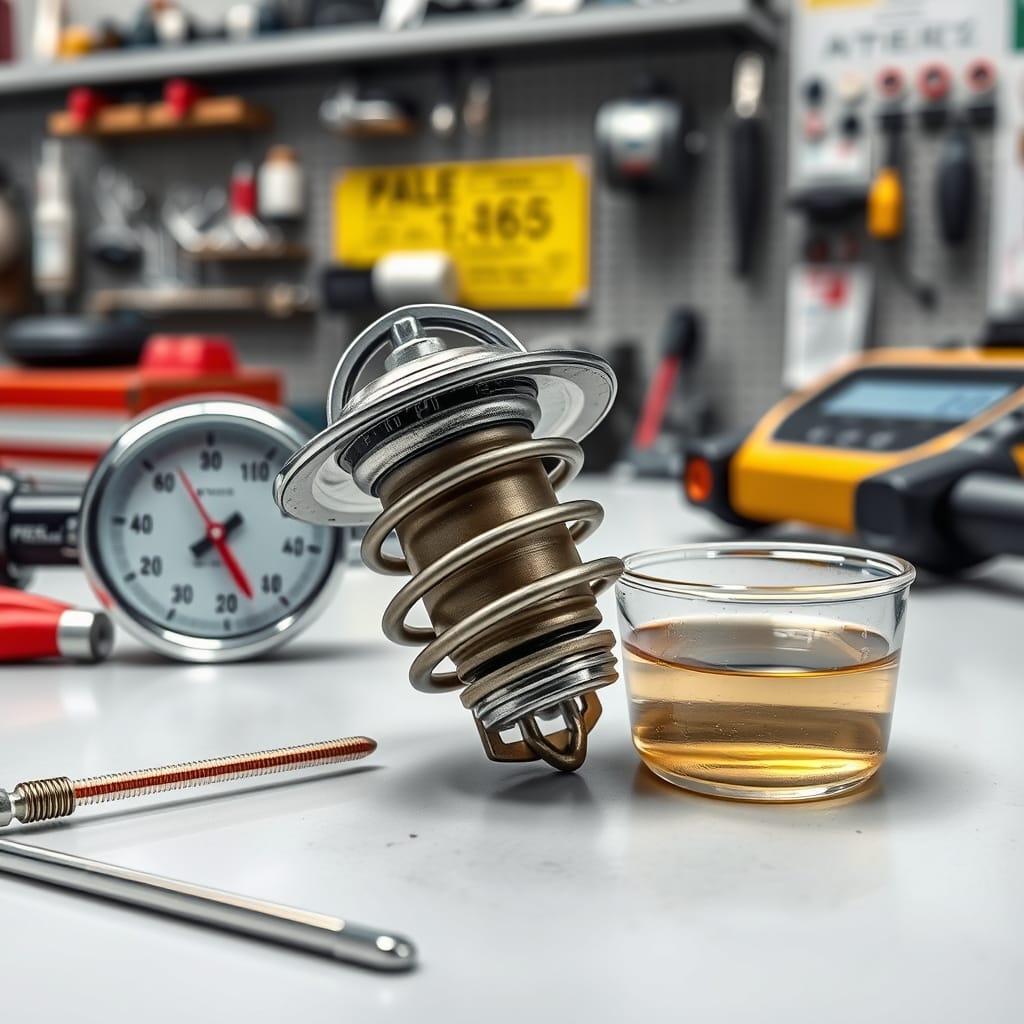
If diagnosis still points toward the thermostat, follow the manufacturer’s thermostat test procedure. On some conventional removable thermostats, service information may specify testing the thermostat in heated water while monitoring when it begins to open and how far it opens.
Do not rely on generic opening temperatures. Use specifications for the exact vehicle and thermostat.
What Can Affect Thermostat Operation?
Electrical or Control Problems on Applicable Systems
Electronically controlled thermostat systems may be affected by wiring faults, connector problems, control-circuit faults or other electrical issues. These possibilities apply only to vehicles equipped with this type of thermostat system.
Use vehicle-specific wiring diagrams, DTC procedures and test specifications before diagnosing an electrical thermostat-control fault.
Mechanical Thermostat Problems
A thermostat may fail mechanically by sticking, opening incorrectly or failing to close as intended. Deposits, corrosion, physical damage or deterioration may also interfere with operation depending on cooling-system condition and thermostat design.
These conditions should be confirmed through appropriate testing rather than inferred solely from overheating or abnormal gauge behavior.
Incorrect Installation or Sealing Problems
An incorrectly installed thermostat, damaged seal, incorrect component or improperly assembled housing can cause cooling-system problems after service.
Thermostat orientation, gasket or seal placement, housing procedures and tightening specifications vary by vehicle. Follow manufacturer service information during installation.
Coolant Condition and Previous Cooling-System Work
Incorrect coolant, contamination, corrosion, neglected cooling-system maintenance or previous repair problems can sometimes affect thermostat and cooling-system operation.
Follow the vehicle manufacturer’s coolant specification and maintenance requirements rather than replacing a thermostat solely because of age or mileage unless a replacement interval is specifically provided.
Repair Only the Confirmed Fault
Once testing identifies the cause of the temperature problem, repair the confirmed fault. Do not replace the thermostat simply because the engine overheats, warms slowly or stores a cooling-system DTC.
The correct repair depends on the evidence found during diagnosis.
Repair Electrical Faults Where Applicable
If testing confirms a wiring, connector or control-circuit problem on an electronically controlled thermostat system, repair it using the manufacturer-approved procedure.
Do not clean, probe, repair or replace connectors indiscriminately. Some terminals and sealed connectors require specific service methods.
Replace the Thermostat When Failure Is Confirmed
If testing confirms thermostat failure, replace it using the procedure specified for the vehicle. Depending on the design, this may involve draining enough coolant to open the thermostat housing, removing the housing or thermostat assembly, installing the correct replacement component and seal, and reassembling the system to specification.
After installation, refill the cooling system with the manufacturer-specified coolant and follow the correct bleeding or air-removal procedure. Some vehicles require specific filling equipment or procedures to prevent trapped air.
Verify the Repair
After completing the repair, confirm the coolant level and check for leakage. Bring the engine through the appropriate warm-up cycle while monitoring temperature behavior and other relevant data.
When practical, reproduce the conditions that originally caused the complaint. Confirm that the temperature concern has been resolved and check for returning diagnostic trouble codes.
Safety Considerations When Diagnosing Thermostat Problems
Never remove a radiator, expansion-tank or other pressurized cooling-system cap while the system is hot unless the manufacturer provides a specific safe procedure. Hot coolant and steam can cause severe burns.
Allow the engine to cool before opening the cooling system. Keep hands, clothing and tools away from belts, pulleys and electric cooling fans, which may operate unexpectedly.
If electrical testing is required on an electronically controlled thermostat system, follow the manufacturer’s test procedures. Do not disconnect the battery routinely unless the service procedure specifically requires it.
Vehicle-Specific Thermostat Diagnosis
Thermostat design, operating temperature, cooling-system layout and diagnostic strategy vary considerably between vehicles. Some engines use conventional mechanical thermostats, while others incorporate electrically heated or electronically controlled systems.
Use manufacturer service information for thermostat specifications, cooling-system filling and bleeding procedures, electrical tests where applicable, tightening specifications and any required scan-tool procedures.
Frequently Asked Questions
What are the symptoms of a bad thermostat?
Possible signs include overheating, slow engine warm-up, lower-than-expected coolant temperature or abnormal temperature behavior. These symptoms can also result from other cooling-system faults, so they do not confirm thermostat failure by themselves.
Does overheating mean the thermostat is bad?
No. A thermostat that fails to open correctly can contribute to overheating, but low coolant, trapped air, cooling-fan problems, coolant-flow issues and other faults can produce similar symptoms.
Can an OBD-II scanner diagnose a bad thermostat?
A scan tool can provide useful trouble codes and coolant-temperature data, but it normally cannot prove thermostat failure by itself. The results must be interpreted with physical inspection and other testing.
Does a P0128 code mean I need a new thermostat?
Not necessarily. P0128 indicates that the engine did not reach the expected coolant regulating temperature under the monitored conditions. The thermostat is one possible cause, but diagnosis should confirm the fault before replacement.
How can a thermostat be tested?
Diagnosis may involve reviewing engine-temperature data and temperature behavior. On some removable conventional thermostats, manufacturer procedures may specify testing the thermostat in heated water and comparing its opening behavior with specifications.
Should I replace a thermostat just because the engine is overheating?
No. Diagnose the cooling system first and replace the thermostat only when testing supports thermostat failure.
Final Checks
A thermostat problem should be diagnosed rather than assumed from overheating, slow warm-up or a trouble code. Begin by verifying the complaint and checking basic cooling-system conditions, then use scan data and targeted testing to determine whether thermostat operation is actually abnormal.
Consider the thermostat design used by the specific vehicle, repair only the confirmed fault, follow the correct coolant filling and bleeding procedure, and verify normal temperature behavior after the repair.