
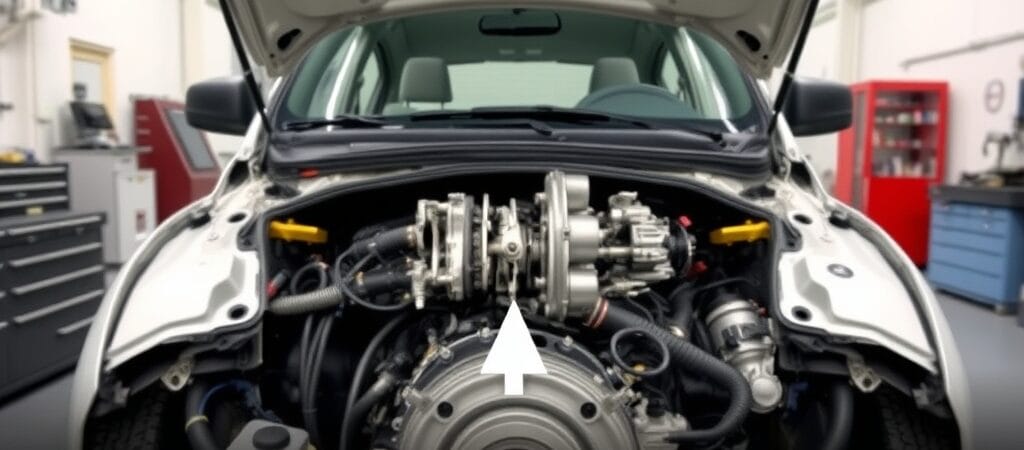
If your vehicle stores the P0011 code, the engine control module (ECM/PCM) has detected that the “A” camshaft timing on Bank 1 is more advanced than expected or that the camshaft timing system is not performing as commanded. On many engines, “A” refers to the intake camshaft, but terminology and system design can vary by manufacturer. P0011 does not identify a failed component by itself. Engine-oil problems, restricted oil flow, VVT control faults, wiring issues, camshaft actuator problems, mechanical timing faults, and other conditions can produce the code, so diagnosis should confirm the actual cause before parts are replaced.
What You Need to Know About the P0011 Code
Definition of P0011
P0011 is a generic OBD-II powertrain code commonly defined as “A” Camshaft Position – Timing Over-Advanced or System Performance (Bank 1). Bank 1 is the cylinder bank containing cylinder #1. The code means the ECM/PCM detected that the monitored camshaft timing was more advanced than expected or that the variable camshaft timing system did not respond as intended under the conditions being monitored. It reports a detected condition; it does not prove that the VVT solenoid, camshaft position sensor, actuator, timing chain, or another individual component has failed.
The Importance of Camshaft Position Timing
Camshaft timing affects when the engine’s valves open and close relative to crankshaft position. On engines equipped with variable valve timing, the ECM/PCM can command changes in camshaft position to support performance, efficiency, emissions, and drivability. If actual camshaft movement does not follow the commanded position correctly, engine operation may be affected. The severity depends on the underlying cause and how far the system has deviated from normal operation.
Symptoms Associated with the P0011 Code
Signs to Watch For
Symptoms vary depending on the cause and severity of the fault. Possible signs include:
- Check Engine Light: P0011 may illuminate the malfunction indicator light.
- Rough or unstable idle: Incorrect camshaft timing can affect idle quality.
- Hesitation or reduced performance: The engine may respond poorly under some operating conditions.
- Hard starting or stalling: Possible with more significant timing or VVT problems.
- Increased fuel consumption: Engine efficiency may be affected.
- Abnormal engine noise: Rattling or other unusual mechanical noise requires particular attention because it may indicate a lubrication or mechanical timing problem.
Some vehicles may have few noticeable symptoms other than the warning light.
Connection to Engine Performance Problems
The presence or absence of drivability symptoms can provide useful diagnostic context, but symptoms alone cannot identify the failed component. Rough running, hesitation, poor performance, or stalling can have many causes unrelated to P0011. Use the code together with freeze-frame data, related DTCs, oil condition, live camshaft data, and targeted testing.
How to Diagnose the P0011 Code
Step 1: Verify the Complaint
Confirm that P0011 is currently stored or pending and record any related DTCs before clearing anything. Review freeze-frame data when available and note the engine temperature, speed, load, and other conditions present when the code was set. Ask about recent oil changes, engine repairs, timing work, unusual noises, starting problems, or drivability symptoms. These clues help determine which tests should come next.
Step 2: Inspect for Simple Causes
Check the engine-oil level and condition first, and verify that the oil type and viscosity meet the vehicle manufacturer’s specification. Incorrect oil, low oil level, degraded oil, sludge, or restricted oil passages can interfere with hydraulically operated VVT systems. Inspect accessible VVT-related wiring, connectors, grounds, and components for damage, corrosion, contamination, or poor connections. Do not assume that dirty oil automatically explains the code or that an oil change alone will repair it.
Step 3: Scanning Codes and Data
Retrieve all stored and pending DTCs and review freeze-frame data before clearing codes. Related camshaft, crankshaft, oil-pressure, VVT-control, or correlation codes can significantly change the diagnostic direction. Where the scan tool and vehicle support it, compare commanded camshaft position with actual camshaft position while the engine operates under appropriate conditions. A difference between commanded and actual timing is useful evidence, but further testing is still required to determine whether the cause is hydraulic, electrical, mechanical, or related to another part of the system.
Possible Causes of the P0011 Code
Low or Contaminated Engine Oil
Low oil level, degraded oil, incorrect viscosity or specification, sludge, restricted oil passages, or insufficient oil pressure can interfere with VVT operation on systems that use engine oil hydraulically. Verify the oil level, condition, specification, service history, and—when indicated—actual oil pressure or oil-flow condition before deciding that an oil-related problem is responsible.
Mechanical Timing Problems
A stretched timing chain, incorrect timing installation, worn guides or tensioner components, a timing-belt problem on applicable engines, or another mechanical timing fault can prevent the camshaft from maintaining the expected relationship to the crankshaft. Mechanical timing should be checked when scan data, related codes, engine noise, repair history, or other evidence points in that direction rather than assumed from P0011 alone.
VVT Oil-Control, Solenoid, or Actuator Problems
Depending on the engine design, P0011 may result from a sticking or restricted oil-control valve, VVT solenoid/control valve problem, camshaft phaser or actuator fault, restricted oil passage, or related control issue. These components should be tested according to the vehicle-specific procedure before cleaning or replacement.
Camshaft Position Signal or Circuit Problems
Camshaft position information is used by the ECM/PCM to monitor camshaft operation, but P0011 does not automatically indicate a failed camshaft position sensor. If scan data or related DTCs suggest a signal problem, inspect and test the sensor circuit, wiring, connectors, power or reference supply where applicable, grounds, and signal according to manufacturer procedures. Replace the sensor only when testing confirms that it is faulty.
VVT Control-Circuit Problems
Open circuits, short circuits, high resistance, poor connections, power or ground problems, or ECM/PCM control issues can interfere with operation of the VVT oil-control solenoid or related components. Electrical integrity should be tested before replacing the solenoid or actuator.
Step 4: Test Relevant Systems and Components
Use the evidence collected so far to choose the next test. Where supported, compare commanded and actual camshaft position with a capable scan tool and perform the manufacturer-specified VVT actuator or solenoid tests. Test the relevant control circuit before condemning an electrical component. If oil supply is suspect, verify oil pressure or oil-flow conditions according to vehicle specifications. If scan data, related DTCs, noise, or repair history suggests a mechanical timing problem, check camshaft-to-crankshaft correlation and mechanical timing using the correct vehicle-specific procedure.
Repairs Based on the Confirmed Cause
Repair should follow diagnosis rather than the code alone. Depending on the confirmed fault, this may involve correcting the engine-oil level or specification, performing an overdue oil and filter service, repairing damaged wiring or connectors, cleaning or replacing a confirmed faulty VVT oil-control component where the manufacturer permits, repairing a camshaft actuator/phaser problem, correcting inadequate oil supply, or repairing mechanical timing components.
Do not replace the VVT solenoid, camshaft sensor, timing components, or ECM/PCM solely because P0011 is stored.
Essential Tools for Diagnosis and Repair
Useful equipment may include a scan tool capable of displaying relevant live camshaft/VVT data and performing bidirectional tests where supported, a digital multimeter, appropriate oil-pressure testing equipment when required, vehicle-specific wiring diagrams and service information, and specialized timing tools when mechanical timing must be verified. The exact equipment and test procedure depend on the vehicle.
Safety Considerations When Addressing P0011
Ensuring Vehicle Stability
Work on stable ground and follow proper lifting procedures if access underneath the vehicle is required. Use the specified lifting points and properly rated jack stands or a suitable lift; never rely solely on a hydraulic jack. Keep hands, clothing, tools, and test leads clear of belts, pulleys, fans, and other moving components while the engine is running.
Proper Handling of Engine Oil
Hot engine oil and engine components can cause burns. Allow the vehicle to cool as appropriate before servicing the lubrication system, wear suitable protective equipment, clean spills promptly, and dispose of used oil and filters according to local requirements. If oil-pressure testing is required, use equipment and procedures appropriate for the vehicle.
Vehicle-Specific Considerations for the P0011 Code
Variations in Variable Valve Timing Systems
VVT design varies substantially among manufacturers and engines. “A” commonly refers to the intake camshaft, but terminology, actuator design, oil-control strategy, scan-data parameters, test procedures, and acceptable camshaft-angle specifications are vehicle-specific. Bank 1 refers to the cylinder bank containing cylinder #1; its physical location depends on the engine.
When Driving May Not Be Appropriate
Do not continue driving simply because the vehicle still moves normally. If P0011 is accompanied by a low-oil-pressure warning, severe rough running, repeated stalling, significant power loss, overheating, or abnormal mechanical rattling or knocking, stop driving when it is safe to do so and have the vehicle inspected. These symptoms can indicate a problem that may become more serious if operation continues.
Consulting Manufacturer-Specific Resources
Use manufacturer service information for wiring diagrams, oil specifications, VVT test procedures, expected camshaft-angle data, mechanical timing procedures, torque specifications, and any required relearn or initialization procedures. Generic testing should not override vehicle-specific requirements.
Frequently Asked Questions
What does the P0011 code mean?
P0011 generally means the ECM/PCM detected that the “A” camshaft timing on Bank 1 was more advanced than expected or that the camshaft timing system did not perform as commanded. It identifies a detected condition, not a specific failed part.
What are common causes of the P0011 code?
Possible causes include incorrect, low, or degraded engine oil; restricted oil flow; VVT oil-control or solenoid problems; wiring or circuit faults; camshaft actuator/phaser problems; insufficient oil pressure; mechanical timing faults; and, in some cases, camshaft-position signal problems. Testing is required to determine which cause applies.
Can I still drive my vehicle with the P0011 code?
It depends on the symptoms and underlying cause. A vehicle with only a warning light may still operate, but P0011 should be diagnosed promptly. Avoid continued driving if there is a low-oil-pressure warning, severe rough running, stalling, substantial power loss, overheating, or abnormal mechanical noise.
How is the P0011 code diagnosed?
Diagnosis typically includes confirming P0011 and related codes, reviewing freeze-frame data, checking engine-oil level, condition, and specification, inspecting relevant wiring and connectors, comparing commanded and actual camshaft data where supported, testing the VVT control system, evaluating oil pressure or flow when indicated, and checking mechanical timing when evidence points there.
What repairs might be needed for the P0011 code?
The repair depends on the confirmed cause. It may involve correcting an oil-related problem, repairing wiring, servicing or replacing a confirmed faulty VVT control component, repairing a camshaft actuator/phaser, correcting an oil-supply problem, or repairing mechanical timing components. Parts should not be replaced based on P0011 alone.
Final Checks
P0011 reports an over-advanced or performance problem involving the “A” camshaft timing on Bank 1, but it does not identify the failed component. Start with the code, related DTCs, freeze-frame data, and engine-oil condition and specification. Then use scan data and targeted electrical, hydraulic, and mechanical tests to determine why actual camshaft timing is not behaving as expected. Repair only the confirmed fault. After the repair, clear the DTCs when appropriate, operate the vehicle under suitable conditions, confirm that commanded and actual camshaft operation is reasonable where scan data allows, and verify that P0011 and the original symptoms do not return.