
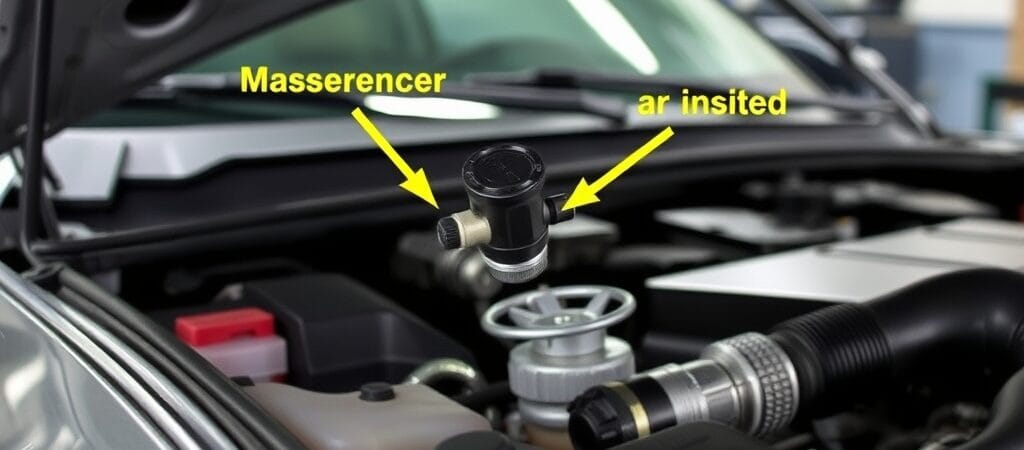
P0101 is a diagnostic trouble code (DTC) indicating that the engine control module (ECM/PCM) has detected a Mass Air Flow (MAF) sensor signal or calculated airflow value that is outside the expected range or does not agree with the engine’s operating conditions. The code does not prove that the MAF sensor itself has failed. Intake leaks, airflow restrictions, sensor contamination, wiring or connector problems, engine operating problems, and other vehicle-specific conditions can all affect the airflow information used by the control module. Diagnosis should determine why the measured airflow does not match what the system expects before any component is replaced.
What the P0101 Code Means
Definition of the P0101 Code
P0101 is generally defined as a Mass or Volume Air Flow Circuit Range/Performance fault. It means the ECM/PCM has determined that the MAF signal or calculated airflow is outside the expected range or is implausible for the current operating conditions. Unlike a simple open- or short-circuit diagnosis, a range/performance code can occur even when the sensor is still producing a signal. The code identifies a problem with the airflow information or system performance; it does not identify the failed component.
The Role of the Mass Air Flow (MAF) Sensor
On vehicles equipped with a MAF sensor, the sensor measures or provides information related to the amount of air entering the engine. The ECM/PCM uses this information together with other inputs to manage fueling and other engine-control functions. Because the expected MAF value depends on engine speed, load, temperature, intake conditions, and vehicle-specific strategy, an implausible reading may result from the sensor itself or from another condition affecting measured or expected airflow.
Symptoms Associated With a P0101 Code
P0101 may occur with few noticeable symptoms or alongside drivability problems. Symptoms depend on the underlying cause and the vehicle’s control strategy.
Check Engine Light
The Check Engine light is commonly the first indication that P0101 has been stored. Other DTCs may also be present and can provide important diagnostic context.
Possible Drivability Symptoms
Depending on the underlying fault, the vehicle may experience hesitation, rough running, reduced power, stalling, abnormal fuel trims, or other drivability symptoms. These symptoms do not prove that the MAF sensor has failed and may also occur with intake, fueling, ignition, mechanical, or other engine-management problems.
Potential Causes of the P0101 Code
P0101 can be triggered whenever the airflow information seen by the ECM/PCM does not behave as expected. Possible causes vary by vehicle and should be treated as diagnostic possibilities rather than confirmed faults.
MAF Sensor Contamination or Sensor Problems
Contamination on the sensing element or an internal sensor fault can affect MAF readings. However, P0101 alone does not prove that the sensor is dirty or defective. Inspect and test it according to vehicle-specific procedures before cleaning or replacing it.
Intake Leaks or Airflow Problems
Leaks downstream of the MAF sensor can introduce unmetered air on systems where this is relevant. Damaged intake ducts, loose connections, restrictions, incorrectly installed intake components, or other airflow problems may also cause measured airflow to disagree with expected values.
Wiring, Connector, Power, or Ground Problems
Damaged wiring, poor terminal contact, corrosion, power or ground problems, or signal-circuit faults can affect MAF information. Circuit design varies, so testing should follow the appropriate wiring diagram and manufacturer procedure.
Other Engine or Control-System Conditions
Depending on the vehicle, other engine-management or mechanical conditions may cause the calculated and measured airflow values to disagree. Related DTCs, fuel-trim information, manifold-pressure data where available, engine speed, throttle/load information, and other relevant scan data can help determine whether the MAF sensor is actually the source of the problem.
Steps to Diagnose the P0101 Code
Confirm the Code and Operating Conditions
Confirm that P0101 is stored and check whether it is current, pending, intermittent, or accompanied by other DTCs. Record freeze-frame information before clearing anything. Note engine speed, load, temperature, airflow information, fuel trims where relevant, and the operating conditions under which the fault was detected. Related codes may change the diagnostic direction.
Inspect the Intake System and Electrical Connections
With the engine off, inspect the air-intake path, MAF installation, ducts, clamps, connectors, and accessible wiring. Look for disconnected or damaged intake components, contamination, obvious leaks, corrosion, damaged terminals, or evidence of recent work. Check the air filter and intake path for relevant restrictions where appropriate. Do not clean the MAF sensor or replace components simply because P0101 is present.
Analyze Codes, Freeze-Frame, and Live Data
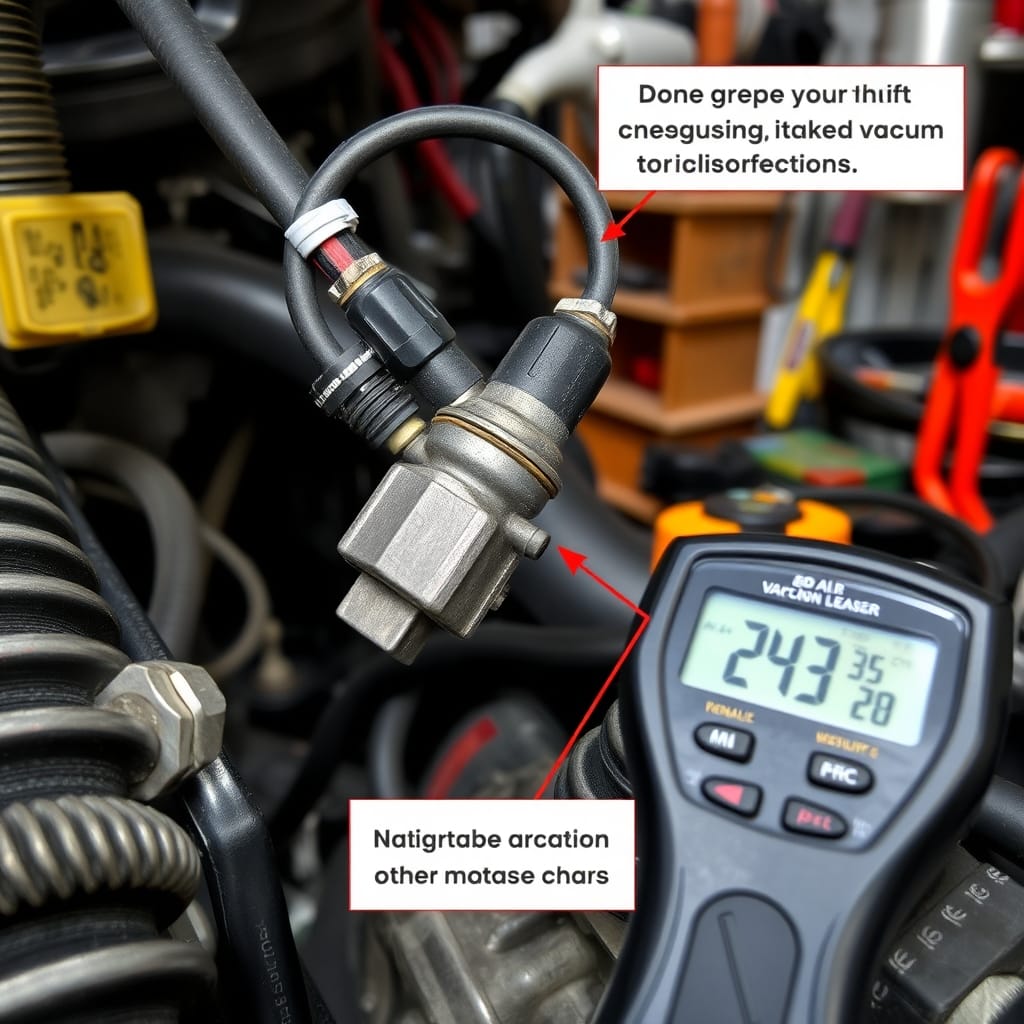
Use a capable scan tool to review P0101 together with related DTCs, freeze-frame information, and relevant live data. Evaluate MAF readings in the context of engine speed, load, throttle position, manifold pressure where available, fuel trims, and other useful parameters supported by the vehicle. The objective is to determine whether the airflow information is plausible—not simply whether the MAF sensor produces a signal. Compare values using vehicle-specific service information rather than relying on universal MAF numbers.
Testing Relevant Systems
Test the MAF Sensor and Relevant Circuits
If the diagnostic evidence points toward the MAF sensor or its circuit, follow the manufacturer’s testing procedure. Depending on sensor design, this may involve checking power, ground, signal voltage, frequency, scan-data response, wiring integrity, or another specified test. Do not apply a universal resistance, voltage, or bench-test procedure to every MAF sensor. Compare results with vehicle-specific specifications before condemning the sensor.
Check for Intake, Wiring, and Related System Faults
If MAF testing does not confirm a sensor fault, continue investigating the intake system, wiring and connectors, power and grounds, and other systems suggested by the codes and data. Where appropriate, use suitable leak-testing methods and vehicle-specific diagnostic procedures. Confirm the cause rather than assuming P0101 must originate inside the MAF sensor.
Repair Options After Diagnosis
Repair only the fault confirmed during diagnosis. Depending on the findings, this may involve repairing an intake leak or damaged duct, correcting an airflow restriction, repairing wiring or connector problems, addressing another engine-management fault, carefully cleaning a contaminated MAF sensor when the manufacturer permits it, or replacing a sensor that has actually failed testing.
Do not replace the MAF sensor solely because P0101 is stored. If cleaning is appropriate, use only a method and product suitable for the sensor and avoid physically touching or damaging the sensing element.
After repair, clear DTCs when appropriate and reproduce the operating conditions that originally set the code. Confirm that P0101 does not return, MAF and related scan data are plausible, and the original drivability symptoms—if any—are resolved.
Safety Considerations During Diagnosis and Repair
Park the vehicle securely before inspection and keep hands, clothing, tools, and test leads away from belts, pulleys, cooling fans, and other moving components while the engine is running. Electric cooling fans may start unexpectedly. Allow hot engine and exhaust components to cool before working nearby.
Follow vehicle-specific procedures when probing electrical circuits or disconnecting components. Do not disconnect the battery merely as a generic diagnostic step; doing so may erase useful information or require vehicle-specific relearn or initialization procedures. If lifting the vehicle becomes necessary, use approved lifting points and properly rated support equipment.
Considerations for Vehicle-Specific P0101 Code Diagnostics
Understanding Variations in MAF Sensor Diagnostics by Manufacturer
MAF sensor designs, expected values, circuit configurations, and diagnostic strategies vary significantly by manufacturer, engine, and model. Use vehicle-specific service information for wiring diagrams, test procedures, specifications, and known diagnostic conditions rather than applying universal MAF test values.
Frequently Asked Questions
What does the P0101 code mean?
P0101 is a Mass or Volume Air Flow Circuit Range/Performance DTC. It means the ECM/PCM has detected airflow information that is outside the expected range or is implausible for the operating conditions. It does not by itself mean that the MAF sensor has failed.
What commonly causes the P0101 code?
Possible causes include MAF sensor contamination or failure, intake leaks or restrictions, damaged intake components, wiring or connector faults, power or ground problems, and other engine or control-system conditions that cause measured airflow to disagree with expected airflow. The actual cause must be confirmed through diagnosis.
Can the vehicle still be driven with a P0101 code?
A vehicle with P0101 may continue to run, but drivability can range from nearly normal to hesitation, rough running, stalling, or reduced power depending on the underlying fault. Arrange diagnosis promptly. If the engine stalls repeatedly, runs severely poorly, or cannot be driven safely, avoid continued driving and have the vehicle inspected.
How is the P0101 code diagnosed?
Start by confirming P0101 and checking for related DTCs and freeze-frame information. Inspect the intake system, MAF installation, wiring, and connectors, then analyze relevant live data. Use the evidence to test the MAF circuit, intake system, or other related systems according to vehicle-specific procedures before replacing components.
Does the P0101 code mean a specific component must be replaced?
No. P0101 is a range/performance diagnostic code, not proof that the MAF sensor or another specific component has failed. Confirm the cause using inspection, scan data, circuit testing, and vehicle-specific procedures before replacing parts.
How is the repair verified after addressing the P0101 code?
After repairing the confirmed cause, clear DTCs when appropriate and operate the vehicle under conditions similar to those recorded in the original freeze-frame data. Verify that P0101 does not return, relevant airflow and related scan data are plausible, and any original drivability symptoms are resolved.
Final Checks
P0101 is a Mass or Volume Air Flow Circuit Range/Performance code. It indicates that the ECM/PCM has detected airflow information that is outside the expected range or does not agree with the engine’s operating conditions; it does not prove that the MAF sensor has failed. Diagnose the complete airflow system by reviewing related DTCs and freeze-frame data, inspecting the intake and electrical connections, analyzing relevant live data, and performing vehicle-specific tests. Repair only the confirmed cause and verify the repair under the conditions that originally triggered the fault.