

P0120 is a diagnostic trouble code associated with a throttle/pedal position sensor or switch “A” circuit malfunction. The code reports that the powertrain control system detected a problem with the monitored circuit or signal; it does not prove that the throttle position sensor, accelerator pedal position sensor, or throttle body has failed. Diagnosis should determine how the vehicle monitors this circuit and identify the actual electrical, sensor, mechanical, or control-system cause before parts are replaced.
What Does the P0120 Code Mean?
P0120 is a generic OBD-II diagnostic trouble code generally defined as Throttle/Pedal Position Sensor/Switch “A” Circuit Malfunction.
Depending on the vehicle, the monitored circuit may involve a throttle-position signal, accelerator-pedal position system, electronic throttle-control components, associated wiring, reference voltage, ground, or control-module inputs.
The exact circuit arrangement and diagnostic criteria vary by manufacturer, so use vehicle-specific service information to determine what “A” represents on the vehicle being diagnosed.
What the Code Actually Reports
P0120 indicates that the control module detected a malfunction involving the designated throttle/pedal position sensor or switch “A” circuit. The code itself does not identify whether the cause is an open circuit, short, poor connection, sensor problem, reference or ground fault, throttle-body issue, pedal-sensor issue, or another vehicle-specific condition.
Related DTCs may provide additional information about signal range, performance, high/low input, or correlation depending on the vehicle and fault.
Why Throttle and Pedal Position Signals Matter
Throttle-position and accelerator-pedal signals help the powertrain control system determine driver demand and actual throttle operation. Electronic throttle-control systems may use multiple redundant signals so the control module can compare inputs and detect unsafe or implausible operation.
Because system designs vary, P0120 should be diagnosed using the specific circuit diagram, scan data, specifications, and test procedure for the vehicle.
Common Symptoms Associated with the P0120 Code
P0120 may be accompanied by drivability symptoms, but the exact behavior depends on the vehicle, fault, and electronic throttle-control strategy. Some vehicles may enter a reduced-power or fail-safe mode, while others may show fewer noticeable symptoms.
Check Engine Light
The malfunction indicator lamp may illuminate when the vehicle determines that the P0120 fault meets the required criteria. Additional throttle-control or related DTCs may also be stored and can provide useful diagnostic context.
Reduced or Abnormal Throttle Response
Depending on the vehicle and fault, throttle response may become limited, delayed, or abnormal. Some electronic throttle-control systems intentionally restrict throttle operation when they detect a fault that could affect reliable throttle control. Do not assume this symptom proves that the throttle-position sensor itself has failed.
Possible Drivability Problems
Some vehicles may exhibit rough running, hesitation, unstable idle, or poor acceleration when a throttle/pedal position signal is unreliable. These symptoms are not specific to P0120 and can also result from other engine-management, intake, ignition, fuel, or mechanical problems.
Reduced-Power or Fail-Safe Operation
Some vehicles may enter a reduced-power or fail-safe operating mode when the control system detects an electronic throttle fault. Accelerator response may be significantly limited. The exact strategy varies by manufacturer, so warning messages and vehicle behavior should be documented during diagnosis.
Possible Causes of the P0120 Code
Several factors can contribute to the triggering of the P0120 code. Understanding these possible causes helps in diagnosing the issue accurately.
Throttle-Position Sensor or Throttle-Body Fault
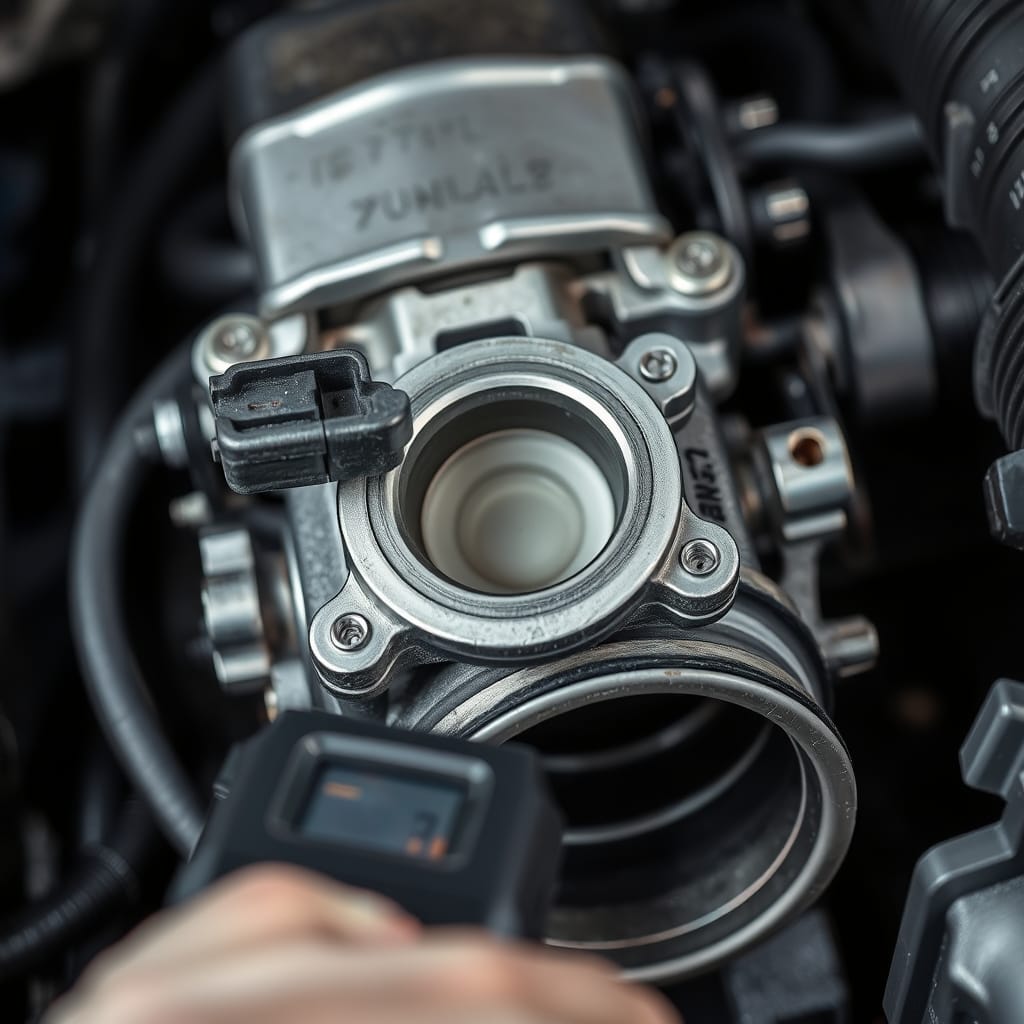
A throttle-position sensor or an integrated electronic throttle-body assembly can cause P0120 if testing confirms that the relevant signal or circuit does not operate as specified. On many vehicles, throttle-position sensors are integrated into the throttle body and may not be serviced separately. Confirm the component design before considering replacement.
Wiring, Connector, Reference, or Ground Problems
Open circuits, shorts, damaged wiring, loose terminals, corrosion, poor connections, reference-voltage faults, or ground problems can affect throttle/pedal position signals and trigger P0120. Inspect and electrically test the relevant circuit according to the vehicle wiring diagram rather than replacing a sensor based on the code alone.
Control-Module or Circuit-Interface Problems
A control-module input or internal fault is possible but should generally be considered only after the relevant sensors, wiring, connections, reference circuits, grounds, power supplies, and manufacturer-specified tests have been checked. Do not replace or reprogram a PCM/ECM solely because P0120 is present.
Calibration or Software Issues
On some vehicles, manufacturer service information may identify calibration updates, relearn requirements, or known electronic throttle-control issues associated with specific symptoms or DTCs. Check applicable manufacturer information before assuming software is involved. Programming or calibration changes should only be performed when supported by the vehicle-specific diagnostic procedure.
Accelerator-Pedal Position Sensor or Circuit Fault
Depending on the vehicle’s circuit design, an accelerator-pedal position sensor or its wiring may be involved in the monitored fault. Many pedal assemblies use multiple signals for redundancy. Compare the appropriate signals and circuits using manufacturer-specific specifications before deciding that the pedal assembly is faulty.
Diagnostic Approach for the P0120 Code
Diagnosing the P0120 code involves a systematic approach to confirm the issue and identify the root cause.
Verify the Complaint and Stored DTCs
Confirm the check-engine light, reduced-power warning, throttle-response complaint, or other reported symptoms. Scan all relevant modules and record P0120 along with any companion DTCs, freeze-frame data, and operating conditions before clearing anything.
Related throttle/pedal correlation, high/low-input, actuator, reference-voltage, or communication codes may significantly change the diagnostic direction.
Inspect the Relevant Wiring and Connectors
Use the vehicle wiring diagram to identify the circuit associated with P0120. Inspect accessible connectors and wiring at the throttle body, pedal assembly, and relevant control-module circuits for damage, loose terminals, corrosion, contamination, poor repairs, or harness problems.
Avoid probing or manipulating terminals in ways that can spread or damage them.
Review DTCs, Freeze-Frame Data, and Service Information
Review all stored and pending DTCs, freeze-frame information, and manufacturer-specific code definitions when available. P0120 identifies a detected circuit malfunction; it does not identify the failed component.
See our How to Read OBD2 Codes guide for a broader explanation of interpreting DTCs before replacing parts.
Compare Relevant Live-Data Signals
When supported, monitor the throttle-position and accelerator-pedal position parameters identified by the manufacturer. Observe whether the relevant signals change smoothly and correlate as expected while following the specified diagnostic procedure.
Do not manually force an electronic throttle plate unless the manufacturer specifically permits it. Some electronic throttle bodies can be damaged or behave unexpectedly when moved incorrectly.
Perform Circuit and Component Tests
Follow the manufacturer-specific diagnostic procedure for P0120. Depending on the system, testing may include checking power supply, reference voltage, ground integrity, signal circuits, continuity, shorts to power or ground, connector terminal condition, or signal behavior.
Use the specified test equipment and measurement method. Do not apply a universal resistance or voltage specification to TPS or APP circuits, and do not replace either component unless testing supports that conclusion.
Repair Considerations After Diagnosis
After successfully diagnosing the issue, take appropriate measures to resolve the identified problems.
Repair a Confirmed Throttle-Sensor or Throttle-Body Fault
If diagnosis confirms a fault in the throttle-position sensor or integrated throttle-body assembly, repair or replace the serviceable component according to manufacturer procedures. Some vehicles require throttle adaptation, initialization, or relearn after service; others perform this automatically.
Repair Confirmed Circuit Problems
Repair damaged wiring, terminals, connectors, grounds, or other circuit faults using appropriate automotive wiring-repair methods. After repair, confirm electrical integrity and ensure the harness is routed and secured correctly.
Address Mechanical Throttle-Body Problems Only When Confirmed
Throttle-body contamination or mechanical binding can affect operation on some vehicles, but cleaning should not be presented as a default repair for P0120. Inspect and clean the throttle body only when supported by the vehicle-specific procedure and observed condition.
Use an approved cleaning method because some electronic throttle bodies have coatings or components that can be damaged by inappropriate cleaners or manual movement.
Verify the Repair
After repairing the confirmed fault, perform any required throttle or accelerator-pedal initialization, relearn, or adaptation procedure. Clear DTCs when appropriate and reproduce the original operating conditions safely.
Confirm that P0120 does not reset, relevant throttle/pedal signals behave as specified, warning messages remain off, and normal throttle response has returned.
Electrical and Electronic Throttle Safety
Follow manufacturer procedures before disconnecting connectors, measuring circuits, or servicing electronic throttle-control components. Battery disconnection is not required for every diagnostic step and may erase useful data or create relearn requirements.
Never apply external voltage or ground to an electronic throttle, sensor, or control-module circuit unless the manufacturer procedure specifically instructs you to do so.
Moving Components and Unexpected Throttle Movement
Keep hands, tools, clothing, and test leads away from belts, fans, throttle linkages, and other moving components whenever the engine is running. Electronic throttle bodies may move when commanded by the control system, so keep fingers and tools clear of the throttle plate during powered testing.
Vehicle-Specific Considerations for P0120
The meaning of sensor designation “A,” circuit layout, throttle-body design, pedal-sensor configuration, expected signal values, fail-safe strategy, relearn procedures, and diagnostic test sequence vary among manufacturers and models.
Use manufacturer-specific service information, wiring diagrams, specifications, and applicable technical service information before performing circuit tests or replacing components.
Frequently Asked Questions
What does the P0120 code mean?
P0120 is generally defined as Throttle/Pedal Position Sensor/Switch “A” Circuit Malfunction. It indicates that the control module detected a problem involving the designated circuit or signal; it does not identify the failed component by itself.
What are the common symptoms of the P0120 code?
Possible symptoms include a check-engine light, reduced or abnormal throttle response, hesitation, poor acceleration, rough running, or a reduced-power/fail-safe mode. Symptoms vary by vehicle and fault.
What causes the P0120 code to trigger?
Possible causes include throttle-position or accelerator-pedal sensor/circuit faults, damaged wiring or connectors, reference-voltage or ground problems, an electronic throttle-body fault, and less commonly a control-module or vehicle-specific calibration issue. Testing is required to identify the actual cause.
How is the P0120 code diagnosed?
Diagnosis starts by recording P0120 and companion DTCs, freeze-frame data, and symptoms. Inspect the relevant wiring and connectors, review vehicle-specific wiring diagrams and service information, compare appropriate live-data signals, and perform targeted circuit or component tests before replacing parts.
Can I drive my vehicle with a P0120 code?
Driving may be unsafe if the vehicle has limited or unpredictable throttle response, enters reduced-power mode, stalls, or cannot accelerate normally. If throttle control is significantly affected, move to a safe location when possible and have the fault diagnosed before continuing normal driving.
How can I fix the P0120 code?
Repair the fault confirmed by diagnosis. Depending on the vehicle, this may involve repairing wiring or connectors, correcting a reference or ground problem, servicing a throttle-body or pedal-sensor assembly, or performing a required relearn or manufacturer-supported software procedure. Do not replace the TPS, APP, throttle body, or ECM based on P0120 alone.
Final Checks
P0120 reports a malfunction involving the designated throttle/pedal position sensor or switch “A” circuit; it does not prove that a TPS, accelerator-pedal sensor, throttle body, or ECM has failed. Record companion DTCs and freeze-frame data, inspect the relevant circuits, compare appropriate live-data signals, and perform vehicle-specific electrical tests before replacing components.
After repairing the confirmed cause, complete any required relearn or adaptation procedure and verify that P0120 does not return and normal throttle response has been restored.