
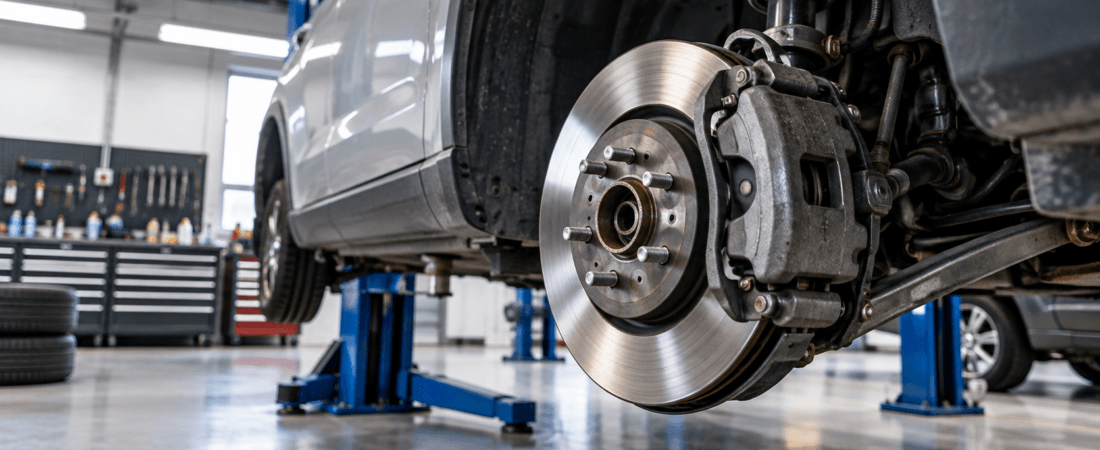
If your steering wheel shakes when braking, the vibration may originate from the front brakes, steering or suspension components, wheels, or tires. Brake-related vibration is often associated with rotor thickness variation, lateral runout, or uneven friction at the rotor surface, but the symptom alone does not identify the failed component. Note when the vibration occurs, inspect the relevant systems, and measure suspected brake components before replacing parts.
Why Your Steering Wheel Shakes When Braking
A steering-wheel vibration that appears mainly when the brakes are applied often points toward a condition affecting the front braking, steering, or suspension system. The speed at which it occurs, braking force, whether the brake pedal also pulsates, and whether vibration exists when you are not braking can help narrow the diagnosis. These patterns are clues rather than proof of a specific failed component.
Common Symptoms of Steering Wheel Vibration During Braking
Recognizing the symptoms accompanying a shaking steering wheel is essential for accurate diagnosis. Common signs include:
- Vibration felt through the steering wheel or the entire vehicle.
- Increased pulsation or feedback in the brake pedal.
- Noise such as grinding or clattering during braking.
- Changes in the vehicle’s directional stability while braking.
These symptoms help establish the vibration pattern but do not identify the cause by themselves. Grinding, pulling, reduced braking performance, or significant steering instability should be inspected promptly because they may indicate a more serious brake, wheel, steering, or suspension problem.
Possible Causes of Steering Wheel Shaking When Braking
Understanding possible causes is a crucial step in diagnosing the problem effectively.
Brake Rotor Thickness Variation or Runout
Brake rotor thickness variation or excessive lateral runout can create changing brake forces as the rotor turns, which may be felt through the brake pedal, steering wheel, or vehicle. Uneven friction-material transfer or rotor surface condition can produce similar symptoms. Do not assume a rotor is “warped” from vibration alone. Inspect the braking system and measure rotor thickness variation and runout against vehicle-specific specifications before deciding on repair.
Uneven Brake Pad Wear
Uneven brake-pad wear can indicate abnormal pad contact, sticking caliper hardware, caliper movement problems, rotor condition, or other braking-system faults. Inspect both pads and related hardware rather than treating uneven pad wear as the root cause automatically. Correct the condition responsible for the abnormal wear before installing replacement parts.
Sticking Brake Caliper or Hardware
A sticking caliper piston, seized or restricted slide hardware, or another caliper-related fault can cause uneven braking force, abnormal pad wear, heat buildup, pulling, and sometimes vibration. Compare brake wear and temperature patterns where appropriate and inspect caliper operation according to the vehicle-specific procedure before replacing components.
Tire Issues
Tire or wheel problems can cause steering-wheel vibration, but imbalance is typically more noticeable at particular road speeds even when the brakes are not applied. Inspect tires for damage, abnormal wear, inflation problems, and wheel issues. If the vibration occurs only during braking, prioritize brake and related steering/suspension checks while still considering tire or wheel faults when the symptom pattern supports them.
Suspension Problems
Worn or loose steering and suspension components can allow braking forces to produce noticeable steering-wheel movement. Depending on the vehicle, inspect components such as tie-rod ends, ball joints, control-arm bushings, wheel bearings, and other relevant joints for looseness or damage using the manufacturer-specified inspection procedure. Do not replace suspension parts based on vibration alone.
Alignment Issues
Wheel alignment problems can contribute to abnormal tire wear, pulling, or directional instability, but alignment alone is not usually the first explanation for a vibration that occurs only when braking. Inspect tire wear and steering/suspension condition first, and check alignment when the symptom pattern or inspection findings support it.
Diagnostic Steps to Identify the Cause
To accurately diagnose why your steering wheel shakes when braking, follow these systematic steps:
Verify the Complaint
Determine exactly when the vibration occurs before disassembling anything. Note the vehicle speed, braking intensity, whether the steering wheel, brake pedal, or entire vehicle vibrates, and whether the vibration also occurs while cruising without braking. If the vehicle has severe vibration, reduced braking ability, pulling, grinding, or unstable steering, avoid an unnecessary road test and inspect the vehicle safely first.
Inspect Simple Causes
Inspect the tires and wheels for visible damage or abnormal wear, then examine accessible brake components for uneven pad wear, rotor damage, overheating, contamination, and caliper or hardware problems. Inspect relevant steering and suspension components for looseness or damage. Visual inspection can reveal important clues, but rotor runout and thickness variation require measurement rather than visual judgment alone.
Scan for Codes
A scan tool is not usually the primary diagnostic tool for ordinary brake vibration, but it can be useful if ABS, stability-control, or related warning lights are present. Retrieve codes and relevant live data when appropriate. A stored DTC identifies a detected condition in the monitored system; it does not by itself prove the mechanical cause of the steering-wheel vibration.
Test Relevant Systems and Components
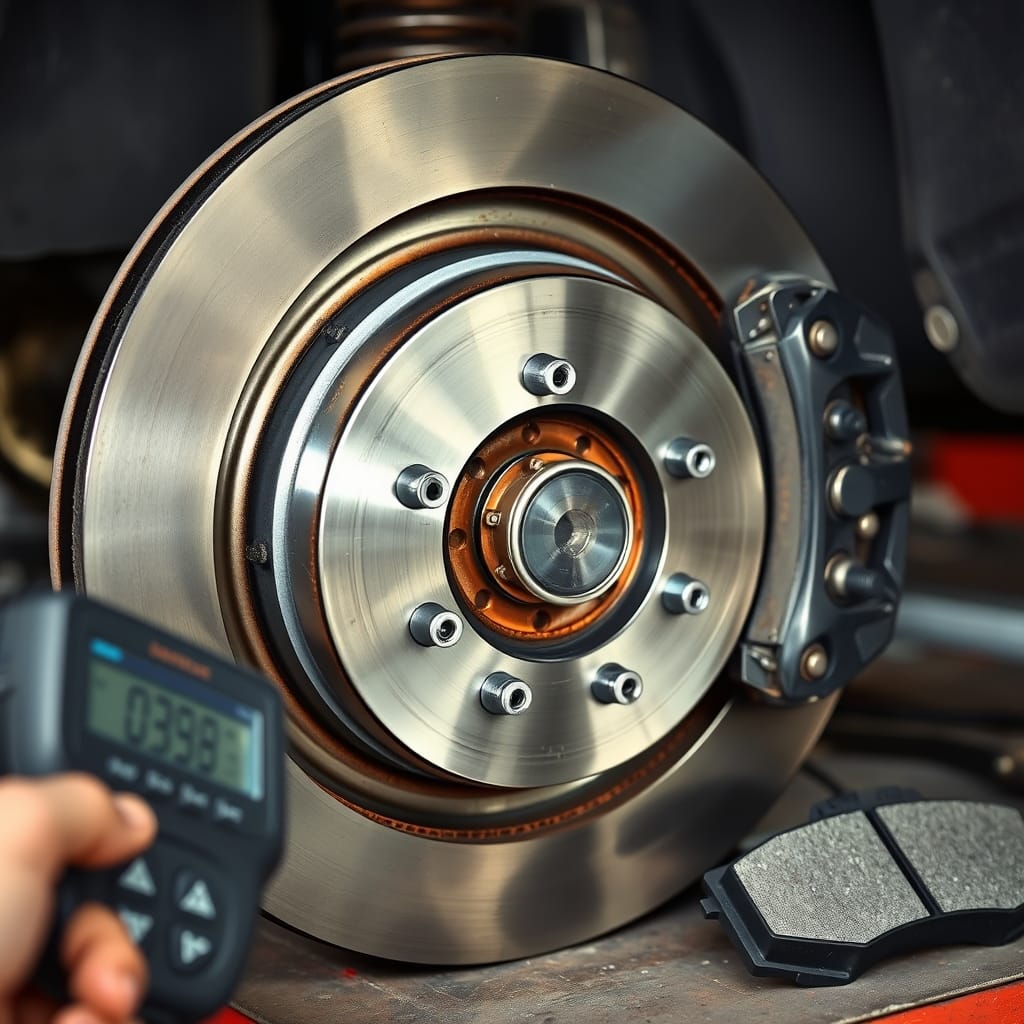
If brake-related vibration remains suspected, measure rotor lateral runout and thickness variation using appropriate tools and compare the results with vehicle-specific specifications. Inspect hub and rotor mounting surfaces, wheel-bearing condition, brake-pad wear, and caliper operation where relevant. Check steering and suspension joints for excessive play using the specified procedure. Confirm the source of the vibration before replacing brake, tire, wheel, steering, or suspension components.
Repair Options After Diagnosis
Once a diagnosis has been established, several repair options might be available:
Correcting a Confirmed Rotor Problem
If measurement confirms rotor thickness variation, excessive runout, or another serviceable rotor condition, determine the appropriate repair using manufacturer specifications. Depending on rotor condition, remaining thickness, vehicle requirements, and available service procedures, resurfacing may be permitted or replacement may be required. Also identify and correct contributing problems such as hub contamination, improper mounting, wheel-bearing play, or abnormal brake operation before installing or servicing the rotor.
Replacing Uneven Brake Pads
Replace brake pads when inspection confirms they are worn beyond specification, damaged, contaminated, or otherwise unserviceable. If wear is uneven, diagnose and correct the underlying cause—such as caliper, hardware, rotor, or mounting problems—rather than replacing the pads alone. Service the rotor only when inspection and measurement show that it requires correction.
Repairing a Confirmed Caliper or Hardware Fault
If diagnosis confirms a sticking caliper, seized slide hardware, or another brake-hardware fault, repair or replace the confirmed component according to the vehicle-specific procedure. After repair, verify free movement where applicable, correct brake operation, and even braking without abnormal heat buildup or pulling.
Addressing Suspension Component Wear
If worn suspension components are discovered, replacing or repairing those parts will be essential. Restoring these components can help ensure stable handling and eliminate vibrations caused by suspension issues.
Tire Maintenance Considerations
If diagnosis confirms a tire or wheel problem, correct the specific fault identified. This may involve adjusting inflation, balancing a wheel-and-tire assembly, repairing or replacing a damaged component, or correcting alignment when measurement shows it is outside specification. Do not use tire balancing or alignment as a default repair for vibration that occurs only during braking.
Safety Considerations for Addressing Steering Wheel Shaking
Steering-wheel vibration during braking should not automatically be treated as a brake failure, but it should not be ignored. Stop driving and arrange inspection if the vehicle has significantly reduced braking ability, severe pulling, grinding, a loose or unstable steering feel, or severe vibration. When inspecting brakes, allow hot components to cool, support a raised vehicle at manufacturer-approved lifting points with properly rated equipment, and never work beneath a vehicle supported only by a jack. Follow vehicle-specific procedures for brake and suspension work.
Vehicle-Specific Diagnostics and Repair Considerations
Rotor runout and thickness specifications, minimum rotor thickness, brake service procedures, wheel fastener torque, suspension inspection methods, and allowable component play vary by vehicle. Use manufacturer-specific service information for the exact model and braking system before making measurements or repair decisions. Generic symptoms can guide diagnosis, but vehicle-specific specifications should determine whether a component is serviceable.
Frequently Asked Questions
What can cause a steering wheel to shake when braking?
Possible causes include brake rotor thickness variation or runout, uneven brake friction, sticking caliper or hardware problems, abnormal pad wear, loose steering or suspension components, and some tire or wheel faults. The vibration pattern and diagnostic measurements are needed to determine the actual cause.
Can I still drive my car if the steering wheel shakes when I brake?
Mild vibration does not automatically mean the brakes are about to fail, but the cause should be diagnosed promptly. Stop driving and arrange inspection if the vehicle has reduced braking performance, severe pulling, grinding, unstable steering, or severe vibration.
How can I diagnose why my steering wheel shakes when braking?
Start by determining whether the vibration occurs only during braking or also while cruising, and note whether it is felt mainly through the steering wheel, brake pedal, or entire vehicle. Inspect the brakes, tires, wheels, steering, and suspension, then measure rotor runout and thickness variation if brake-related vibration is suspected. Scan ABS or stability-control systems when warning lights or other symptoms make electronic-system faults relevant.
What should I check first if my steering wheel shakes while braking?
First determine whether the vibration occurs only while braking or also while cruising. Then inspect the tires, wheels, brakes, steering, and suspension for obvious problems. If the vibration is brake-related, rotor runout and thickness variation should be measured rather than judging rotor condition by appearance alone.
Does a shaking steering wheel indicate a specific part that needs to be replaced?
Not necessarily. The shaking can indicate various issues, and it’s essential to diagnose the problem accurately before replacing any components.
Final Checks
A steering wheel that shakes during braking does not identify one failed component. Use the conditions under which the vibration occurs to narrow the diagnosis, inspect the braking, wheel, steering, and suspension systems, and measure suspected rotor problems before replacing parts. Correct only faults supported by diagnostic evidence, then verify the repair under safe conditions. Seek professional inspection if braking performance, steering stability, or the required measurements are beyond your ability to evaluate safely.