
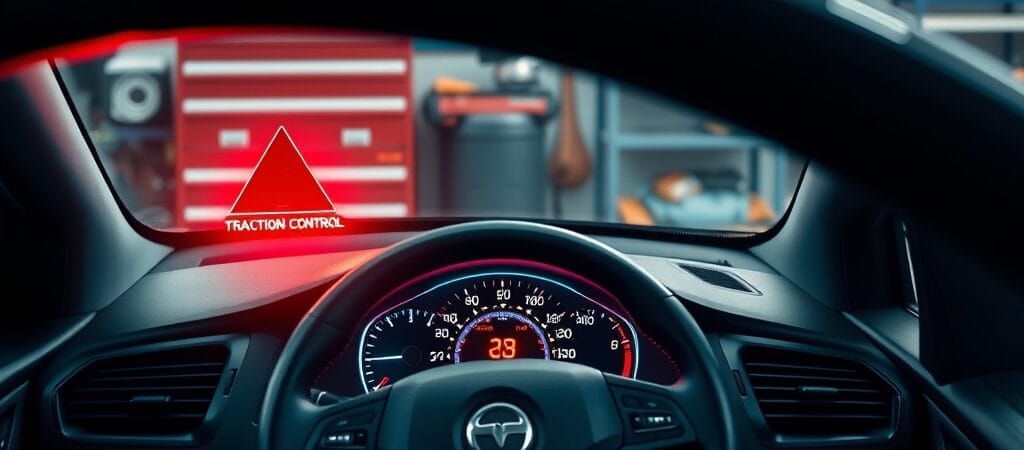
The traction control warning or indicator light can have different meanings depending on how and when it appears. A flashing indicator commonly means the system is actively reducing wheel slip, while a light that stays on may indicate that traction control has been switched off, is temporarily unavailable, or has a stored fault. Because traction control often shares wheel-speed information and other components with ABS and electronic stability control, diagnosis should consider related warning lights and faults. Exact indicator behavior varies by vehicle, so confirm its meaning in the owner’s manual before assuming a component has failed.
What Does It Mean When the Traction Control Light Is On?
Traction control helps limit excessive driven-wheel slip by using information from wheel-speed and other vehicle sensors. Depending on the vehicle, the system may reduce engine torque, apply braking to an individual wheel, or use both strategies. The dashboard indicator may show active intervention, intentional system deactivation, temporary unavailability, or a detected fault. The light alone does not identify which component or system is responsible.
Symptoms of a Traction Control Light Activation
Solid Light vs. Flashing Light
A flashing or blinking traction-control indicator commonly means the system is actively intervening because wheel slip has been detected. A light that remains continuously illuminated may mean the system has been switched off, is temporarily unavailable, or has detected a fault, depending on the vehicle. Do not use the light pattern alone to diagnose a failure; check the owner’s manual for the exact indicator behavior.
Additional Warning Lights to Consider
Note whether the ABS, stability-control, brake, Check Engine, or other warning lights are illuminated at the same time. Traction control, ABS, and electronic stability control often share sensors, control modules, and communication networks, so one fault may disable more than one function. Record all warning lights before clearing codes or disconnecting the battery because the combination can provide useful diagnostic information.
Common Causes of the Traction Control Light Being On
Wheel-Speed Signal Problems
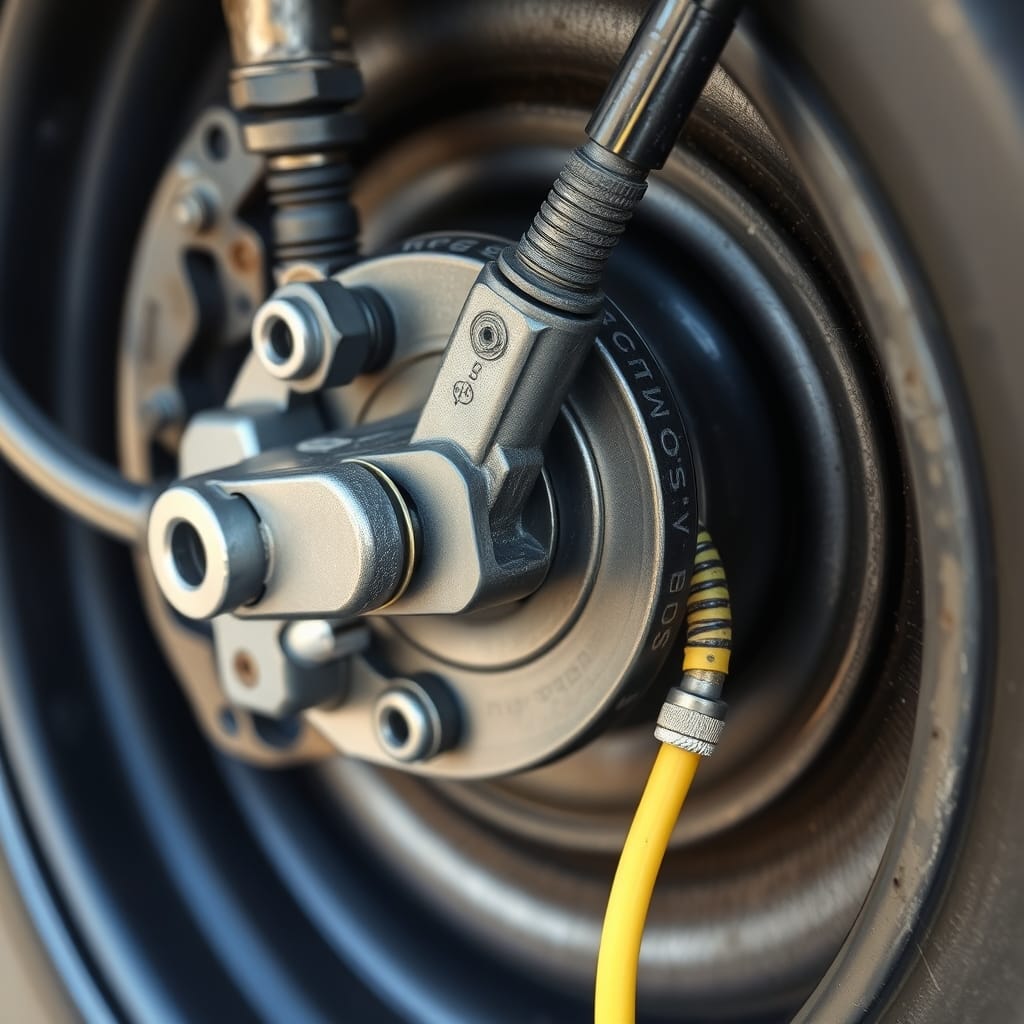
Traction control relies heavily on accurate wheel-speed information. A missing, intermittent, or implausible wheel-speed signal may result from a sensor, wiring or connector fault, damaged tone/reluctor ring, excessive bearing play, incorrect sensor gap where applicable, or another vehicle-specific problem. A wheel-speed-related DTC does not automatically prove that the sensor itself has failed.
ABS/ESC System Faults
Traction control commonly shares hardware and data with the anti-lock braking and electronic stability-control systems. A fault involving the ABS/ESC module, hydraulic unit, power supply, wiring, communication network, or another shared input can disable traction-control functions. Diagnose the stored fault and circuit before replacing an ABS module or hydraulic component.
Electronics or Module Issues
Wiring damage, poor connections, low system voltage, communication faults, sensor-signal problems, or control-module faults can affect traction-control operation. Module failure is only one possibility and should generally be considered after power supplies, grounds, networks, inputs, and relevant circuits have been tested according to vehicle-specific procedures.
Tire Mismatches
Incorrect tire size, substantially different rolling circumference, significant pressure differences, or uneven tire wear can create wheel-speed differences that affect ABS, traction-control, or stability-control operation on some vehicles. The tires do not necessarily need to be the same brand, but they should meet the vehicle manufacturer’s size, type, pressure, load, and axle-specific requirements. AWD and other sensitive drivetrains may have additional circumference or tread-depth requirements.
System Deactivation Scenarios
Some vehicles allow the driver to reduce or disable traction-control intervention using a dashboard control. The indicator may remain illuminated while the system is intentionally switched off. Certain vehicles may also limit traction-control or stability-control operation because of another detected fault. Confirm the switch status and the manufacturer’s indicator behavior before diagnosing a malfunction.
How to Diagnose the Traction Control Light Issue
Verify the Light Activation Conditions
Determine whether the indicator flashes only during wheel slip or remains illuminated continuously. Note road conditions, vehicle speed, acceleration, recent tire or brake work, and whether ABS, stability-control, brake, or Check Engine warnings appear at the same time. Confirm whether traction control was intentionally switched off and check the owner’s manual for the vehicle-specific meaning of the indicator.
Inspect Tire Conditions and Sizes
Check tire pressures and inspect the tires for incorrect sizes, substantial differences in wear or rolling circumference, damage, or other conditions that could create abnormal wheel-speed relationships. Compare the tire specifications with the vehicle manufacturer’s requirements rather than assuming all four tires must simply be the same brand.
Inspect Wheel-Speed Sensor Systems
Inspect accessible wheel-speed sensor wiring, connectors, sensor mounting areas, and tone/reluctor components for obvious damage, corrosion, contamination, or signs of recent repair. Where supported, use scan data to compare individual wheel-speed signals while the vehicle is operated or the wheels are rotated according to a safe diagnostic procedure. Do not replace or clean a sensor solely because a traction-control warning is present.
Scan the ABS/ESC System for Diagnostic Codes
Use a scan tool capable of communicating with the ABS/ESC or stability-control module, not just a basic engine-code reader. Read stored and current DTCs and review relevant live data before clearing anything. Your guide on how to read OBD2 codes explains the general code-reading process, but traction-control diagnosis may require enhanced or manufacturer-specific module access. Treat each code as a starting point for testing rather than proof that the named sensor or component has failed.
Compare Live Wheel-Speed and Related Data
When supported by the scan tool, compare individual wheel-speed signals at low speed and during the conditions associated with the warning. A signal that drops out, differs unexpectedly, or behaves implausibly can help identify which circuit or wheel area requires further testing. Also review other relevant ABS/ESC inputs when indicated by the stored codes. Confirm the signal path before replacing a sensor or module.
Repair Options After Diagnosis
Repairing a Confirmed Wheel-Speed Signal Fault
Repair the specific cause identified during testing. Depending on the vehicle, this may involve a wheel-speed sensor, damaged wiring or connector, tone/reluctor component, wheel bearing or hub assembly, or another part of the signal path. Clean a sensor or mounting area only when contamination is actually affecting operation, and replace components only when diagnostic evidence supports the repair.
Repairing a Confirmed ABS/ESC System Fault
If diagnosis confirms an ABS/ESC system fault, repair the specific circuit or component identified by testing. This may involve wiring, connectors, power or ground circuits, sensors, hydraulic components, or a control module depending on the vehicle and fault. Some module or hydraulic-unit replacements may require programming, coding, calibration, or bleeding procedures. Do not replace an ABS module solely because traction control is unavailable.
Correcting Tire-Related Causes
Correct tire pressure and replace damaged, incorrect, or excessively mismatched tires when they are confirmed to be contributing to abnormal wheel-speed information. Follow the vehicle manufacturer’s tire-size and drivetrain requirements, particularly on AWD or other systems sensitive to rolling-circumference differences.
Repairing Wiring, Power, or Communication Faults
Repair confirmed wiring, connector, power-supply, ground, or network faults according to the vehicle-specific procedure. After the repair, clear DTCs when appropriate and confirm that the ABS, traction-control, and stability-control systems communicate normally and no relevant faults return.
Safety Considerations When the Traction Control Light Is On
A traction-control warning does not necessarily mean the vehicle has lost normal braking, but traction-control and possibly stability-control assistance may be reduced or unavailable when a fault is present. Drive cautiously, especially on wet, icy, loose, or otherwise low-traction surfaces. If the ABS light, red brake warning, abnormal braking behavior, severe stability problem, or other serious warning accompanies the traction-control light, arrange prompt diagnosis and avoid driving when braking or vehicle control is compromised. When inspecting wheel-area components, support the vehicle only at approved lifting points with properly rated equipment and keep clear of rotating wheels and moving components.
Vehicle-Specific Considerations for Traction Control Diagnostics
Traction-control, ABS, and stability-control strategies vary significantly between manufacturers and models. Warning-light behavior, switch operation, wheel-speed sensor design, diagnostic codes, scan-tool access, calibration procedures, tire requirements, and repair specifications may all differ. Use the owner’s manual to interpret the dashboard indicator and manufacturer-specific service information to diagnose and repair the system.
Frequently Asked Questions
What does it mean if the traction control light is on?
The meaning depends on the vehicle and how the indicator behaves. A flashing light commonly indicates active traction-control intervention, while a continuously illuminated light may indicate that the system is switched off, temporarily unavailable, or has detected a fault. Check the owner’s manual for the exact meaning.
What are the common causes of the traction control light being on?
If the light remains on because of a fault, possible causes include wheel-speed signal problems, ABS/ESC faults, wiring or communication issues, power-supply problems, tire-related wheel-speed differences, or other vehicle-specific faults. The light may also remain on when the driver intentionally disables traction control.
Can I drive safely with the traction control light on?
It depends on what the light means and whether other warnings are present. If traction control is unavailable, the vehicle may have less assistance controlling wheel slip, particularly on low-traction surfaces. Drive cautiously and arrange diagnosis if the light stays on unexpectedly. If braking behavior is abnormal, a red brake warning appears, or vehicle control is compromised, avoid continued driving.
How can I diagnose the issue with my traction control light?
First determine whether the indicator is flashing during wheel slip or remains on continuously and check for other warning lights. Verify tire condition and pressure, then use a scan tool capable of accessing the ABS/ESC module to read DTCs and live data. Inspect and test the wheel-speed signal path or other circuits indicated by the diagnostic evidence before replacing parts.
What should I do if the traction control light stays on?
Confirm that traction control has not been intentionally switched off and check the owner’s manual for the indicator meaning. If the light remains on unexpectedly, scan the ABS/ESC system for faults and diagnose the stored codes. Do not disconnect the battery or repeatedly clear codes before recording the diagnostic information.
Final Checks
A traction-control light does not identify a failed component by itself. First determine whether the indicator represents active intervention, intentional deactivation, temporary unavailability, or a system fault. Check related warning lights and tire conditions, scan the ABS/ESC module with an appropriate tool, review live data where useful, and test the circuit or component indicated by the evidence. Repair only the confirmed fault, then verify that relevant DTCs do not return and that the traction-control, ABS, and stability-control systems operate as intended.