
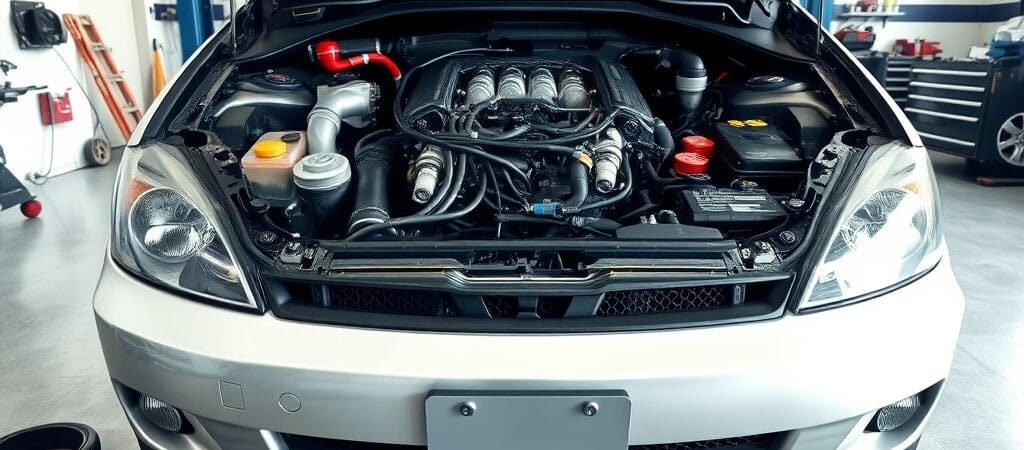
If your engine or vehicle shakes at idle, the vibration can come from uneven engine operation or from vibration being transmitted more strongly through the vehicle. Possible causes range from misfire, air or fuel-control problems, and other engine-management faults to worn engine or transmission mounts. The symptom alone does not identify the failed component. This guide explains how to distinguish different types of idle vibration and diagnose the underlying cause before replacing parts.
Why Your Engine May Shake at Idle
Idle vibration can have different causes. The engine may actually be running unevenly because one or more cylinders are not producing consistent torque, or the engine may be running normally while worn mounts allow more vibration to reach the body of the vehicle.
The first diagnostic goal is therefore to determine whether the engine itself is running rough or whether normal engine vibration is simply being transmitted excessively into the cabin.
Recognizing Symptoms of Engine Shaking
Vibration Felt Through the Vehicle
Idle vibration may be felt through the steering wheel, seat, floor, pedals, or body of the vehicle. Note whether the vibration changes when the transmission is shifted between Park/Neutral and Drive, when electrical or A/C loads change, or when engine speed is raised slightly. These observations can help distinguish an engine-running problem from vibration associated with mounts or other components.
Unstable or Fluctuating Idle Speed
If engine speed rises and falls or the engine struggles to maintain a stable idle, the vibration may be associated with an engine-management, airflow, fueling, ignition, or combustion problem. Record when the RPM variation occurs rather than assuming that one particular component is responsible.
Warning Lights and Other Symptoms
Note whether the Check Engine Light or another warning indicator is illuminated and whether the engine also misfires, hesitates, stalls, starts poorly, lacks power, or produces unusual noises. These additional symptoms can help determine which diagnostic path to follow.
A flashing Check Engine Light can indicate a severe misfire on many vehicles. If it flashes while the engine is running poorly, reduce load and follow the vehicle manufacturer’s guidance because continued operation may damage the catalytic converter.
Common Causes of Engine Shaking at Idle
Ignition or Misfire Problems
On spark-ignition engines, an ignition fault can cause one or more cylinders to misfire and produce a rough or shaking idle. Depending on the vehicle, possible contributors include spark plugs, ignition coils, wiring, connectors, or related control circuits.
Do not replace spark plugs or ignition coils solely because the engine shakes. Check for misfire DTCs and perform appropriate cylinder-specific testing before identifying the failed component.
For a broader diagnostic process, see our How to Diagnose Engine Misfire guide.
Unmetered Air or Intake Leaks
Air entering the engine through an unintended path can affect idle quality on some engine-management systems. Possible leak points vary by vehicle and may include intake hoses, manifold seals, vacuum hoses, PCV-related components, or other intake connections.
Inspection, scan data, smoke testing, or other vehicle-specific procedures may be needed to confirm an intake leak. Do not use flammable sprays around a running engine to search for leaks.
Fueling or Injector Problems
Incorrect fuel delivery or injector operation can contribute to unstable combustion and rough idle. Depending on the vehicle, possible causes include injector faults, incorrect fuel pressure, electrical control problems, fuel-quality issues, or other fuel-system conditions.
Diagnose the system using appropriate scan data, fuel-system testing, and vehicle-specific procedures rather than assuming that the fuel pump or filter is responsible.
Worn or Damaged Engine or Transmission Mounts
Engine and transmission mounts isolate normal powertrain vibration from the vehicle body. A damaged, collapsed, loose, or fluid-leaking mount can allow more vibration to reach the cabin, particularly at idle or when the transmission is placed in gear.
A mount problem may produce noticeable vibration even when engine speed and combustion are otherwise stable. Inspect the mounting system according to vehicle-specific procedures before replacing a mount.
Airflow and Idle-Control Problems
Idle airflow is controlled differently across vehicle designs. Older systems may use a separate idle-air-control valve, while many newer vehicles regulate idle through an electronic throttle body and engine-management strategy. Deposits, airflow faults, throttle-control problems, sensor inputs, adaptations, or other system-specific conditions may affect idle stability.
Diagnose the actual system fitted to the vehicle rather than assuming that an idle-air-control valve is present.
Mechanical Timing or Engine-Condition Problems
Incorrect mechanical timing, valve-train problems, low or uneven compression, or other internal engine conditions can cause rough operation and vibration. These possibilities are generally investigated when symptoms, DTCs, scan data, previous repair history, abnormal noises, or preliminary testing point toward a mechanical problem.
Mechanical timing and compression should be verified using the correct procedure for the specific engine rather than inferred from idle vibration alone.
Other Engine-Management or Mechanical Causes
If initial ignition, intake, fueling, mount, and scan-data checks do not explain the vibration, continue diagnosis based on the evidence. Other possibilities can include exhaust-flow restrictions, EGR-related problems where applicable, sensor or control faults, or additional mechanical conditions. Test the relevant system before replacing components.
Diagnostic Approach for Engine Shaking
Verify the Complaint
Confirm when the vibration occurs and whether the engine itself is running unevenly. Note engine speed, warning lights, unusual sounds, and whether the vibration changes between Park/Neutral and Drive, with the A/C on or off, or when engine speed is raised slightly.
Also determine whether the symptom occurs only when cold, only after warm-up, continuously, or under additional electrical or accessory load. These details can help separate combustion or idle-control problems from mount-related vibration.
Inspect Accessible Components
With the engine off and following appropriate safety procedures, inspect accessible intake hoses, vacuum or PCV-related connections, ignition wiring and connectors where applicable, and engine or transmission mounts for obvious damage or disconnection.
Do not replace a visibly aged component unless inspection or testing supports it as the cause of the vibration.
Scan for DTCs and Relevant Data
Retrieve stored and pending DTCs and record freeze-frame information before clearing anything. Misfire, fuel-trim, airflow, throttle, sensor, or other engine-management codes may provide useful diagnostic direction.
Review relevant live data where appropriate, which may include misfire information, fuel trims, engine speed, airflow or manifold-pressure data, throttle information, and other vehicle-specific parameters.
A DTC identifies a detected condition; it does not by itself prove which component has failed.
If P0300 is stored, see our P0300 Code guide for a structured approach to diagnosing random or multiple-cylinder misfires.
Perform Targeted Testing
Use the symptoms, DTCs, scan data, inspection results, and vehicle-specific information to decide what to test next. Depending on the evidence, diagnosis may include:
- cylinder-specific ignition or misfire testing;
- intake-leak testing;
- injector or fuel-system testing;
- airflow or throttle-control diagnosis;
- engine/transmission mount inspection;
- compression or mechanical-timing testing when indicated.
Avoid testing or replacing unrelated systems simply because they appear on a general list of possible causes.
Repair Only the Confirmed Cause
Repair should follow the diagnostic evidence. Depending on the confirmed fault, this may involve repairing an intake leak, correcting an ignition or fueling problem, repairing wiring or connections, servicing a vehicle-specific airflow or idle-control fault, replacing a confirmed damaged mount, or correcting a mechanical engine problem.
Do not replace spark plugs, ignition coils, injectors, fuel pumps, engine mounts, sensors, or timing components simply because the engine shakes at idle.
After repair, reproduce the conditions that originally caused the vibration and confirm that idle quality has returned to normal. Recheck relevant DTCs and scan data and verify that the original symptom does not return.
Safety Considerations
The urgency depends on the accompanying symptoms. Stop driving when safe and investigate promptly if the engine is severely misfiring, a Check Engine Light is flashing, the engine stalls repeatedly, there are serious abnormal mechanical noises, or another warning indicates that continued operation could cause damage or create a hazard.
Mild vibration without severe symptoms does not automatically mean the vehicle is unsafe to move, but persistent or worsening vibration should still be diagnosed.
Keep hands, clothing, tools, and test leads away from belts, pulleys, fans, and other moving or hot components while the engine is running. Never work beneath a vehicle supported only by a jack.
Vehicle-Specific Considerations
Idle-control strategies, ignition systems, fuel systems, engine mounts, normal idle speeds, cylinder layouts, and diagnostic data vary significantly between vehicles. Some engines naturally transmit more vibration than others, and hybrid or stop-start systems may also behave differently at a standstill.
Use service information for the exact year, make, model, and engine when evaluating specifications, test procedures, component operation, and acceptable vibration or idle behavior.
Frequently Asked Questions
What can cause my engine to shake at idle?
Possible causes include ignition or misfire problems, intake leaks, fueling or injector faults, airflow or idle-control problems, worn engine or transmission mounts, and mechanical engine conditions. The symptom alone does not identify which system is faulty.
How do I know if my engine is shaking at idle?
You may feel vibration through the steering wheel, seat, floor, or vehicle body while the engine is idling. Note whether engine RPM is unstable and whether the vibration changes when shifting between Park/Neutral and Drive, switching the A/C on or off, or slightly increasing engine speed.
Is it safe to drive with my engine shaking at idle?
It depends on the severity and accompanying symptoms. Stop driving when safe if the engine is severely misfiring, the Check Engine Light is flashing, the engine repeatedly stalls, or serious mechanical noises or other critical warnings are present. Mild vibration should still be diagnosed but does not automatically mean the vehicle is unsafe to move.
How can I diagnose the cause of engine shaking?
First determine whether the engine is actually running rough or whether vibration is being transmitted through the mounts. Record when the symptom occurs, scan for DTCs and relevant data, inspect accessible components, and then perform targeted ignition, intake, fuel, mount, or mechanical testing based on the evidence.
Should I consult a professional for engine shaking issues?
Professional diagnosis is appropriate when the cause cannot be confirmed with safe basic checks, specialized testing is required, or the vehicle has severe misfire, stalling, abnormal mechanical noise, or other symptoms that make continued operation risky.
Final Checks
Engine shaking at idle can result from uneven combustion or engine operation, or from normal vibration being transmitted excessively through worn mounts. Begin by identifying when the vibration occurs and whether engine speed or combustion is unstable. Use DTCs, scan data, visual inspection, and targeted testing to narrow the cause rather than replacing parts based on the symptom alone. Repair only the confirmed fault, then reproduce the original conditions and verify that the vibration and any related codes do not return.