
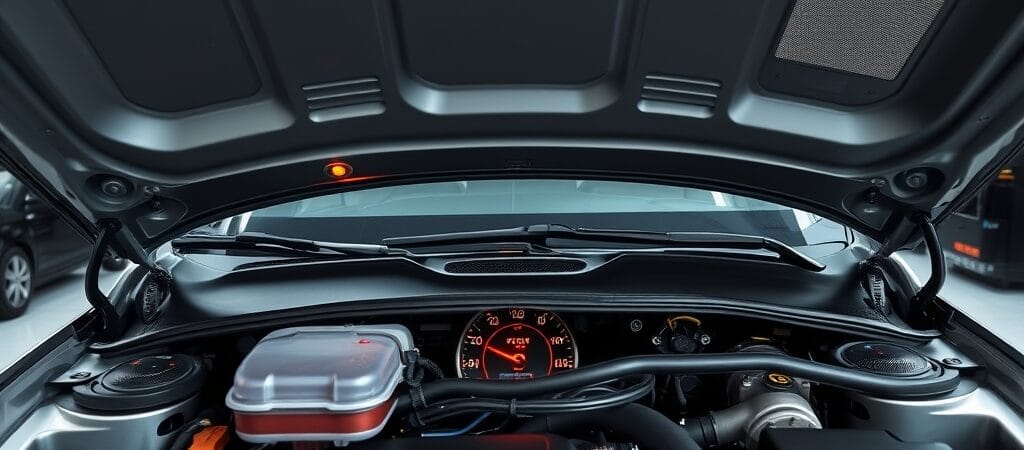
An oil-pressure warning light can indicate dangerously low engine oil pressure, but it does not identify the cause by itself. If the light comes on while driving, pull over safely and switch the engine off as soon as possible. Do not continue driving or let the engine run to “see if it clears,” because low oil pressure can cause severe engine damage. Once the engine has cooled and it is safe to inspect, check the oil level and arrange diagnosis if the warning remains on or the oil level is normal.
Common Symptoms Indicating Oil Pressure Issues
Warning Light Activation
The most obvious sign is the oil-pressure warning light on the dashboard, commonly represented by an oil-can symbol. Depending on the vehicle, the warning may indicate that the oil-pressure monitoring system has detected a low-pressure condition or another problem with the monitoring circuit. Treat the warning as potentially serious until actual oil pressure has been verified.
Unusual Engine Noises
Ticking, knocking, or other abnormal engine noises can accompany genuinely low oil pressure because critical engine components may not receive adequate lubrication. However, these noises can have other causes and do not confirm low oil pressure by themselves. If an oil-pressure warning appears together with severe abnormal engine noise, switch the engine off as soon as it is safe to do so and avoid restarting it until the cause has been assessed.
Other Symptoms That May Occur
Some underlying engine or lubrication-system faults may produce additional symptoms, but overheating or reduced performance should not be treated as reliable indicators of low oil pressure by themselves. Diagnose these symptoms separately while determining whether the oil-pressure warning represents genuinely low pressure or a monitoring-system fault.
Possible Causes of the Oil Pressure Warning Light Activation
Low Oil Level
A low engine-oil level can contribute to loss of oil pressure if the oil supply becomes insufficient for the pump to maintain proper lubrication. However, a low oil level and low oil pressure are not the same condition. Check the level using the procedure specified for the vehicle, and investigate the reason for significant oil loss rather than simply topping it off repeatedly.
Oil Contamination
Incorrect oil viscosity, severely degraded oil, sludge, fuel or coolant contamination, or other oil-condition problems may affect lubrication or oil-pressure control depending on the engine. Inspect the oil condition and verify that the correct oil specification and viscosity are being used. Do not assume contaminated oil is responsible solely because the warning light is on.
Faulty Oil Pressure Sensor
A faulty oil-pressure sensor or switch, damaged wiring, poor electrical connections, or another monitoring-system problem can illuminate the warning even when mechanical oil pressure is acceptable. Verify actual oil pressure and test the monitoring circuit before replacing the sensor.
Oil Pump Failure
An oil pump or pressure-regulation problem can cause genuinely low oil pressure, but pump failure should not be assumed from the warning light alone. Actual pressure should be measured and other possible causes—such as oil level, oil condition, pickup restrictions, filter problems, or internal engine clearances—evaluated before condemning the pump.
Clogged Oil Filter
An incorrect, damaged, severely restricted, or otherwise unsuitable oil filter may contribute to lubrication-system problems on some engines. However, the effect depends on the engine and filter-system design, including bypass arrangements. Inspect the filter and service history as part of the diagnosis rather than assuming a clogged filter is the cause of the warning.
Worn Engine Components
Excessive internal engine clearances, including worn bearings, can contribute to low oil pressure because oil escapes through the lubrication clearances more readily. Internal wear should be considered only after actual pressure has been verified and simpler causes have been evaluated. The exact diagnosis depends on the engine design and manufacturer specifications.
Diagnostic Steps for Oil Pressure Warning Light
Verifying the Complaint
Confirm whether the warning is the oil-pressure light, not an oil-level or service reminder. Note whether the engine made ticking, knocking, or grinding noises, but do not restart or continue operating an engine with an active oil-pressure warning until it has been assessed safely.
Inspecting Simple Causes
With the engine off and cooled, check the oil level using the vehicle-specific procedure and inspect for obvious oil leaks. Do not assume that adding oil fixes the problem; a normal oil level does not prove that oil pressure is correct.
Scanning for Related Codes
If the vehicle supports relevant diagnostic data, scan the appropriate control modules for related DTCs and review available oil-pressure or engine data. Trouble codes can help identify sensor, circuit, or related control-system faults, but the absence of a code does not prove that mechanical oil pressure is correct. See our How to Read OBD2 Codes: A Step-by-Step Diagnostic Guide for guidance on interpreting DTCs and scan data.
Testing Relevant Systems
If it is safe to operate the engine for testing, compare the indicated oil pressure with actual oil pressure measured using the manufacturer-specified procedure, appropriate test equipment, and the vehicle manufacturer’s pressure specifications. If pressure is outside specification, diagnose possible oil-supply, filter, pickup, pump, pressure-regulation, or internal-engine problems according to the test results. If mechanical pressure is correct, investigate the sensor or switch, wiring, connectors, instrument or control-module inputs, and related monitoring circuitry as applicable.
Repair Options After Diagnosis
Repairs Based on the Confirmed Cause
Repair should follow the diagnosis rather than the warning light alone. If the oil level is low, correct it with the manufacturer-specified oil and investigate why oil was lost or consumed. If testing confirms an incorrect or defective filter, oil-condition problem, sensor or circuit fault, pickup restriction, pressure-regulation problem, oil-pump fault, or internal engine wear, repair the confirmed cause according to vehicle-specific service information.
Complex Repairs and Considerations
Internal engine, oil-pump, pickup, or pressure-regulation repairs may require significant disassembly and specialized testing. Do not replace an oil pump or internal engine components solely because the oil-pressure warning light is illuminated. Confirm actual pressure and isolate the cause first.
Safety Precautions When the Oil Pressure Light is On
Immediate Actions to Take
If the oil-pressure warning light comes on while driving, safely move out of traffic and switch the engine off as soon as possible. Do not continue driving or repeatedly restart the engine to see whether the warning disappears. Once the engine has cooled and it is safe to inspect, check the oil level according to the vehicle-specific procedure. If the level is normal, the warning remains, severe engine noise is present, or the cause cannot be established safely, arrange professional diagnosis rather than continuing to drive.
Long-Term Safety Practices
Follow the manufacturer’s maintenance schedule for engine-oil level checks, oil and filter changes, and the specified oil grade and viscosity. Maintenance intervals vary by vehicle, engine, operating conditions, and oil specification, so use the owner’s manual rather than a universal mileage interval. For more guidance, see our Car Maintenance Schedule by Mileage.
Frequently Asked Questions
What does the oil pressure warning light mean?
The oil-pressure warning light means the vehicle’s monitoring system has detected a condition associated with oil pressure or its monitoring circuit. Because genuinely low oil pressure can rapidly damage an engine, treat the warning as urgent until actual pressure has been verified.
What causes the oil pressure warning light to come on?
Possible causes include low oil level, an oil-condition or viscosity problem, an oil-pressure sensor or circuit fault, a lubrication-system restriction, pressure-regulation problems, an oil-pump fault, or excessive internal engine clearances. The warning light alone does not identify which cause is present.
Can I continue driving with the oil pressure warning light on?
Do not continue driving with an active oil-pressure warning simply to see whether it clears. Safely pull over and switch the engine off as soon as possible. Once it is safe, check the oil level. If the warning cannot be explained and resolved safely, have the vehicle inspected before continuing to drive.
How can I diagnose the issue behind the oil pressure warning light?
First confirm the correct warning, check the oil level and inspect for obvious leaks with the engine safely off. Review relevant scan data where available. If further testing is required and the engine can be operated safely, verify actual oil pressure using the manufacturer-specified procedure and specifications. The results determine whether diagnosis should continue toward the mechanical lubrication system or the pressure-monitoring circuit.
What are the repair options if the oil pressure warning light is triggered?
Repair the cause confirmed by diagnosis. Depending on the findings, this may involve correcting the oil level or oil specification, repairing a leak, servicing a confirmed filter or lubrication-system problem, repairing the sensor or wiring, or addressing an oil-pump, pressure-regulation, pickup, or internal-engine fault. Do not replace components solely because the warning light is illuminated.
Final Checks
An oil-pressure warning is urgent and does not identify a failed sensor, pump, filter, or engine part by itself. Stop the engine safely, check the oil level only after it is safe to do so, and confirm actual oil pressure before replacing components. If pressure is low or cannot be verified safely, have the vehicle inspected by a qualified technician.