

P0013 is an OBD-II diagnostic trouble code associated with the “B” camshaft position actuator circuit on Bank 1, generally corresponding to the exhaust camshaft on applicable engines. The code reports an electrical circuit malfunction detected by the powertrain control system; it does not prove that the VVT solenoid, camshaft actuator, or another component has failed. Diagnosis should identify the exact Bank 1 “B” actuator circuit on the vehicle and test the circuit before replacing parts.
What Does the P0013 Code Mean?
P0013 is generally defined as “B” Camshaft Position Actuator Circuit/Open — Bank 1. On many engines, “B” refers to the exhaust camshaft, while Bank 1 identifies the side of the engine containing cylinder 1.
The code indicates that the PCM/ECM detected an electrical problem involving the designated camshaft actuator control circuit. Depending on the vehicle, the monitored fault may involve the actuator solenoid, wiring, connector, power supply, control circuit, or module driver.
P0013 does not by itself prove that the solenoid or mechanical camshaft actuator has failed.
P0013 Is Primarily a Circuit Code
P0013 should be distinguished from VVT performance or camshaft-timing codes. Although oil condition, oil pressure, and mechanical VVT operation can be important when diagnosing related codes or symptoms, P0013 specifically directs diagnosis toward the electrical actuator circuit first.
Companion DTCs and manufacturer-specific diagnostic information should determine whether broader mechanical or lubrication-system testing is necessary.
P0013 should also be distinguished from P0014, which concerns camshaft timing performance rather than the same electrical circuit condition.
Common Symptoms of P0013 Code
Check Engine Light
The check-engine light may illuminate when the P0013 fault meets the vehicle’s criteria for storing the DTC and commanding the warning lamp. Additional VVT, camshaft-position, or circuit-related codes may also be present and can provide important diagnostic context.
Possible Rough or Unstable Operation
Some vehicles may exhibit rough idle or other drivability changes if the actuator cannot be controlled as intended. However, P0013 may also occur with few noticeable symptoms beyond the check-engine light. Rough running is not specific to this code and should be evaluated together with companion DTCs and scan data.
Possible Performance Changes
Depending on the engine-management strategy and actuator position when the fault occurs, the vehicle may experience reduced performance or changes in fuel economy. These symptoms are not diagnostic of P0013 and can result from many other engine faults.
Starting or Stalling Symptoms
Starting difficulty or stalling may occur in some circumstances, particularly when other camshaft-timing or engine-management faults are present. P0013 alone does not establish that a hard-start or stalling complaint is caused by the VVT actuator circuit, so investigate companion codes and other relevant systems.
Possible Causes of the P0013 Code
Connector or Terminal Problems
Loose terminals, corrosion, contamination, damaged connector locks, poor terminal contact, or other connector problems can interrupt the actuator circuit and contribute to P0013. Inspect the specific Bank 1 “B” actuator connector and related harness according to the vehicle wiring diagram.
Open, Shorted, or High-Resistance Wiring
An open circuit, short to ground, short to power, excessive resistance, damaged insulation, or poor harness repair can prevent proper actuator control and trigger P0013. Wiring near the engine may be exposed to heat, vibration, oil contamination, or abrasion, so inspect the complete relevant circuit rather than only the connector at the solenoid.
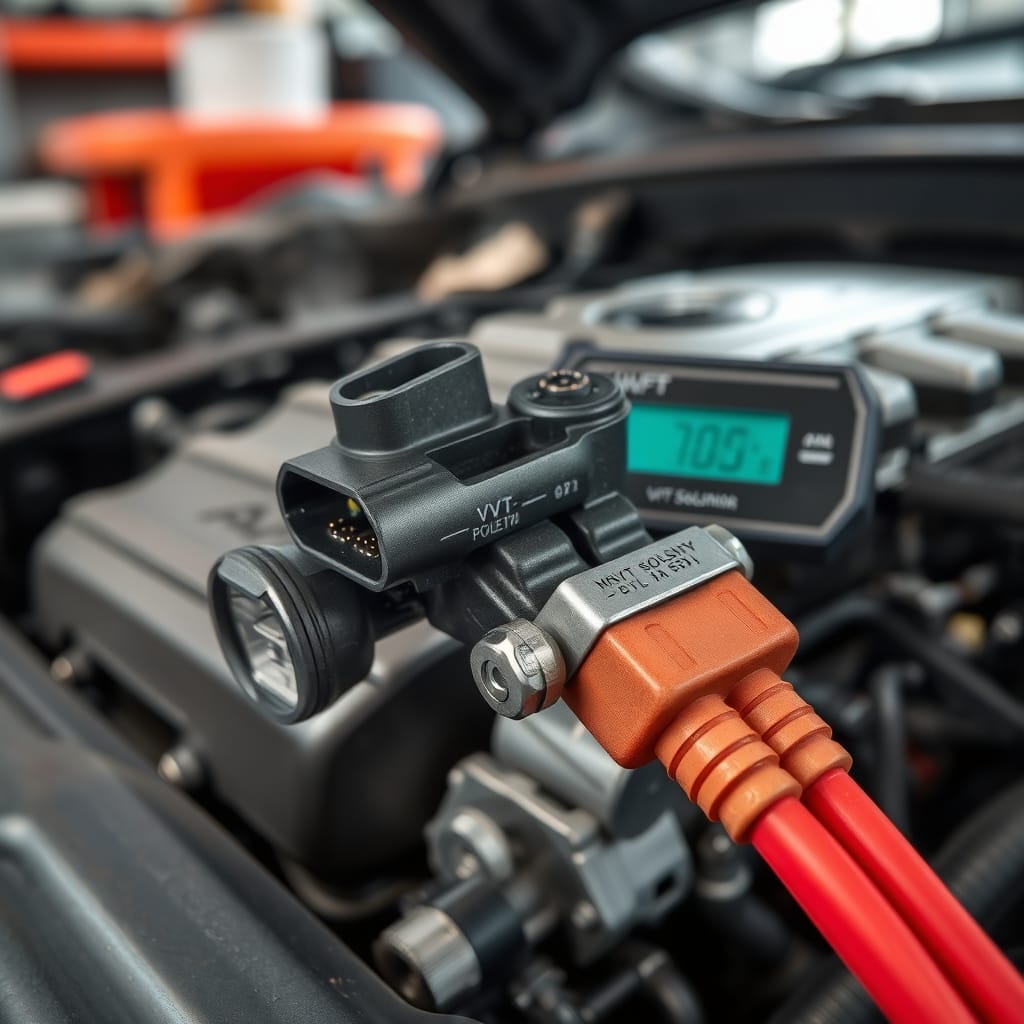
Camshaft Actuator Solenoid Fault
The Bank 1 “B” camshaft actuator or oil-control solenoid may have an internal electrical fault, such as an open or shorted winding, depending on its design. However, P0013 does not prove that the solenoid has failed. Test the component and its circuit according to manufacturer specifications before replacement.
Power Supply or Control-Circuit Fault
Depending on the circuit design, the actuator may receive switched power while the PCM/ECM controls the opposite side of the circuit, or the system may use another control arrangement. A missing power supply, control-side fault, damaged fuse or shared circuit where applicable, or another electrical problem can cause P0013.
Use the vehicle wiring diagram to identify how the actuator is actually controlled before testing.
PCM/ECM Driver or Module Fault
A control-module driver or internal module fault is possible but should not be assumed from P0013 alone. Verify the actuator, wiring, connectors, power supply, grounds, and manufacturer-specified circuit tests before considering module repair, replacement, or programming.
Diagnostic Approach for P0013 Code
Verify the DTC and Complaint
Confirm the check-engine light and any reported drivability symptoms. Scan the vehicle before clearing codes and record P0013, companion DTCs, freeze-frame information, and relevant operating conditions.
Determine whether other camshaft-position, VVT performance, oil-pressure, reference-voltage, or circuit codes are present because they may change the diagnostic direction.
Identify the Correct Bank 1 “B” Actuator and Inspect the Circuit
Use manufacturer-specific service information to identify Bank 1 and the “B” camshaft actuator on the engine. Do not assume component location from another engine design.
Inspect the actuator connector and relevant wiring for loose terminals, corrosion, oil intrusion, damaged insulation, heat damage, abrasion, previous repairs, or other visible faults.
Review DTCs, Freeze-Frame Data, and Service Information
Review stored and pending codes together with freeze-frame data and manufacturer-specific code information. Companion DTCs can help distinguish an isolated actuator-circuit fault from a broader VVT, camshaft-position, electrical-supply, or engine problem.
P0013 identifies a detected circuit condition; it does not identify which component has failed.
See our How to Read OBD2 Codes guide for the correct diagnostic approach to trouble codes.
Test the P0013 Circuit
Follow the manufacturer-specific diagnostic procedure and wiring diagram. Depending on the circuit design, diagnosis may include:
- verifying the actuator’s required power supply;
- checking the control circuit for opens, shorts, or excessive resistance;
- inspecting connector terminal fit and electrical integrity;
- testing actuator-solenoid electrical characteristics using the specified method;
- using an appropriate scan tool for commanded actuator testing when supported;
- checking PCM/ECM control output only according to the manufacturer’s procedure.
Do not apply battery voltage, ground, or a generic resistance specification to the actuator unless the service procedure specifically requires it.
If companion codes or symptoms indicate a broader VVT performance problem, then inspect oil level and condition and perform appropriate mechanical, oil-pressure, or VVT-system tests. Those tests should follow diagnostic evidence rather than being assumed necessary for every P0013 code.
Repair Options After Diagnosis
Repair Confirmed Wiring or Connector Faults
Repair open, shorted, high-resistance, damaged, or contaminated wiring and connectors using appropriate automotive electrical-repair methods. Verify terminal condition and harness routing after the repair.
Replace a Confirmed Faulty Actuator Solenoid
If vehicle-specific testing confirms an internal electrical fault or other serviceable failure in the Bank 1 “B” camshaft actuator solenoid, replace the correct component according to manufacturer procedures. Do not replace the solenoid solely because P0013 is stored.
Address Related Oil or Mechanical Problems When Confirmed
If companion DTCs, symptoms, or manufacturer testing identify incorrect oil level, unsuitable oil condition, low oil pressure, restricted oil flow, or a mechanical VVT problem, diagnose and repair that condition separately according to vehicle-specific procedures.
Do not assume an oil-system repair will correct P0013 unless diagnosis establishes a connection to the detected fault.
Verify the Repair
After repairing the confirmed fault, reconnect all components correctly and clear DTCs when appropriate. Reproduce the relevant operating conditions or complete the manufacturer-specified verification procedure.
Confirm that P0013 does not reset, the Bank 1 “B” actuator circuit operates as specified, and any original drivability symptoms have been resolved. Recheck for companion DTCs before considering the repair complete.
Important Safety Considerations
Follow manufacturer procedures before disconnecting electrical connectors or performing powered circuit tests. Battery disconnection is not required for every diagnostic step and may erase useful data or create relearn requirements.
Keep hands, clothing, wiring, and test equipment away from belts, pulleys, cooling fans, and other moving components whenever the engine is running. Allow hot engine and exhaust components to cool before working nearby.
Never apply external power or ground to a solenoid or PCM/ECM circuit unless the manufacturer diagnostic procedure specifically instructs you to do so.
Vehicle-Specific Considerations for P0013
Bank identification, “B” camshaft designation, actuator location, wiring configuration, control strategy, electrical specifications, and diagnostic procedures vary by engine and manufacturer.
Use the correct wiring diagram and manufacturer-specific service information to identify the circuit and test points before performing electrical measurements or replacing components.
Frequently Asked Questions
What does the P0013 code mean?
P0013 is generally defined as “B” Camshaft Position Actuator Circuit/Open — Bank 1. It reports an electrical problem involving the designated camshaft actuator circuit and does not identify the failed component by itself.
What are the common symptoms of the P0013 code?
Possible symptoms include a check-engine light and, depending on the vehicle and fault, rough operation, reduced performance, starting difficulty, or other drivability changes. Some vehicles may have few noticeable symptoms beyond the warning light.
What can cause the P0013 code?
Possible causes include damaged connectors or terminals, open or shorted wiring, excessive circuit resistance, a faulty camshaft actuator solenoid, power-supply or control-circuit problems, and less commonly a PCM/ECM driver fault. Testing is required before identifying the failed component.
How is the P0013 code diagnosed?
Diagnosis starts by recording P0013, companion DTCs, freeze-frame data, and symptoms. Identify the correct Bank 1 “B” actuator using vehicle-specific information, inspect its wiring and connector, and perform manufacturer-specified power, control-circuit, and actuator tests before replacing components.
Can the vehicle still be driven with a P0013 code?
Drivability varies depending on the vehicle and fault. If the engine runs normally, limited driving may sometimes be possible while arranging diagnosis, but avoid continued operation if there is severe rough running, stalling, abnormal oil-pressure indication, significant loss of power, or another condition that could make driving unsafe or risk engine damage.
Final Checks
P0013 reports an electrical malfunction involving the Bank 1 “B” camshaft position actuator circuit; it does not prove that the actuator solenoid or another VVT component has failed. Record companion codes and freeze-frame data, identify the correct circuit using vehicle-specific information, inspect the wiring and connectors, and perform targeted electrical tests before replacing parts.
If broader VVT, lubrication, or mechanical problems are indicated by additional evidence, diagnose them separately. After repairing the confirmed cause, complete the required verification procedure and confirm that P0013 does not return.