
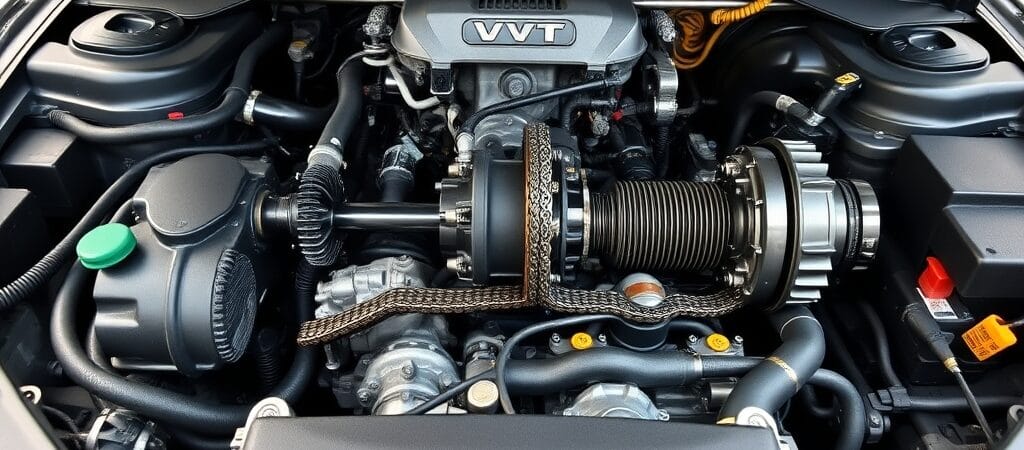
If your vehicle has stored the P0017 code, the engine control module has detected a crankshaft-to-camshaft position correlation problem involving the Bank 1 exhaust camshaft, commonly designated Sensor B. This does not automatically mean that a timing chain, camshaft sensor or other component has failed. Possible causes include mechanical timing problems, variable valve timing (VVT) operation, engine oil conditions, or sensor and circuit faults. This guide explains what P0017 means, which symptoms may occur, and how to diagnose the underlying cause before replacing parts.
What Does the P0017 Code Mean?
P0017 is a generic OBD-II diagnostic trouble code defined as Crankshaft Position – Camshaft Position Correlation (Bank 1 Sensor B).
The engine control module compares crankshaft and camshaft position signals to determine whether their relationship is within the expected range under the relevant operating conditions.
Bank 1 identifies the cylinder bank containing cylinder No. 1. Sensor B generally refers to the exhaust camshaft in applications using intake and exhaust camshaft designations, but the exact arrangement should be confirmed using vehicle-specific service information.
A correlation fault can result from incorrect mechanical timing, VVT operation that does not match the commanded position, or problems affecting the position signals.
P0017 does not, by itself, identify which component is defective.
Related diagnostic information is available in our guide to P0014 Code, which addresses an exhaust camshaft timing performance condition.
Common Symptoms of the P0017 Code
A vehicle with P0017 may display one or more of the following symptoms:
Check Engine Light: The engine control module may illuminate the malfunction indicator lamp.
Rough Idle: The engine may run unevenly, depending on the underlying fault.
Reduced Engine Performance: Acceleration or power delivery may be affected.
Hard Starting or Stalling: Some faults involving engine timing or position signals can affect starting and running.
Unusual Engine Noise: Rattling or other mechanical noises may occur if the underlying problem involves timing components, although these noises are not specific to P0017.
No Noticeable Symptoms: Some vehicles may store the code without an obvious change in drivability.
Symptoms vary by engine design and fault conditions. Increased emissions or reduced fuel economy may occur, but neither reliably identifies the cause.
Possible Causes of the P0017 Code
Several factors could lead to triggering the P0017 code. It is essential to explore these possibilities to accurately diagnose the problem.
Mechanical Timing Problems
Incorrect camshaft-to-crankshaft mechanical timing can cause the measured correlation to fall outside the expected range. Possible problems include a timing chain or belt that has jumped position, incorrect timing after previous repair work, or worn or damaged timing components.
Chain tensioner or guide problems may also contribute on applicable engines. Mechanical timing must be checked against manufacturer specifications before concluding that timing components require adjustment or replacement.
Engine Oil Level, Condition or Pressure Problems
On engines with oil-operated variable valve timing, incorrect oil level, unsuitable oil viscosity, contamination or insufficient oil pressure may interfere with camshaft timing control.
Check the oil level and condition using the manufacturer’s procedure. If an oil-pressure or VVT-control problem is suspected, further testing may be necessary.
An oil change alone should not be assumed to resolve P0017.
Camshaft or Crankshaft Position Signal Problems
A faulty camshaft or crankshaft position sensor, damaged wiring, poor electrical connections or a problem with the associated signal target may affect the signals used for correlation monitoring.
However, P0017 is not automatically a sensor-failure code. Sensor replacement should follow testing that demonstrates a signal or component fault.
Variable Valve Timing System Problems
On applicable engines, a VVT actuator, oil-control valve, restricted oil passage or related control problem may prevent the camshaft from reaching or maintaining its expected position.
Diagnosis should compare commanded and actual camshaft timing when the vehicle supports those data parameters. Relevant manufacturer procedures may include actuator or oil-control testing.
Wiring, Connections or Signal Integrity Problems
Damaged wiring, loose connectors, corrosion, poor grounds or electrical interference can affect the camshaft or crankshaft position signals.
Inspect accessible connections and wiring, then perform appropriate circuit or waveform testing if the evidence points toward an electrical fault.
Do not replace sensors or wiring solely because P0017 is present.
How to Diagnose the P0017 Code
Step 1: Confirm the Code and Operating Conditions
Use an appropriate scan tool to confirm P0017 and identify whether it is current, pending or stored.
Record freeze-frame information and note any starting problems, rough running, unusual mechanical noises or recent engine repairs.
For guidance on reading diagnostic codes, see How to Read OBD2 Codes.
Step 2: Check Engine Oil and Basic Conditions
Check engine oil level, condition and the manufacturer’s required oil specification.
Inspect accessible wiring and connectors associated with the camshaft position sensor, crankshaft position sensor and VVT system.
Ask whether the problem began after timing-system maintenance, sensor replacement or other engine repairs.
Step 3: Review Related Codes and Scan Data
Check for additional camshaft timing, VVT, crankshaft sensor, camshaft sensor or oil-control codes.
Where supported, compare commanded camshaft position with actual camshaft position under manufacturer-specified conditions.
Unexpected readings can guide further testing but do not independently prove that the actuator, sensor or timing chain has failed.
Step 4: Test Relevant Electrical and VVT Systems
If the initial findings suggest an electrical problem, inspect the relevant circuits and test sensor signals according to vehicle-specific procedures.
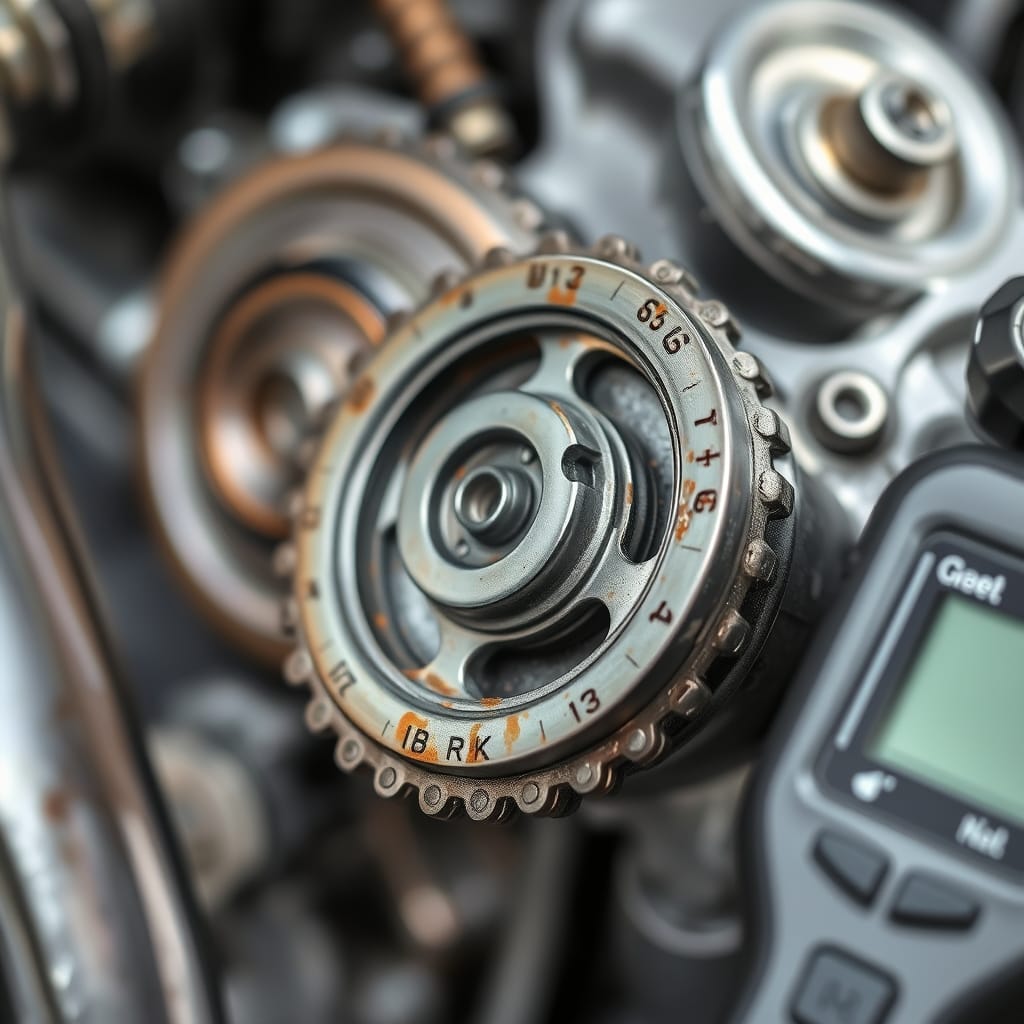
Depending on the system, an oscilloscope may be needed to assess crankshaft and camshaft signal relationships. A multimeter alone may not reveal intermittent or dynamic correlation problems.
Where applicable, test VVT control operation and investigate oil-pressure concerns before replacing components.
Step 5: Verify Mechanical Timing When Indicated
If diagnostic evidence suggests a mechanical timing problem, check camshaft-to-crankshaft timing using the manufacturer’s specified procedure and tools.
Mechanical timing verification may require specialized locking tools, timing references or component removal.
Do not assume that a timing chain is stretched or that a belt has jumped simply because P0017 is stored.
Step 6: Confirm the Cause Before Repair
Review the test results and identify whether the fault is mechanical, hydraulic, electrical or related to VVT control.
Only proceed with repair when the evidence supports the identified cause.
Repair Only the Confirmed Cause
The appropriate repair depends on the results of the diagnosis.
Mechanical timing fault: Correct the timing or replace confirmed damaged components using manufacturer procedures.
Oil-related problem: Correct the oil level, specification, contamination or confirmed pressure-related fault.
VVT problem: Repair or replace the specific control or actuator component proven faulty.
Sensor or signal problem: Repair the confirmed sensor, wiring, connector or signal-target fault.
Previous repair or installation error: Correct the installation or timing configuration using the manufacturer’s specifications.
Do not replace the timing chain, VVT solenoid, camshaft sensor or crankshaft sensor based solely on the P0017 code.
Verifying the Repair
After completing the confirmed repair, recheck the relevant engine oil conditions, electrical connections and timing-related data.
Clear diagnostic trouble codes only after recording the original findings and completing the necessary repairs.
Operate the vehicle under the manufacturer’s specified verification conditions and confirm that the original symptoms and P0017 fault do not return.
Where applicable, verify that the relevant diagnostic monitor has completed successfully.
Safety Considerations When Diagnosing P0017
Engine timing systems contain moving mechanical components, and incorrect timing work can cause severe engine damage on some designs.
Allow hot engine components to cool before inspection. Keep hands, tools and clothing away from moving belts, pulleys and other rotating components.
Do not loosen timing components or attempt to rotate or reposition camshafts without following the manufacturer’s procedure. Certain engines require specialized locking tools and precise installation steps.
Follow vehicle-specific electrical isolation procedures when necessary rather than automatically disconnecting the battery for every diagnostic check.
Never work underneath a vehicle supported only by a jack.
If the engine has severe mechanical noise, repeated stalling, or signs of a significant timing-system failure, avoid further operation until it has been inspected.
Vehicle-Specific Considerations for P0017
The interpretation and diagnostic strategy for P0017 depend on the engine design, camshaft arrangement, VVT system and manufacturer-specific monitoring logic.
Some engines use different timing-control strategies or require specialized tools to inspect camshaft and crankshaft correlation.
Always consult the correct service information for the vehicle’s engine, including timing specifications, wiring diagrams, diagnostic procedures and repair verification requirements.
Frequently Asked Questions
What does the P0017 code mean?
P0017 means the engine control module has detected a crankshaft-to-camshaft position correlation problem involving Bank 1 Sensor B, generally associated with the exhaust camshaft.
Does P0017 mean the timing chain is bad?
No. Mechanical timing problems are one possibility, but VVT operation, engine oil conditions and position-signal faults may also contribute. Testing is needed to identify the cause.
Can a bad camshaft sensor cause P0017?
A faulty sensor or its associated circuit may affect correlation monitoring, but P0017 alone does not confirm sensor failure.
Can low engine oil cause P0017?
On engines using oil-operated VVT systems, low oil level, unsuitable oil or oil-pressure problems may affect camshaft timing control and contribute to the fault.
Can I drive with a P0017 code?
The risk depends on the underlying fault and symptoms. Avoid driving if the engine has severe mechanical noise, significant performance problems, repeated stalling or other indications of a serious timing issue. Have the fault diagnosed promptly.
How is P0017 diagnosed?
Diagnosis includes confirming the code, checking oil and basic conditions, reviewing related codes and scan data, testing relevant electrical and VVT systems, and verifying mechanical timing when indicated.
Final Checks
P0017 indicates that the engine controller has detected an unexpected relationship between crankshaft and camshaft position signals. It does not identify a failed sensor, timing chain or VVT component by itself.
A reliable diagnosis starts with confirming the fault and checking basic conditions, then uses scan data and targeted testing to determine whether the problem involves mechanical timing, VVT operation, oil conditions or electrical signals.
Repair only the confirmed cause and verify that the fault does not return under the relevant operating conditions.