
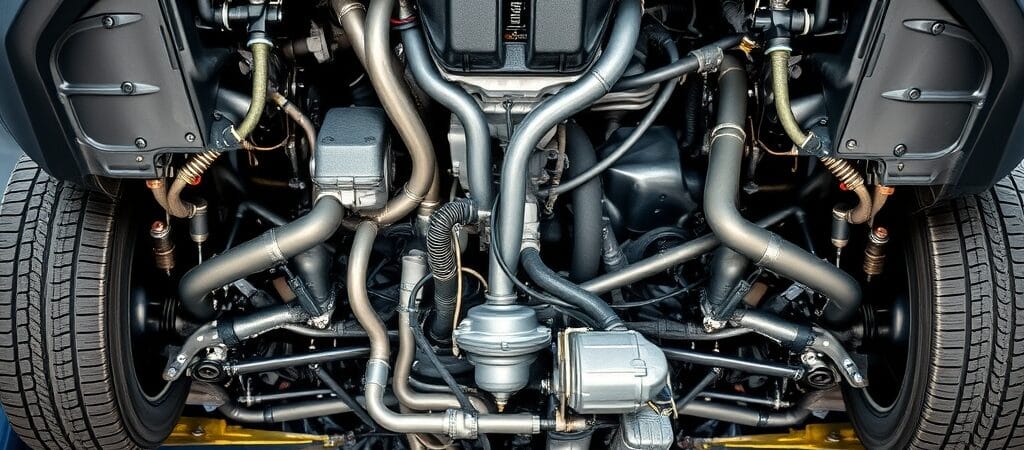
If your car hesitates when accelerating, the delay, stumble, surge, or temporary loss of power can come from several different systems. Fuel delivery, ignition, air metering, engine management, exhaust restriction, transmission behavior, and mechanical engine problems can produce similar symptoms. Acceleration hesitation does not identify a failed component by itself, so diagnosis should begin by reproducing the symptom, checking for diagnostic trouble codes and relevant data, inspecting likely systems, and testing the suspected cause before replacing parts.
Why Your Car Hesitates When Accelerating
Acceleration requires the engine and drivetrain to respond correctly as load increases. If fuel delivery, ignition, airflow measurement, throttle control, engine timing, exhaust flow, or another relevant system does not respond as expected, the driver may notice hesitation, stumbling, surging, or reduced power.
However, similar symptoms can also come from transmission or mechanical problems. The way the hesitation occurs — such as only from a stop, under heavy load, at a particular engine speed, when cold, or after the engine warms — can provide useful diagnostic clues but does not confirm the cause.
Common Symptoms of Acceleration Hesitation
Recognizable Signs to Watch For
Acceleration hesitation may feel like delayed throttle response, stumbling, jerking, surging, shuddering, or a temporary loss of power as the accelerator is pressed. Some vehicles may also display a Check Engine light or store diagnostic trouble codes. Because these symptoms overlap with misfires, transmission problems, traction-control intervention, and other faults, the exact behavior should be documented before diagnosis begins.
Impact on Driving
Hesitation can make acceleration unpredictable, particularly when merging, crossing traffic, or climbing under load. The severity depends on the underlying fault and how much power is lost. Severe hesitation, repeated stalling, a flashing Check Engine light, overheating, abnormal noises, smoke, or another serious warning should be treated as a reason to stop driving when it is safe to do so and investigate the problem.
Possible Causes of Acceleration Hesitation
Fuel Delivery Problems
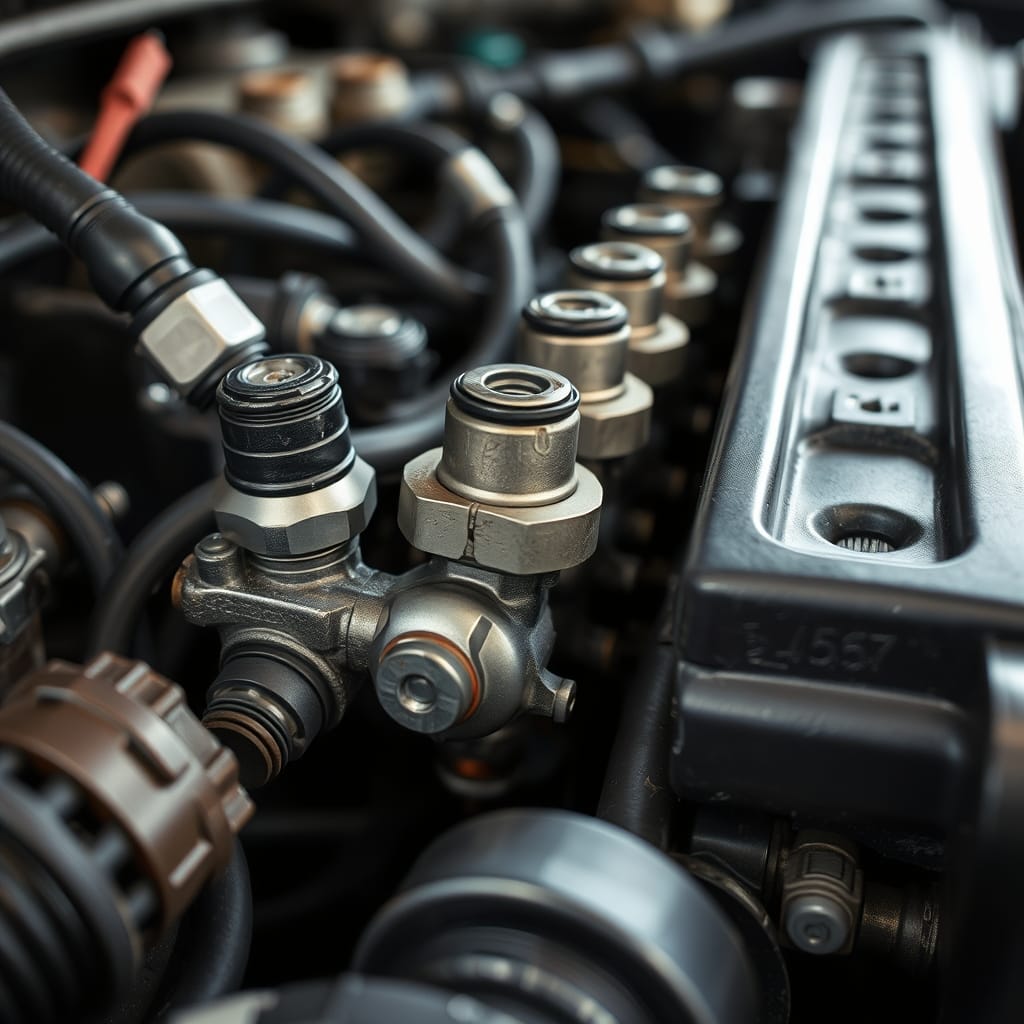
Insufficient or unstable fuel delivery can contribute to hesitation under load. Depending on the vehicle, possible causes may include a fuel-pressure or fuel-volume problem, restricted fuel delivery, injector problems, electrical faults affecting fuel-system operation, or other control issues.
Do not assume that a fuel pump, filter, or injector has failed based on hesitation alone. Fuel-system testing should follow vehicle-specific procedures and specifications.
Ignition and Misfire Problems
An ignition problem can become more noticeable as engine load increases. Spark plugs, ignition coils, wiring or connections where applicable, and other ignition-related faults can contribute to misfire or hesitation.
Check for misfire-related DTCs and available scan data, then test the affected system before replacing ignition components. A misfire code identifies the cylinder or monitored condition; it does not automatically prove that an ignition coil or spark plug has failed.
For more detail on distinguishing an ignition-coil problem from other causes of misfire, see our Bad Ignition Coil Symptoms: What to Look For guide.
Airflow, Intake, and Throttle Problems
Intake leaks, airflow-measurement problems, throttle-control issues, restrictions, or other intake-system faults can affect engine response during acceleration. On vehicles using a mass airflow sensor, implausible MAF data may contribute to poor load calculation and drivability problems, but hesitation alone does not prove that the MAF sensor is faulty.
Inspect the intake system and relevant connections, then compare scan data and perform vehicle-specific testing where appropriate.
If diagnosis identifies a MAF-related trouble code, our P0101 Code guide explains why airflow-system diagnosis should go beyond simply replacing the sensor.
Sensor, Circuit, and Engine-Control Problems
Engine operation depends on multiple sensor inputs, actuator circuits, power and ground supplies, and control strategies. An implausible sensor signal, damaged wiring, poor connection, actuator problem, or related electrical fault may contribute to hesitation.
The presence of a sensor-related DTC does not prove that the sensor itself has failed. Interpret the exact code definition, freeze-frame information, relevant live data, and circuit tests before replacing components or considering a control-module fault.
Exhaust Restrictions
A significant exhaust restriction can reduce engine power, particularly as load and exhaust flow increase. A damaged or restricted catalytic converter is one possible source, but reduced acceleration does not by itself prove that the converter is restricted.
Diagnosis may require evaluating related DTCs, engine operation, exhaust condition, and vehicle-specific restriction or pressure tests before any exhaust component is replaced.
Transmission or Drivetrain Problems
Not every acceleration complaint originates in the engine. Transmission slipping, delayed engagement, abnormal shifting, torque-converter behavior, or other drivetrain faults can sometimes feel like engine hesitation.
Observe engine speed and vehicle response during the symptom and check for transmission-related codes or data where supported. Determine whether engine power is actually dropping or whether the drivetrain is failing to transfer that power correctly before choosing a diagnostic path.
Mechanical Engine Problems
Low compression, incorrect mechanical timing, valve-train problems, or other internal engine faults can cause reduced power or poor operation. These possibilities should normally be investigated after the symptom, codes, basic inspections, and relevant fuel, ignition, intake, and control-system checks provide evidence pointing toward a mechanical problem.
Compression, leak-down, mechanical-timing, or other engine tests should be performed according to vehicle-specific procedures when indicated.
Diagnostic Steps to Identify Hesitation Issues
Verify the Exact Symptom
Determine exactly what the driver means by “hesitation.” Establish whether the engine stumbles, RPM drops, RPM rises without corresponding vehicle acceleration, the transmission shifts abnormally, or throttle response is simply delayed.
Note whether the problem occurs from a stop, during light or heavy acceleration, at a particular RPM or speed, when cold or hot, or only under specific loads. Reproducing the complaint safely can substantially narrow the diagnostic path.
Perform an Initial Inspection
Inspect accessible intake ducts, vacuum and breather connections, wiring, connectors, ignition components, and other relevant areas for obvious damage, disconnection, contamination, or evidence of recent repair work. Verify basic fluid levels according to the vehicle manufacturer’s procedure and check whether other warning lights or symptoms are present.
Avoid replacing components simply because they appear on a list of common causes.
Scan for Codes and Preserve Diagnostic Data
Retrieve codes from relevant control modules and record them before clearing anything. Review code status, freeze-frame information, and applicable live data. Related misfire, fuel-control, airflow, throttle, transmission, or other codes can help determine which system deserves further testing.
A DTC reports a condition detected by a control system; it does not automatically identify the failed component.
If you need help interpreting codes and freeze-frame information, see our How to Read OBD2 Codes: A Step-by-Step Diagnostic Guide.
Perform Targeted Testing
Use the symptom pattern, inspection findings, DTCs, freeze-frame information, and scan data to decide which system requires testing. Depending on the evidence and vehicle design, diagnosis may involve fuel-pressure or delivery testing, ignition or misfire testing, intake-leak checks, airflow or throttle-data analysis, exhaust-restriction testing, electrical circuit testing, transmission diagnosis, or mechanical engine tests.
Compare results with vehicle-specific specifications. Do not apply universal pressure, voltage, resistance, or sensor-value specifications across different vehicles.
Repair Only After Confirming the Cause
Repair the Confirmed Fault
Repair or replace only the component, wiring, connection, restriction, leak, mechanical problem, or other fault supported by diagnosis. A symptom such as acceleration hesitation is not enough evidence to justify replacing a fuel pump, injector, ignition coil, sensor, catalytic converter, transmission component, or control module.
Address Contributing Problems
If diagnosis identifies another condition contributing to the fault — such as damaged wiring, an intake leak, contamination, incorrect fluid condition where applicable, or another engine-management problem — correct that underlying issue according to vehicle-specific service information.
Verify the Repair
After completing the confirmed repair, clear diagnostic trouble codes when appropriate and reproduce the operating conditions that originally caused the hesitation. Confirm that acceleration response has returned to normal and that relevant codes or symptoms do not return. Review applicable scan data when it helps verify normal operation.
Safety While Diagnosing Acceleration Hesitation
Perform road testing only where the vehicle can be operated safely, and do not attempt to reproduce severe hesitation in traffic if acceleration has become unpredictable.
Use caution around moving belts, fans, hot engine and exhaust components, electrical circuits, and pressurized fuel systems. Fuel-system testing requires the correct equipment and vehicle-specific pressure-relief and service procedures.
If the vehicle must be raised, use approved lifting points and properly rated support equipment. Never work beneath a vehicle supported only by a jack.
Vehicle-Specific Considerations
Fuel-system designs, ignition systems, sensor technologies, throttle controls, transmission strategies, diagnostic specifications, and test procedures vary considerably among vehicles. Use manufacturer-specific service information for expected values, component locations, circuit diagrams, test procedures, and repair instructions rather than applying universal specifications.
Frequently Asked Questions
What causes a car to hesitate during acceleration?
Acceleration hesitation can result from fuel-delivery, ignition, intake or airflow, engine-management, exhaust, transmission, or mechanical engine problems. The symptom alone cannot identify which component has failed, so diagnosis should reproduce the condition and use inspection, scan data, and targeted testing to determine the cause.
Can poor fuel quality lead to acceleration hesitation?
Contaminated or incorrect fuel can contribute to poor engine operation in some situations, but fuel quality should not automatically be blamed for acceleration hesitation. Consider the vehicle’s recent fueling history and confirm other diagnostic evidence before drawing that conclusion.
How can I diagnose acceleration hesitation issues?
First determine exactly when and how the hesitation occurs. Inspect for obvious problems, retrieve and record diagnostic trouble codes and freeze-frame data, and review relevant live data. Then perform targeted testing of the system indicated by the evidence rather than replacing parts based only on the symptom.
Is it safe to drive a car that hesitates when accelerating?
Mild hesitation still deserves diagnosis because acceleration may become unpredictable. Avoid driving if the vehicle cannot accelerate safely, repeatedly stalls, has a flashing Check Engine light, produces abnormal smoke or noises, overheats, or displays another serious warning. If acceleration is unreliable enough to make merging or crossing traffic unsafe, arrange diagnosis rather than continuing to drive normally.
When should I seek professional help for acceleration hesitation?
Seek professional diagnosis if the hesitation is severe, the vehicle is unsafe to drive, basic inspection does not identify the problem, or diagnosis requires fuel-pressure testing, advanced scan-tool functions, electrical testing, transmission diagnosis, exhaust testing, or mechanical engine tests that you cannot perform safely.
Final Checks
When a car hesitates during acceleration, avoid assuming that the most familiar component is responsible. First define and reproduce the symptom, inspect for obvious problems, retrieve codes and diagnostic data, and perform targeted testing based on the evidence. Fuel, ignition, airflow, engine-management, exhaust, transmission, and mechanical problems can produce overlapping symptoms.
Repair only the confirmed cause and then reproduce the original operating conditions to verify that acceleration has returned to normal and related codes or symptoms do not return.