
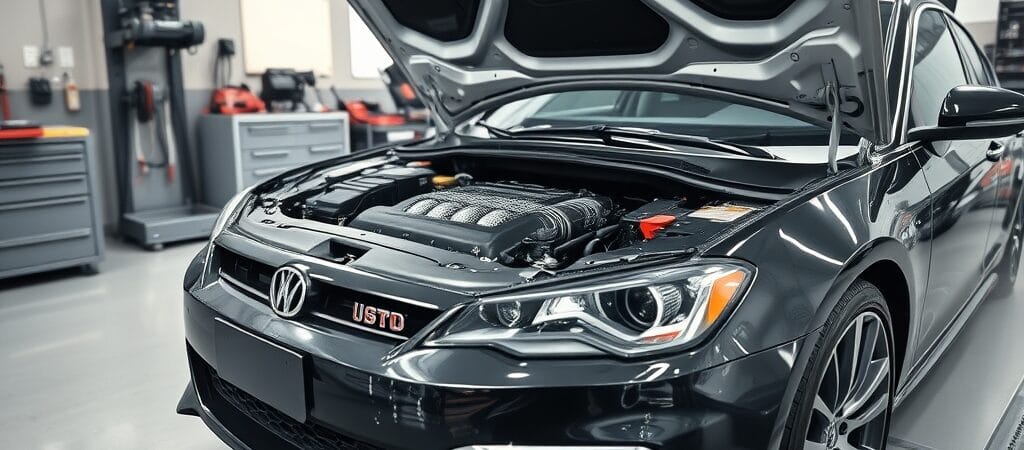
If your car won’t start after car wash, moisture affecting an electrical connector, ignition component, or other sensitive part may be responsible. However, a starting problem that appears after washing does not automatically mean water caused it.
The first step is to determine whether the engine cranks but fails to start, cranks slowly, or does not crank at all. These conditions point toward different systems and require different diagnostic checks.
Water exposure may be relevant, particularly after pressure washing the engine compartment or when existing seals and connectors are damaged. A weak battery, starter problem, or unrelated electrical fault may also happen to become noticeable at the same time.
This guide explains what to check first, how to identify possible moisture-related faults, and when professional diagnosis is necessary.
Car Won’t Start After Car Wash: Why It Happens
A vehicle may develop a starting problem after washing if water reaches an electrical connection or component that is not adequately protected.
Modern vehicles use sealed connectors and protective covers, but seals can deteriorate, wiring can become damaged, and previous repairs may leave components vulnerable to moisture.
Possible consequences include:
Intermittent electrical connections
Ignition misfires on gasoline engines
Sensor or control-circuit faults
Blown fuses caused by an electrical short
Starter-control or power-supply problems
The likelihood depends on the vehicle’s design, condition, and washing method.
An ordinary exterior car wash does not normally expose protected engine electronics to enough water to cause a starting failure.
The timing may therefore be coincidental.
Identify the Type of No-Start Problem First
Before inspecting individual parts, observe what happens when you attempt to start the vehicle.
Engine Cranks but Won’t Start
The starter turns the engine, but the engine does not begin running.
Possible causes include problems with:
Ignition operation on gasoline engines
Fuel delivery
Engine position sensor signals
Engine-management power supplies
Electrical connections
Immobilizer authorization
If the problem began immediately after water exposure, inspect relevant accessible connectors and ignition components for moisture.
However, do not assume that the ignition system is responsible without further evidence.
Engine Does Not Crank
The engine does not turn when the start command is given.
Possible causes include:
A discharged or defective battery
Poor battery or ground connections
Starter or starter-control faults
A relevant fuse or relay problem
Park/neutral or clutch-interlock problems
Immobilizer or starting-authorization faults
Moisture may affect a connector or control circuit, but these conditions can also occur independently of washing.
If the dashboard lights work but the engine does not crank, see our Car Won’t Start but Lights Work guide for additional diagnostic checks.
Engine Cranks Slowly
Slow cranking often suggests insufficient electrical power or excessive resistance in the starting circuit.
Battery condition, cable connections, and starter operation should be evaluated.
A slow-cranking condition is not proof that water entered the ignition system.
Engine Starts and Then Stalls
If the engine starts briefly and stops, the problem may involve engine-management inputs, fuel delivery, electrical power, or starting authorization.
Record whether warning lights appear and whether the problem happens repeatedly.
Common Causes of a Car Not Starting After a Wash
1. Moisture in Ignition Components
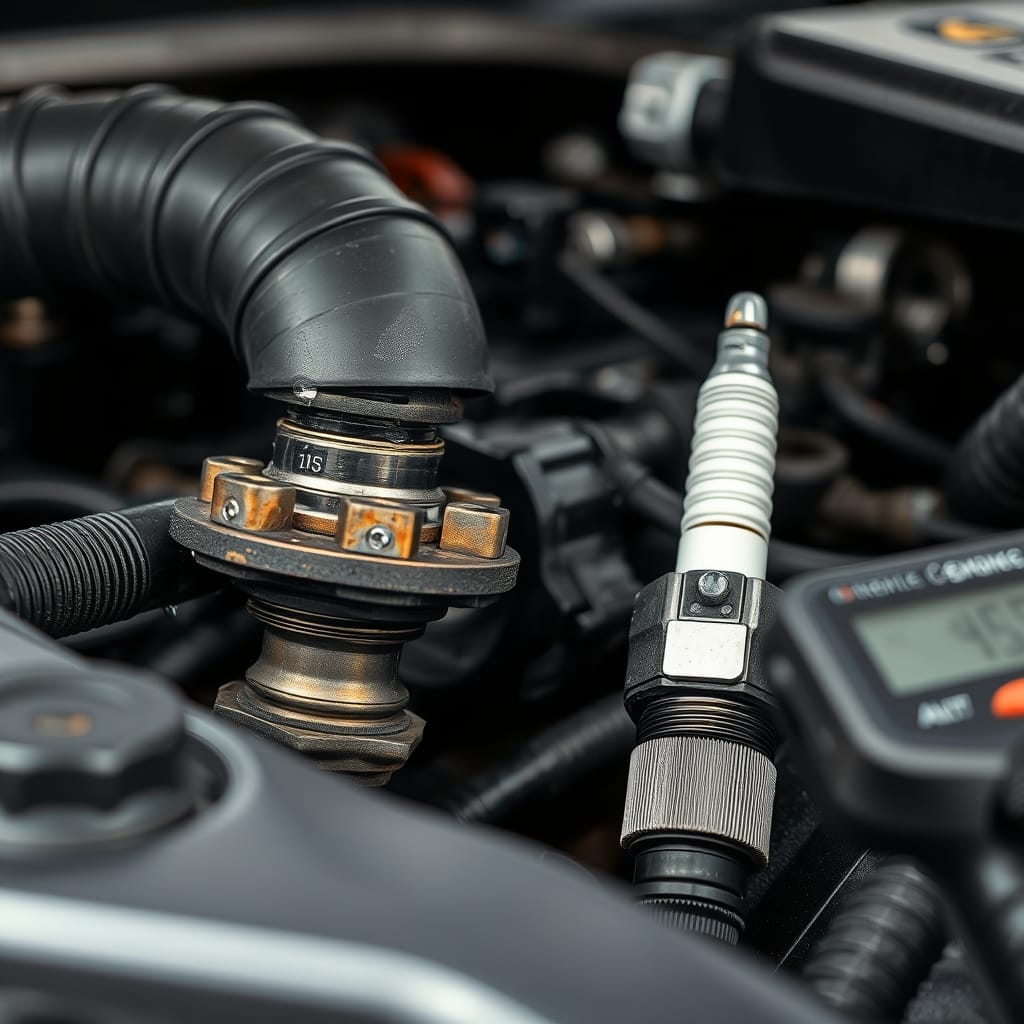
On gasoline engines, moisture around ignition coils, spark plug wells, high-voltage leads where fitted, or older distributor components may contribute to ignition problems.
Damaged seals or insulation can make these components more vulnerable.
Possible symptoms include:
Cranking without starting
Rough running after startup
Misfires
Hesitation
An illuminated check engine light
Modern coil-on-plug systems differ from older distributor-based ignition systems.
Diesel engines do not use spark ignition, so this explanation does not apply to them in the same way.
2. Wet or Damaged Electrical Connectors
Water may enter connectors if their seals are damaged, missing, or incorrectly installed.
This can affect sensor signals, power supplies, or control circuits.
Look for visible moisture, corrosion, loose connectors, and damaged wiring in accessible areas.
Do not disconnect numerous connectors without identifying which circuits are relevant to the complaint.
3. Battery or Ground Connection Problems
A weak battery or poor electrical connection can cause a no-crank or slow-crank condition.
Although the problem may become noticeable after washing, it may not be related to water exposure.
Check for:
Loose battery terminals
Visible corrosion
Damaged battery cables
Poor ground connections
Signs of low battery voltage
A battery that powers dashboard lights may still be unable to supply sufficient current for cranking.
4. Moisture Affecting a Fuse Box or Electrical Module
A damaged fuse-box cover, missing seal, or previous repair may allow water to reach electrical connections.
Possible results include intermittent power loss, control-circuit problems, or blown fuses.
Electrical modules and fuse boxes should not be opened or tested indiscriminately.
If water intrusion is suspected inside a control module or major electrical enclosure, professional inspection is advisable.
5. Starter-Control Circuit Fault
If the engine does not crank, the starter-control circuit may require diagnosis.
Depending on the vehicle, this may involve a relay, switch, control module, wiring connection, or starter solenoid.
Moisture can be relevant if a vulnerable connector has been exposed, but starter problems are not necessarily caused by washing.
6. Engine Sensor or Wiring Fault
The engine computer relies on several inputs to manage starting and engine operation.
An electrical fault affecting a relevant sensor or its wiring may prevent starting.
However, a diagnostic trouble code does not automatically establish that a sensor has failed.
Inspect and test the circuit identified by the evidence before replacing components.
7. Immobilizer or Key Recognition Problem
Some no-start conditions involve the vehicle’s security or starting-authorization system.
A warning message, security indicator, or relevant diagnostic code may provide a clue.
These problems may be unrelated to the car wash.
Follow the manufacturer’s instructions for key recognition and starting authorization.
8. Unrelated Mechanical or Fuel-System Problems
A fuel delivery problem, engine mechanical fault, or another existing condition may become apparent immediately after washing.
Water entering the fuel tank during a normal exterior wash is not a common explanation for a no-start condition.
Only investigate fuel contamination when there is specific evidence supporting it, such as a damaged filler arrangement or known exposure.
Do not open fuel lines or attempt fuel-system repairs without the correct equipment and procedures.
How to Diagnose a Car That Won’t Start After a Car Wash
A structured diagnostic approach helps distinguish a moisture-related electrical fault from an unrelated starting problem.
Step 1: Verify the No-Start Complaint
Attempt to start the vehicle only when it is safe to do so.
Determine whether:
The engine cranks normally
The engine cranks slowly
The engine does not crank
The engine starts and stalls
The vehicle displays a security or starting-system warning
Avoid repeated prolonged cranking, which can discharge the battery and overheat the starter.
For a broader diagnostic process, see our How to Diagnose a Car That Won’t Start guide.
Step 2: Consider the Washing Conditions
Determine how the vehicle was washed.
Useful questions include:
Was it a normal automatic or hand car wash?
Was the engine compartment pressure washed?
Was the hood open during washing?
Did the problem appear immediately afterward?
Were electrical components or covers recently repaired?
Has the vehicle experienced similar problems in heavy rain?
These details help assess whether water intrusion is plausible.
They do not prove that moisture caused the fault.
Step 3: Check Battery and Electrical Power
If the engine does not crank or cranks slowly, begin with the battery and its connections.
Check for obvious corrosion, loose connections, or damaged cables.
A qualified technician can perform battery voltage, load, and starting-circuit tests as appropriate.
Do not replace the battery solely because the vehicle failed to start after washing.
Step 4: Inspect Accessible Areas for Moisture
With the ignition off and the vehicle secured, visually inspect accessible areas where water exposure may have occurred.
Look for:
Water pooling near electrical components
Loose or damaged connector seals
Moisture around ignition components on gasoline engines
Damaged wiring insulation
Missing protective covers
Corrosion or signs of previous water intrusion
Avoid touching exposed electrical terminals.
Do not disconnect high-voltage hybrid or electric vehicle components.
Step 5: Scan for Diagnostic Trouble Codes
Use a suitable diagnostic scanner when available.
Check for stored, pending, or active codes related to:
Engine-management power supply
Ignition or misfire conditions
Relevant sensor circuits
Starting authorization
Starter-control systems
Not every starting fault produces an OBD-II code.
Some vehicles require manufacturer-capable diagnostic equipment to access body, immobilizer, or other control modules.
The absence of a code does not rule out an electrical problem.
Step 6: Check the Relevant Fuse and Power Circuit
If the symptoms or diagnostic information point toward a specific circuit, identify its fuse using the manufacturer’s documentation.
Inspect the relevant fuse and circuit as appropriate.
A blown fuse may indicate an underlying short circuit.
Never install a fuse with a higher rating or repeatedly replace a fuse that continues to fail.
Step 7: Investigate Ignition Operation if the Engine Cranks
On gasoline engines, ignition-system problems may cause a crank-no-start condition.
If inspection reveals moisture around accessible ignition components, the affected area may need to dry before further testing.
A qualified technician may then evaluate ignition operation and related electrical circuits.
Do not remove ignition coils or spark plugs while the engine is being cranked.
High-voltage ignition systems can cause injury.
Step 8: Test Other Systems Based on Evidence
If no moisture-related problem is found, continue with the appropriate diagnostic path.
Depending on the symptoms, testing may involve:
Battery and starter circuits
Fuel delivery
Engine position sensor inputs
Engine-management power and grounds
Immobilizer authorization
Mechanical engine condition
Use vehicle-specific procedures and suitable diagnostic equipment.
Step 9: Confirm the Root Cause
Before replacing parts, determine whether the evidence supports:
Moisture affecting an electrical connection
Damaged ignition components
A battery or starting-circuit fault
A blown fuse and its underlying cause
A damaged connector or wiring harness
A relevant sensor or control-circuit fault
An unrelated starting problem
Repair only the confirmed cause.
What to Do If You Suspect Moisture
Allow Accessible Components to Dry Safely
If moisture is visible around accessible, non-energized components, allow the area to dry naturally in a safe, ventilated environment.
Switch off the ignition before inspecting electrical connections.
Do not use a heat gun, open flame, or excessive heat.
Avoid directing compressed air or water into electrical connectors, seals, or control modules.
If moisture has entered a sealed electrical enclosure or module, professional inspection may be required.
Repair Damaged Connector Seals or Wiring
If diagnosis confirms damaged connector seals, terminals, or wiring, repair or replace the affected components using manufacturer-approved methods.
Drying the area alone may not resolve a fault caused by corrosion or damaged insulation.
Replace Confirmed Faulty Ignition Components
If an ignition coil or another component has failed testing, replacement may be necessary.
However, moisture near an ignition component does not automatically mean the component is defective.
Correct Battery and Starting-Circuit Problems
If testing confirms a weak battery, poor connection, or starter-control fault, repair the actual problem.
Do not attribute these failures to washing without supporting evidence.
Repair Confirmed Fuse or Power-Supply Faults
If a fuse has blown, identify the reason before replacing it.
Repair damaged wiring or electrical components as required.
How to Verify the Repair
After the confirmed problem has been corrected:
Inspect repaired connectors, wiring, and protective covers.
Verify that affected components are properly secured.
Confirm adequate battery condition and normal cranking.
Start the engine and check for stable operation.
Review relevant diagnostic trouble codes.
Confirm that the original no-start symptom does not recur.
Perform an appropriate road test only when the vehicle is operating safely.
Recheck for warning lights, intermittent faults, or signs of moisture intrusion.
If the vehicle starts after drying but later develops the same problem, investigate damaged seals, connectors, and wiring rather than assuming the issue has permanently resolved.
Safety Considerations
Starting-system diagnosis can involve high electrical current, moving engine parts, and potentially hazardous voltage.
Follow these precautions:
Keep hands and tools away from belts, pulleys, and cooling fans.
Do not touch ignition components while the engine is running or cranking.
Do not short battery terminals or electrical connectors.
Do not open fuel lines without approved procedures.
Avoid repeated prolonged cranking.
Do not use unapproved heat sources to dry electrical components.
Do not open sealed electrical modules without appropriate procedures.
Work in a well-ventilated area when operating the engine.
Follow manufacturer instructions before disconnecting electrical components.
Hybrid and Electric Vehicle Precautions
Hybrid and electric vehicles may contain high-voltage components, including orange high-voltage cables.
Do not touch, disconnect, or open high-voltage components.
A hybrid or electric vehicle that will not enter its ready-to-drive state requires a different diagnostic approach from a conventional engine crank-no-start condition.
Have high-voltage system faults assessed by appropriately trained personnel.
Vehicle-Specific Considerations
Starting systems differ between gasoline, diesel, hybrid, and electric vehicles.
Older gasoline engines may use distributor-based ignition systems, while newer vehicles typically use electronically controlled ignition components.
Diesel engines rely on compression ignition and have different starting-system requirements.
Modern vehicles may also use electronic starting authorization, smart keys, and multiple control modules.
Always refer to the manufacturer’s service information for the correct wiring diagrams, diagnostic procedures, and safety requirements.
Frequently Asked Questions
Why won’t my car start after a car wash?
Moisture affecting ignition components, electrical connectors, or related circuits is one possibility.
However, battery, starter, immobilizer, and other unrelated problems can also cause a no-start condition.
Can water from a car wash damage ignition coils?
Water exposure may cause problems if ignition components have damaged insulation or seals.
However, a wet ignition coil is not necessarily permanently damaged.
Diagnosis is required before replacement.
What should I check first if my car won’t start after washing?
Determine whether the engine cranks normally, cranks slowly, or does not crank.
This helps identify the appropriate diagnostic path.
Can a wet electrical connector prevent a car from starting?
Yes, if moisture disrupts a circuit needed for starting or engine operation.
The affected connection must be identified and inspected rather than assuming every wet connector is faulty.
Will my car start again after it dries?
It may, if moisture was temporarily affecting an electrical connection or ignition component.
However, the problem may return if damaged seals, corrosion, or wiring faults remain.
Can a car wash cause a blown fuse?
Water intrusion into an inadequately protected electrical circuit can sometimes contribute to a short circuit and blown fuse.
A blown fuse should be investigated before replacement.
Should I replace my battery if the car won’t start after a wash?
Not without testing.
A weak battery or poor connection may be responsible, but the timing of the wash alone does not establish battery failure.
Is it safe to keep trying to start the car?
Avoid repeated prolonged cranking.
If the vehicle has visible electrical damage, smoke, a burning smell, or other serious warning signs, stop attempting to start it and arrange professional assistance.
Can an automatic car wash cause a no-start problem?
It is possible, particularly when protective seals or covers are damaged.
However, vehicles are generally designed to tolerate ordinary exterior washing, so an unrelated fault should also be considered.
Final Checks
A car that will not start after washing may have a moisture-related electrical problem, but the timing alone does not establish the cause.
Begin by identifying whether the engine cranks, cranks slowly, or does not crank.
Then inspect relevant accessible components, review diagnostic codes where available, and test the systems indicated by the evidence.
Avoid replacing ignition components, sensors, batteries, or fuses without confirming the underlying fault.
Finally, verify reliable starting and normal vehicle operation before considering the repair complete.