
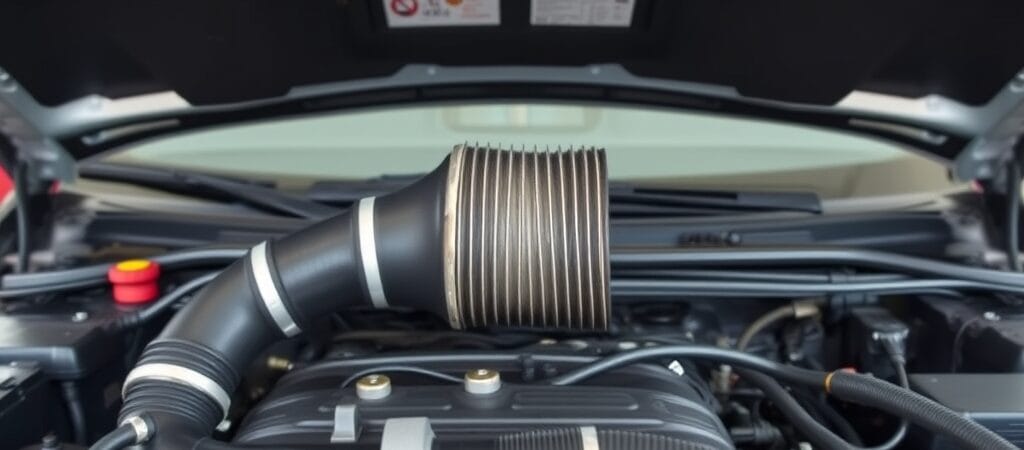
If your radiator hose collapses when cooling, the problem may involve excessive vacuum in the cooling system, a restricted coolant recovery path, or a hose that has become too weak to maintain its shape.
As an engine cools after shutdown, the coolant contracts and system pressure falls. In many conventional cooling systems, a vacuum-return valve in the radiator cap allows coolant to flow back from the recovery reservoir.
If that return path is blocked or the valve fails to operate correctly, vacuum may build up and pull a flexible radiator hose inward.
However, a collapsed hose does not automatically mean the radiator cap is faulty. The cooling system’s design, hose condition, and recovery components must all be considered.
This guide explains the common causes, warning signs, diagnostic checks, and repair options for a radiator hose that collapses as the engine cools.
Why Does a Radiator Hose Collapse When Cooling?
How Cooling System Pressure Changes
When the engine runs, coolant absorbs heat and expands.
If your coolant hose expands or swells while the engine is hot, see our Coolant Hose Swells When Hot guide for the possible causes and diagnostic checks.
In a conventional cooling system with a radiator pressure cap and separate recovery reservoir, expanding coolant may flow into the reservoir when the system reaches the cap’s pressure-release threshold.
After the engine is switched off and the coolant temperature falls, the coolant contracts.
This can create a pressure difference between the cooling system and its surroundings.
The radiator cap’s vacuum-return valve is designed to allow coolant to return from the recovery reservoir when appropriate.
If coolant cannot return, negative pressure may develop inside the cooling system.
A flexible radiator hose can then be pulled inward.
What Does a Collapsed Radiator Hose Look Like?
A collapsed hose may appear:
- Flattened along part of its length
- Pinched or drawn inward
- Partially folded
- Deformed after the engine has cooled
- Normal again after pressure equalizes
The condition may occur after shutdown rather than during normal engine operation.
Record when the hose collapses and whether it returns to its usual shape.
Does a Collapsed Hose Always Mean the Engine Is Overheating?
No.
A radiator hose that collapses during cooldown does not necessarily indicate that the engine overheated while running.
Some vehicles may show no temperature warning or noticeable driving symptoms.
However, a severely weakened hose, low coolant level, or an unresolved cooling-system problem can eventually affect normal cooling performance.
Any overheating warning should be investigated separately.
Common Causes of a Radiator Hose Collapsing When Cooling
1. Faulty Radiator Cap Vacuum-Return Valve
On cooling systems equipped with a conventional radiator cap and recovery reservoir, the cap usually performs two important functions.
Its pressure valve helps control cooling-system pressure when the coolant heats and expands.
Its vacuum-return valve allows coolant to return from the recovery reservoir during cooldown.
If the vacuum-return valve sticks closed or becomes obstructed, coolant may not flow back as intended.
The resulting vacuum can cause a flexible radiator hose to collapse.
A faulty radiator cap is an important possibility, but the correct diagnosis requires inspection or testing.
2. Blocked Coolant Recovery Hose
A small hose commonly connects the radiator filler neck to the coolant recovery reservoir.
If this hose becomes kinked, blocked, disconnected, or damaged, coolant may not return properly as the engine cools.
Inspect the hose for:
- Kinks or sharp bends
- Cracks or deterioration
- Blockages
- Incorrect routing
- Loose or damaged connections
A restricted recovery hose can produce symptoms similar to a defective radiator cap.
3. Coolant Recovery Reservoir Problems
A conventional recovery reservoir must allow the cooling system to draw coolant back when the coolant contracts.
Problems may include:
- Insufficient coolant in the reservoir
- A damaged pickup tube
- A blocked return connection
- An incorrectly installed hose
- Reservoir damage
- An obstruction in the recovery path
If the return pickup cannot draw coolant, the system may fail to recover coolant normally.
The correct coolant level should be checked using the manufacturer’s cold-fill markings and procedures.
4. Weak or Deteriorated Radiator Hose
A radiator hose may become softer or lose structural strength as it ages.
A weakened hose can deform under a vacuum that a serviceable hose would withstand.
Possible signs include:
- Unusual softness
- Permanent flattening
- Cracks or surface deterioration
- Swelling or deformation
- Damage near hose connections
A hose may need replacement if inspection confirms deterioration, even when another component is responsible for the vacuum condition.
5. Incorrect or Unsuitable Replacement Hose
A replacement hose must have the correct dimensions, construction, and application.
An incorrect hose may kink, deform, or collapse more easily.
Check whether the problem began after a cooling-system repair or hose replacement.
Some hose applications require specific reinforcement or internal support according to the vehicle design.
Do not install an improvised spring or reinforcement unless specified by the manufacturer.
6. Incorrect Radiator Cap
A radiator cap that physically fits may not necessarily have the correct pressure rating or valve arrangement.
An incorrect cap may interfere with normal cooling-system pressure and coolant recovery.
Use the manufacturer’s specifications to identify the appropriate cap.
7. Other Cooling System Restrictions or Faults
Cooling systems differ significantly between vehicles.
Some use a pressurized expansion tank rather than a conventional radiator cap and atmospheric recovery bottle.
The pressure and vacuum control arrangement may therefore be different.
Restrictions, damaged hoses, incorrect component installation, or faults in the system’s pressure-management components can contribute to abnormal pressure conditions.
The actual system design must be identified before selecting diagnostic tests.
Symptoms Associated with a Collapsed Radiator Hose
Visible Hose Deformation After Shutdown
The most direct symptom is a radiator hose that becomes visibly flattened or pinched as the engine cools.
This is particularly useful when the hose appears normal during operation but collapses later.
Abnormal Coolant Recovery
The coolant level in a conventional recovery reservoir may not change as expected during heating and cooldown.
A failure to return coolant to the radiator can indicate a recovery-path problem.
However, coolant-level changes depend on the vehicle design and operating conditions.
Low Coolant Level
A coolant recovery problem may contribute to an abnormal coolant level in the radiator or related components.
Low coolant can also result from leaks or other faults.
Do not assume that low coolant is caused by the radiator cap without checking the system.
Overheating or Temperature Warnings
A collapsed hose may coexist with cooling-system problems that cause overheating.
However, hose collapse after shutdown is not itself proof that coolant flow was restricted during engine operation.
If the temperature warning light illuminates or the engine overheats, stop safely and investigate the overheating condition before further driving.
If your engine temperature rises particularly when driving uphill, see our Car Overheats Going Uphill guide for possible causes and diagnostic steps.
Repeated Hose Deformation
A hose that repeatedly collapses and returns to its normal shape may indicate an ongoing pressure-equalization problem.
Repeated deformation can also suggest that the hose has become weakened.
Both the pressure-control system and hose condition should be evaluated.
How to Diagnose a Radiator Hose That Collapses When Cooling
Follow a structured process to distinguish a recovery-system fault from a deteriorated hose or another cooling-system problem.
Step 1: Verify When the Hose Collapses
Determine whether the hose collapses:
- Immediately after engine shutdown
- During the cooldown period
- Only after the engine becomes completely cold
- During engine operation
- After recent cooling-system repairs
These conditions help narrow the diagnosis.
A hose collapsing during engine operation may require a different investigation from one collapsing after shutdown.
Step 2: Allow the Engine to Cool Completely
Before inspecting the radiator cap, reservoir, or coolant connections, allow the engine and cooling system to cool fully.
Hot coolant may remain pressurized after shutdown.
Never remove a radiator or expansion-tank pressure cap while the system is hot.
Step 3: Inspect the Radiator Hose
With the engine cold, inspect the affected hose for visible damage.
Check for:
- Cracks
- Soft or weakened sections
- Permanent flattening
- Incorrect routing
- Kinks
- Damaged connections
- Signs of coolant leakage
Confirm that the hose matches the vehicle’s specified application.
A visibly deteriorated hose may require replacement, but the reason for any abnormal vacuum should also be investigated.
Step 4: Identify the Cooling System Design
Determine whether the vehicle uses:
- A radiator pressure cap and separate coolant recovery reservoir
- A pressurized expansion tank
- Another manufacturer-specific cooling-system arrangement
This distinction is important because not every cooling system uses the same coolant-return path.
Follow the correct service procedure for the vehicle.
Step 5: Inspect the Radiator Cap or Pressure-Control Assembly
For a conventional radiator-cap system, inspect the cap only after the engine has cooled.
Look for:
- Damaged seals
- Corrosion
- Debris
- Physical damage
- Incorrect cap type
- Problems with the vacuum-return valve
A cap can appear normal but still fail to operate correctly.
Where supported, use suitable equipment and manufacturer procedures to test the relevant pressure and vacuum functions.
Do not rely only on visual appearance.
Step 6: Check the Coolant Recovery Hose and Reservoir
Inspect the hose connecting the radiator to the recovery reservoir, where fitted.
Confirm that it is correctly routed and free of visible damage or restriction.
Check the reservoir and its return pickup arrangement.
Verify the coolant level using the manufacturer’s cold-level guidance.
A disconnected or blocked return path can prevent coolant recovery during cooldown.
Step 7: Perform Appropriate Cooling System Tests
A qualified technician may perform cooling-system pressure testing, cap testing, or other manufacturer-specified checks.
Pressure testing can help identify leaks and certain pressure-related faults.
However, a conventional positive-pressure leak test does not necessarily confirm that the cap’s vacuum-return function works correctly.
Additional testing may be needed to evaluate coolant recovery and vacuum behavior.
Do not exceed the manufacturer’s specified test pressure.
Step 8: Confirm the Root Cause
Review the findings before replacing components.
Determine whether the problem involves:
- A faulty radiator cap vacuum-return valve
- A blocked or damaged recovery hose
- A reservoir or return-pickup problem
- A weakened radiator hose
- An incorrect replacement hose
- An incorrect pressure cap
- Another vehicle-specific cooling-system fault
Repair only the confirmed cause.
Repair Options After Diagnosis
Replace a Confirmed Faulty Radiator Cap
If testing confirms that the radiator cap is defective, replace it with the correct manufacturer-specified type.
The replacement must have the appropriate pressure rating and valve arrangement.
A new cap should not be used as a substitute for investigating a blocked recovery hose or other confirmed problem.
Repair the Coolant Recovery Path
If the recovery hose is blocked, kinked, disconnected, or damaged, correct the specific fault.
Replace deteriorated hoses and repair damaged connections using suitable components.
Ensure the hose is routed correctly and does not contact hot or moving parts.
Repair or Replace Damaged Reservoir Components
If the recovery reservoir, pickup tube, or related connection is defective, repair or replace the affected component according to the manufacturer’s procedure.
Confirm that coolant can return normally after the repair.
Replace a Weak or Damaged Radiator Hose
If the radiator hose has become permanently deformed, excessively soft, cracked, or otherwise unserviceable, replace it with a compatible part.
Use the correct clamps and installation procedure.
Do not reuse a hose that no longer meets the manufacturer’s service requirements.
Correct the Coolant Level
If coolant is low, investigate the reason before topping up.
Use the correct coolant specification and filling procedure.
Some vehicles require a particular bleeding or vacuum-filling procedure to remove trapped air.
Do not mix incompatible coolant types.
How to Verify the Repair
After correcting the confirmed problem:
- Inspect all repaired connections for correct installation.
- Confirm that the radiator hose is properly routed and secured.
- Check the coolant level according to the manufacturer’s cold-fill procedure.
- Perform any required cooling-system filling or bleeding procedure.
- Check for leaks using the appropriate manufacturer-approved method.
- Monitor normal engine temperature during operation.
- Allow the engine to cool completely.
- Check whether the hose retains its normal shape.
- Verify coolant recovery behavior where applicable.
- Recheck the coolant level after the required operating and cooldown cycle.
If the hose collapses again, further diagnosis is needed.
A hose returning to its normal shape once does not establish that the underlying problem has been resolved.
Safety Considerations When Inspecting the Cooling System
Cooling systems can contain hot, pressurized coolant capable of causing serious burns.
Follow these precautions:
- Never remove a pressure cap from a hot cooling system.
- Allow the engine and cooling system to cool completely before opening components.
- Wear suitable eye and hand protection.
- Keep hands, clothing, and tools away from fans and moving components.
- Remember that electric cooling fans may operate unexpectedly.
- Never squeeze, disconnect, or loosen a hot pressurized coolant hose.
- Do not exceed manufacturer-specified pressure-test limits.
- Clean coolant spills promptly and keep coolant away from children and animals.
- Do not continue driving if the engine is overheating or coolant is leaking significantly.
If the system cannot be inspected safely, arrange professional diagnosis.
Vehicle-Specific Cooling System Considerations
Not every vehicle uses a conventional radiator cap and atmospheric recovery reservoir.
Some vehicles use a pressurized expansion tank with pressure-control functions integrated into the tank cap.
Others have different hose routing, pressure-management arrangements, or filling procedures.
These differences affect how vacuum is controlled and how the system should be tested.
Always use manufacturer-specific service information for:
- Radiator or expansion-tank cap specifications
- Coolant recovery operation
- Hose replacement requirements
- Pressure-testing procedures
- Correct coolant type
- Cooling-system filling and bleeding
Frequently Asked Questions
Why does my radiator hose collapse after the engine cools?
As coolant cools, its volume contracts and cooling-system pressure decreases.
If the system cannot equalize the resulting vacuum correctly, a flexible radiator hose may be pulled inward.
Possible causes include a faulty vacuum-return valve, restricted recovery hose, or weakened radiator hose.
Can a bad radiator cap cause a radiator hose to collapse?
Yes. On a conventional recovery-type cooling system, a defective radiator cap vacuum-return valve can prevent coolant from returning as the engine cools.
However, the cap should be inspected or tested before replacement.
Can a blocked coolant reservoir hose cause hose collapse?
Yes. A blocked or kinked recovery hose can interfere with coolant return during cooldown and contribute to excessive vacuum.
Does a collapsed radiator hose always cause overheating?
No. A hose that collapses after shutdown may not have restricted coolant circulation while the engine was running.
However, underlying cooling-system faults should still be investigated.
Should I replace the radiator hose if it collapses?
Not automatically.
If the hose is structurally sound, the main problem may be elsewhere in the coolant recovery or pressure-control system.
Replace the hose if inspection confirms deterioration, permanent deformation, or another condition that makes it unserviceable.
Can I drive with a radiator hose that collapses when cooling?
The risk depends on the cause and whether the cooling system is operating normally.
Because a collapsed hose may indicate a pressure-control or coolant recovery fault, it should be inspected promptly.
Do not drive if the engine overheats, coolant is leaking significantly, or the hose remains severely deformed during operation.
How do I test the radiator cap?
Use the manufacturer’s specified procedure and suitable test equipment.
A pressure test alone may not confirm that the vacuum-return valve operates correctly.
The correct test depends on the cap and cooling-system design.
How do I know the repair worked?
After the repair, verify normal cooling-system operation, allow the engine to complete the appropriate cooldown cycle, and confirm that the hose no longer collapses.
Also check coolant levels, connections, and any relevant coolant recovery function.
Final Checks
A radiator hose that collapses when cooling often points to a vacuum or coolant recovery problem, although hose deterioration can also contribute.
On conventional recovery systems, the radiator cap’s vacuum-return valve and the hose connecting the radiator to the recovery reservoir are important diagnostic areas.
However, cooling-system designs vary, and a collapsed hose does not automatically identify a defective cap.
Confirm when the collapse occurs, inspect the hose and recovery components, perform appropriate vehicle-specific tests, and repair the verified cause.
Finally, monitor the system through a normal operating and cooldown cycle to confirm that the hose retains its shape and the cooling system functions correctly.